



























Moving to Digital: Redesigning Paper Letters for Email and SMS

A paper-to-digital migration succeeds when it preserves legal certainty, improves readability, and protects customers who cannot or will not go digital. The practical path is to redesign letter content into channel-ready “message units”, apply consent and identity rules by message type, and measure outcomes across delivery, comprehension, and contact drivers. Done well, email and SMS…

Australian Success Stories: The Impact of Holistic CX Integration

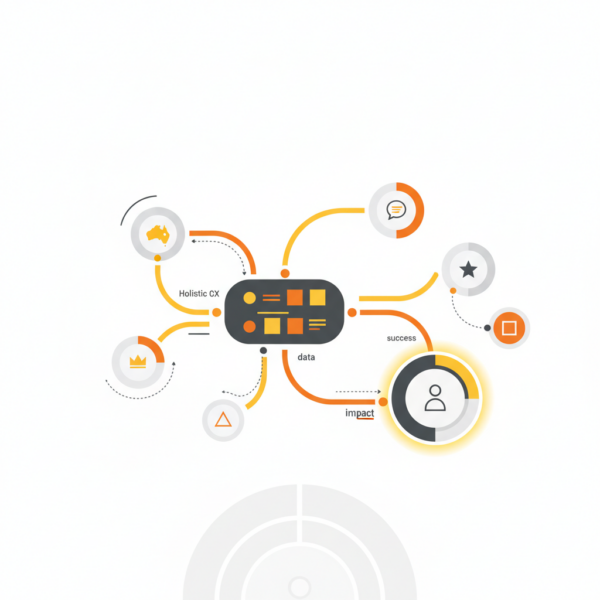
Holistic CX integration improves outcomes when it unifies service design, data, technology, and frontline ways of working into one operating model. In Australian organisations, this approach typically reduces channel friction, shortens resolution time, and improves complaint handling by connecting customer journeys to operational controls. The biggest gains come when a CX integrator aligns governance, measurement,…

Governance for Integrated CX: Managing Tech and Teams Holistically

Integrated CX governance aligns customer outcomes, technology choices, and operating decisions under one decision system. It clarifies who owns journeys, data, and change. It also makes priorities explicit across product, IT, risk, and service. The result is faster cross-functional delivery, fewer experience defects, stronger compliance controls, and a measurable link between CX investment and business…

Agile CX Integration: Delivering Wins in Weeks, Not Years | CX & Service Transformation

Agile CX integration compresses CX and service transformation into short delivery cycles by aligning teams, data, and decision rights around customer outcomes. It replaces multi-year programs with a governed backlog, small releases, and measurable feedback loops. When executed well, leaders get rapid CX transformation, lower operational friction, and higher customer trust without sacrificing compliance, risk…

Why CX Roadmaps Fail: Bridging the Gap Between Design and Tech

CX roadmaps fail when design, technology, and delivery operate as separate systems. The fix is an implementation-grade roadmap: clear service outcomes, testable requirements, strong governance, and a delivery model that connects journeys to platforms. A CX integrator function closes the gap by translating intent into build-ready work, managing risk, and proving value with operational and…

Beyond Systems Integration: Why You Need Business Process Orchestration

Business process orchestration turns disconnected CX tools into one governed, end-to-end operating model. It goes beyond systems integration by managing state, decisions, handoffs, and accountability across channels and teams. The result is fewer customer “dead ends”, faster resolution, clearer ownership, and measurable service outcomes, even as your CX ecosystem grows more complex. What is business…

The Economic Case for an Integrated CX Partner vs. Multiple Specialist Agencies

An integrated CX partner often delivers a higher integrated services ROI than multiple specialist agencies because it reduces coordination cost, duplicate tooling, and delivery rework. It also improves governance, data consistency, and speed to value. A strong business case quantifies these effects across operating expenditure, risk, and revenue drivers, then validates results through service standards…

Silo-Busting: How a CX Integrator Unifies Ops, Tech, and People

A CX Integrator breaks down silos in business by aligning operating processes, enabling technology, and frontline capability around one shared service outcome. The work creates a unified CX operating model with clear decision rights, cross-functional value streams, and a single measurement spine. The result is faster change delivery, fewer handoffs, and more consistent customer outcomes…

Single Point of Accountability: Reducing Risk in Digital Transformation

A single point of accountability (SPOA) reduces digital transformation risk by consolidating decision rights, delivery ownership, and vendor management into one accountable integrator. This model cuts coordination failures, prevents scope drift, strengthens controls, and improves service outcomes. It works best when governance is explicit, metrics are tied to customer and operational value, and third parties…