Automation Stack: RPA, Orchestration, and AI

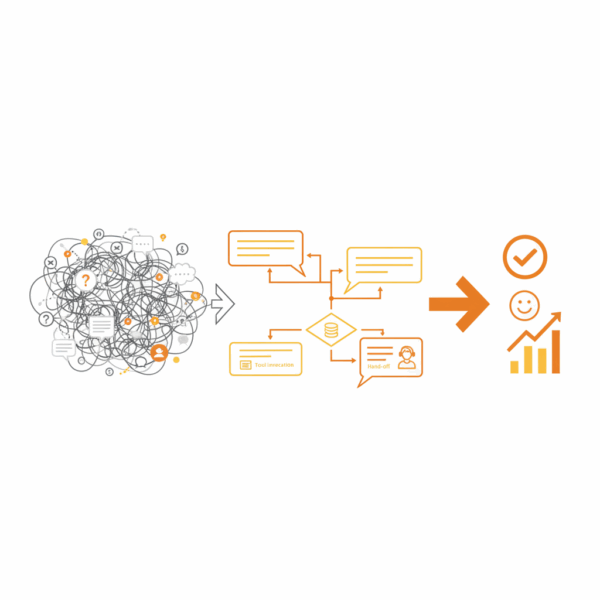
What do executives actually mean by an “automation stack”? Leaders use the term “automation stack” to describe a layered capability that combines Robotic Process Automation, process orchestration, and applied AI to execute work end to end. The stack aligns people, policies, data, and platforms to remove manual effort, enforce controls, and accelerate outcomes. RPA automates…

Automate After You Simplify: A First Principle

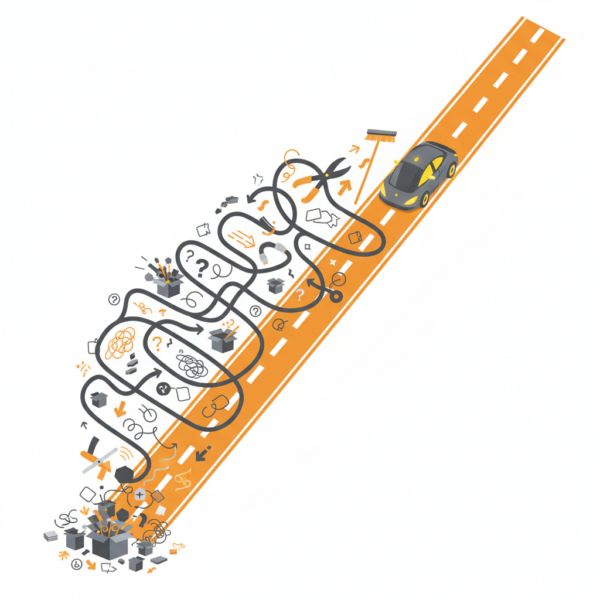
Who needs this principle in 2025? Executives run growth, cost and risk agendas that compete for attention. Leaders in Customer Experience and Service Transformation must choose levers that move outcomes without creating technical debt or customer pain. The first principle is simple. Teams should simplify before they automate. This principle protects customer outcomes, improves operational…

Experiment Design: Channel Mix A/B Framework

Why do executives need a channel mix A/B framework now? Leaders face rising acquisition costs, signal loss from privacy controls, and pressure to prove incremental impact across paid, owned, and earned channels. A disciplined channel mix A/B framework lets an enterprise isolate causal lift, compare channels on a common outcome, and reallocate budget toward the…

Benchmark: App Store Ratings vs CSAT

Why compare App Store ratings with CSAT? Executives compare App Store ratings and Customer Satisfaction Score to understand product health and service quality. Leaders often assume a high star rating signals high satisfaction. The assumption looks tidy. Reality gets messy. App Store ratings reflect public sentiment from a subset of users in a marketplace. CSAT…

Measuring Digital Adoption & Containment

Why measure digital adoption and containment in the first place? Leaders set strategy by measuring what customers actually do. Digital adoption shows how many customers start and complete tasks in digital channels. Containment shows how many of those tasks resolve without escalation to assisted service. These twin measures tell a service organization whether digital is…

Deflect to Delight: Smart Self-Service Flows

Why should leaders treat deflection as a growth play, not a cost play? Executives often chase deflection to cut volume. Customers chase resolution to get time back. Smart self-service aligns both incentives. When leaders design self-service to solve the full job, deflection becomes delight. Digital journeys reduce avoidable contact, protect margins, and return human capacity…

Launching a Digital Concierge

What is a digital concierge and why does it matter now? A digital concierge simulates a knowledgeable service host who guides customers to outcomes across channels. The unit listens, understands intent, retrieves the right action, and completes the task end to end. Executives use the concept to unify self-service, orchestration, and assisted service into one…

Journey-Led Channel Roadmap

Why do leaders need a journey-led channel roadmap now? Executives face rising customer expectations, shrinking patience, and complex channel sprawl. Leading firms use customer journeys as the backbone for channel decisions because journeys concentrate investment on the moments that create value. Research links experience quality to revenue expansion through higher retention, cross-sell, and wallet share.¹…

App vs Web vs Messaging: Choosing Your Primary

Why does channel primacy matter now? Executives choose channel primacy to concentrate investment, simplify governance, and accelerate measurable outcomes. A primary channel anchors design, data, and delivery decisions. The alternative is diffusion: duplicated roadmaps, fractured signals, and rising service costs with unclear ROI. Mobile adoption, changing privacy rules, and the reconfiguration of app stores and…

Avoiding Channel Cannibalization

What is channel cannibalization in modern service models? Executives define channel cannibalization as one channel siphoning demand or margin from another without growing total value.¹ In customer experience and service transformation, this risk increases when digital service models launch rapidly without clear roles, pricing logic, or measurement guardrails. Channel conflict emerges when incentives push units…