


















What is channel cannibalization in modern service models?
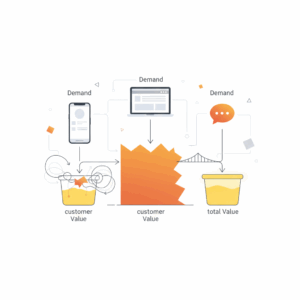
Executives define channel cannibalization as one channel siphoning demand or margin from another without growing total value.¹ In customer experience and service transformation, this risk increases when digital service models launch rapidly without clear roles, pricing logic, or measurement guardrails. Channel conflict emerges when incentives push units to compete for the same interaction rather than coordinate around the customer journey.² Leaders often confuse healthy substitution with harmful erosion. The distinction is simple. Healthy substitution lowers cost-to-serve while holding or lifting lifetime value. Harmful erosion lowers contribution margin, degrades experience, or inflates avoidable demand. In practice, channel cannibalization hides inside positive metrics. Digital volumes climb. Handle time falls. Self-service usage spikes. The business celebrates the near-term optics while the multichannel system silently loses revenue quality and trust. Clarity on definitions gives teams a shared lens for decisions and tradeoffs.¹
Where does cannibalization show up in CX and service?
Teams see cannibalization first in contact mix and cost-to-serve. Digital channels attract interactions that voice already handled effectively. Migration looks like progress because digital unit costs are lower, but the journey extends and repeat contacts rise. Leaders also see cannibalization in sales-assisted flows. An FAQ page outranks a high-intent booking path, so prospects self-serve to dead ends. Frontline advisors then re-handle issues with less context, which erodes satisfaction and increases churn risk.³ In retail service, buy-online-return-in-store can shift margin from eCommerce to stores without lifting net contribution if policies and attribution are misaligned. Omnichannel strategy treats channels as coordinated touchpoints that share goals and data.⁴ When leaders miss this, channels compete for credit and protect their metrics. The organization then optimizes locally and underperforms systemically.
What causes channel cannibalization in digital service models?
Organizations cause cannibalization when governance, data, and incentives diverge. Siloed targets push each channel owner to grow volume, even if the volume duplicates effort. Fragmented identity and journey data block agents and bots from seeing prior steps, which forces customers to repeat themselves and switch channels.⁵ Overconfident automation also creates cannibalization. A chatbot captures simple queries but mishandles edge cases, which deflects temporarily then bounces customers back to voice. Content design contributes as well. Search engines reward fresh content, not necessarily authoritative journey alignment. Without a content architecture, new articles outrank high-value flows and absorb intent that should convert elsewhere. Finally, pricing and promotions shift demand. Discounted app-only offers move revenue to a lower-margin channel without increasing total demand. Leaders reduce these risks by aligning goals and publishing clear rules of engagement across channels.²
How do we distinguish healthy substitution from harmful cannibalization?
Teams separate the two by testing incrementality and journey outcomes. Incrementality measures the net lift caused by a channel, campaign, or feature after accounting for what would have happened anyway.⁶ When a digital unit replaces a more expensive contact while holding satisfaction, first contact resolution, and revenue quality, substitution is healthy. When replacement drives more repeat contacts, longer time to resolve, or lower conversion, cannibalization is at work. Leaders should validate with structured experiments. Hold out a random share of traffic from a new channel feature. Compare resolution, revenue, and churn. If the experiment shows no net lift, treat the feature as a candidate for redesign or removal. Marketing science and media mix methods help estimate incremental effects in complex environments.⁷ Pair testing with cohort analysis so you see the longitudinal impact on lifetime value, not just a weekly snapshot.
Designing channel purpose: what role does each channel play?
Executives assign channels clear roles and decision rights. Define each channel’s primary jobs-to-be-done, acceptable intents, and escalation rules. In service, asynchronous messaging can own low-urgency troubleshooting. Voice can own urgent, emotionally charged issues where empathy and speed matter. Knowledge content can own known-answer contacts. Omnichannel design then connects these roles with shared identity, context, and knowledge so handoffs feel continuous.⁴ Publish a channel rulebook that specifies eligibility, hours, service levels, and data captured. Train frontline and digital agents on the same decision trees and the same canonical answers. Use one knowledge source to reduce drift. When every channel knows its job and shares the same content backbone, substitution becomes intentional and value accretive rather than accidental and erosive.⁵ Governance converts channel purpose from a poster into a daily operational discipline.
Measurement that matters: which metrics reveal cannibalization early?
Leaders upgrade metrics from channel-local to journey-system. Start with a balanced set that monitors demand quality, resolution, and value creation. Track:
Incremental resolution rate: percentage of issues resolved that would have created a costly contact without the new channel.⁶
First contact resolution and repeat contact interval by entry channel to expose silent bouncing.³
Time-to-relief, defined as the elapsed time from first contact to outcome across channels.
Deflection quality, which measures whether deflected contacts remain resolved over a defined window.
Contribution margin by journey cohort so cost-to-serve improvements do not hide revenue leakage.
Omnichannel leaders also monitor consistency. Consistent experiences across touchpoints correlate with higher satisfaction and loyalty.⁸ Consistency does not mean sameness. It means coherent promises, policies, and answers across the system. Variation should be designed, measured, and purposeful.
What governance prevents channel conflict before it starts?
Executives embed a few structural moves. First, align incentives to system value rather than channel volume. Pay leaders on net outcomes such as incremental resolution, journey NPS, and contribution margin. Second, run a cross-channel change council that approves new content, bots, and offers against explicit cannibalization checks. Third, require experiments for major changes. No experiment, no launch. Fourth, standardize identity, context passing, and knowledge management so handoffs preserve state.⁵ Fifth, set pricing and promotions rules that avoid channel arbitrage unless the goal is market entry or specific acquisition.² Finally, publish a retirement policy. Old content and features must expire on a schedule. Without a retirement policy, the long tail of assets will absorb intent, fragment journeys, and drive self-competition. These governance moves contain risk while preserving speed.
How do content and search strategy avoid cannibalizing commercial intent?
Content operations reduce cannibalization by aligning information architecture to journeys. Teams map intents, assign owners, and route search demand into the right flows. Enterprise SEO best practice promotes canonical pages, structured data, and internal linking that clarifies which page should rank for which intent. Clear canonicalization prevents support content from outranking transactional flows for high-intent queries.⁹ Design content templates with action modules so every article routes to the next best step. Use noindex and on-page disclaimers on topics that could misroute demand. Pair this with site search that prioritizes resolution and conversion, not just clicks. Treat the knowledge base as a product with a backlog, A/B tests, and sunset rules. When content and search reinforce journey design, digital growth shifts from siphoning to compounding.
How do automation and agents work as one team rather than competitors?
Service automation and human expertise work best as a blended unit. Bots triage, collect context, and resolve known-answer issues. Advisors handle exceptions, emotions, and complex judgment. This blended model increases satisfaction when both units share identity, policy, and knowledge, and when customers can request a person easily.⁵ Overreliance on automation creates false deflection and customer churn. Customers will try another channel or switch providers if the system blocks them from resolution. Leaders should measure agent-assisted save rates and bot-assisted containment together so winners and losers are visible at the system level. Design escalation as a feature, not a failure. When a bot hands off with full context and an appointment or callback, the customer perceives care and competence. This perception builds trust and reduces multi-channel thrash over time.⁸
What is the executive playbook for avoiding channel cannibalization?
Executives align strategy, operating model, and measurement. Start by defining channel purpose and publishing a rulebook. Build shared identity, context passing, and knowledge so handoffs carry state. Install a change council and require experiments for meaningful launches. Fund content and search as core capabilities and direct them to shepherd intent. Invest in agent tools and bot platforms that share policy, data, and metrics. Use incrementality testing and contribution margin to validate that digital growth is value accretive.⁶ Translate wins into frontline playbooks and enterprise rituals to lock in gains. Communicate consistently that channels do not own customers. Journeys own customers.⁴ This principle simplifies decisions and speeds execution because every team optimizes to the same north star. When leaders operate this playbook, they prevent self-competition and convert omnichannel investments into durable value.
What impact should leaders expect within two quarters?
Leaders should expect three tangible shifts. First, repeat contacts and cross-channel bouncing should decline as escalation and knowledge tighten.³ Second, contribution margin should improve as healthy substitution replaces avoidable demand and as automation captures qualified intents.⁶ Third, journey satisfaction and loyalty should rise as consistency and handoffs improve.⁸ The operational signals arrive early in contact mix, containment quality, and time-to-relief. The financial signals arrive as margins and churn improve. Expect channel owners to collaborate more because incentives now reward system value. Expect content and search to act like a demand router rather than a content factory. Expect customers to notice that service feels continuous. When these changes hold for several cohorts, the business can scale new channels with confidence. The system then grows by compounding, not by cannibalizing itself.
How should leaders start this work next week?
Leaders start simple. Pick one high-volume journey and map entry channels, intents, and outcomes. Identify where digital captures demand that bounces to voice. Install a single experiment to test a better escalation path or a clearer content route. Publish a channel rulebook draft for this journey. Measure incremental resolution, repeat contacts, and contribution margin through a defined window. Socialize the results. Use the learning to refine governance, incentives, and tooling. Repeat for the next journey. Small, visible wins shift culture and reduce resistance. Teams that learn in public accelerate alignment. Leaders who frame the work as protecting value rather than blocking innovation create pull across product, marketing, and operations. The goal is not to slow digital growth. The goal is to grow digital without eroding trust, margin, or momentum.⁴
FAQ
What is channel cannibalization in customer experience and service?
Channel cannibalization occurs when a new or alternative channel draws demand from an existing channel without increasing total value, which often shows up as duplicated contacts, lower contribution margin, or longer time-to-relief.¹
Why do digital service models trigger channel conflict?
Digital service models trigger conflict when channel incentives reward volume, data is fragmented, and content or bots capture high-intent traffic that should convert elsewhere.² ⁵
How can leaders measure whether substitution is healthy or harmful?
Leaders should run incrementality tests and track first contact resolution, repeat contact intervals, deflection quality, and contribution margin by journey cohort to determine whether changes create net lift.³ ⁶ ⁷
Which governance moves reduce channel cannibalization risk?
Executives should align incentives to system outcomes, run a cross-channel change council, require experiments for major launches, standardize identity and knowledge, and enforce retirement policies for content and features.² ⁵
How does omnichannel design prevent self-competition?
Omnichannel design assigns clear roles to each channel and connects them through shared identity, context, and knowledge so handoffs feel continuous and customers do not bounce between touchpoints.⁴ ⁵
Which metrics reveal cannibalization early in operations?
Metrics that reveal early risk include incremental resolution rate, first contact resolution by entry channel, repeat contact interval, deflection quality, time-to-relief, and contribution margin by cohort.³ ⁶
Which content and SEO practices help avoid cannibalizing commercial intent?
Leaders should use canonicalization, internal linking, and structured data to route search demand to the right journey pages, while pairing knowledge content with action modules and sunset rules to prevent misrouting.⁹
Sources
Investopedia. Kenton, W. 2023. “Cannibalization.” Investopedia. https://www.investopedia.com/terms/c/cannibalization.asp
HubSpot. McFadden, K. 2022. “Channel Conflict: What It Is and How to Manage It.” HubSpot Blog. https://blog.hubspot.com/sales/channel-conflict
Customer Contact Week Digital. CCW Digital Research Team. 2021. “The State of Contact Center Repetition and Resolution.” CCW Digital. https://www.customercontactweekdigital.com/
McKinsey & Company. Heller, J., Kime, D., Singer, M. 2021. “Omnichannel: The Path to Value.” McKinsey Insights. https://www.mckinsey.com/
Google. “Help customers pick up where they left off with persistent identity.” Think with Google. 2020. https://www.thinkwithgoogle.com/
Google. “A marketer’s guide to incrementality testing.” Think with Google. 2019. https://www.thinkwithgoogle.com/
Nielsen. 2018. “Five Things to Know About Marketing Mix Modeling.” NielsenIQ Insights. https://nielseniq.com/
McKinsey & Company. Doshi, N., Rawson, A., Waite, S. 2014. “The Three Cs of Customer Satisfaction.” McKinsey Insights. https://www.mckinsey.com/
Google. “Guide to canonicalization for SEO.” Google Search Central. 2023. https://developers.google.com/search/docs/crawling-indexing/consolidate-duplicate-urls