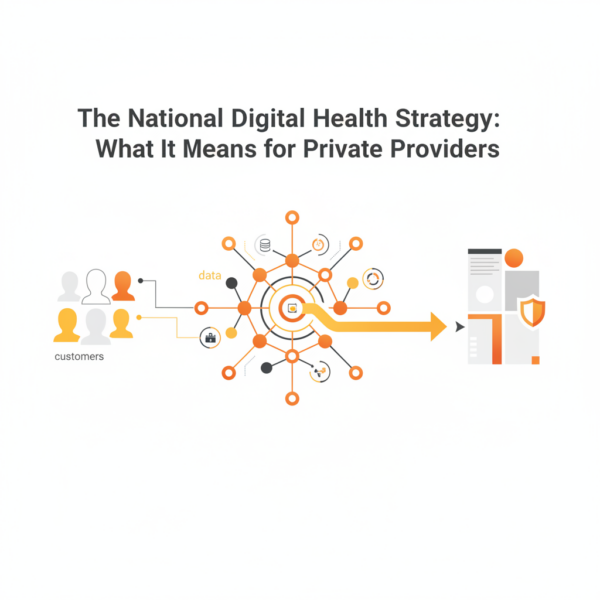























The National Digital Health Strategy: What It Means for Private Providers

Private providers should treat Australia’s National Digital Health Strategy as a practical operating mandate, not a policy document. It raises expectations for secure information sharing, standards-based interoperability, privacy controls, and measurable benefits. Providers that align early can reduce integration cost, improve continuity of care, and strengthen compliance posture. Providers that delay will face rising onboarding…

Protecting Patient Data: Cybersecurity Essentials for Health Providers

Patient data protection in healthcare depends on a small set of consistently executed controls: strong identity security, rapid patching, resilient backups, segmented systems, and tested incident response. Health providers should align these controls to recognised frameworks, meet Privacy Act obligations, and measure performance through objective indicators such as phishing resistance, patch latency, backup recoverability, and…

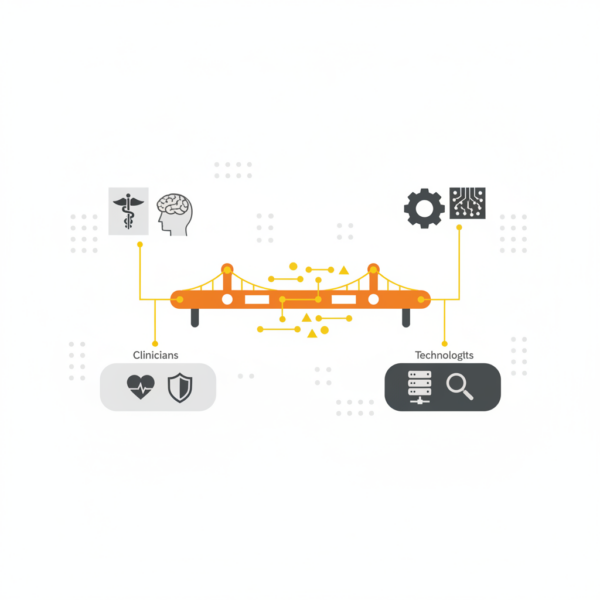
Bridging the Gap Between Clinicians and Technologists: The Role of Health Informatics

Health informatics bridges clinicians and technologists by turning clinical intent into safe, usable, interoperable digital health systems. It does this through shared clinical workflow models, data standards, human-centred design, and governance that measures outcomes, not just deployments. When done well, it reduces documentation burden, improves care continuity, and lowers change risk by aligning product delivery…

The Future of Remote Patient Monitoring in Chronic Disease Management

Remote patient monitoring is moving from pilot programs to mainstream chronic disease management. The next phase will be defined by clinical workflow integration, clearer governance, and stronger evidence for which patients benefit most. Leaders who treat RPM as a service model, not a device rollout, can reduce avoidable deterioration, improve patient experience, and support capacity…

EMR Optimisation: Getting Value Beyond the Implementation

EMR optimisation means moving from “system installed” to “system improves care”. It focuses on usability, workflow fit, data quality, interoperability, and governance so clinicians spend less time navigating screens and more time delivering care. The fastest gains usually come from fixing high-friction workflows, tightening decision support, improving training, and tracking benefits with a disciplined value…

Automation in Government: Streamlining Citizen Services Securely

Automation in government can cut wait times, reduce errors, and free staff for complex work. The safe path combines process automation, human review for high-impact decisions, and strong controls for privacy and cybersecurity. Success depends on selecting the right service journeys, hardening identity and access, monitoring outcomes, and proving compliance through measurable service, risk, and…

The True Cost of Automation: Licensing, Infrastructure, and Maintenance

Automation TCO is usually higher than the initial business case because recurring licence tiers, cloud and security run costs, and ongoing change-driven maintenance accumulate faster than expected. A defensible model treats automation as a product with a lifecycle: build, run, change, and govern. This article shows how to quantify licensing, infrastructure, and maintenance so leaders…

The Balance of Automation and Empathy: When to Hand Off to a Human

Automation should remove effort, not remove care. The best balance comes from designing clear human handoff triggers, preserving customer context, and training agents to complete service recovery quickly. Done well, automation handles routine work while humans handle emotion, exceptions, and risk. This approach improves resolution, protects trust, and reduces repeat contact. Definition What is an…