




























Writing for All: Meeting Australian Accessibility Standards in Customer Comms

customer communications ensure every customer can understand and act on information regardless of disability, literacy level, or technology. In Australia, accessibility is both a legal obligation and a practical driver of lower service demand. This article explains how Australian accessibility standards apply to customer correspondence, how inaccessible design increases cost and risk, and how CX…

Brand Voice Consistency: Why Your Chatbot Should Sound Like Your CEO

Brand voice consistency is no longer a marketing concern. It is a core driver of trust, comprehension, and service efficiency. When chatbots, emails, letters, and agents sound disconnected from leadership intent, customers experience friction and doubt. This article explains why consistent tone of voice matters across CX channels, how inconsistency increases cost and risk, and…

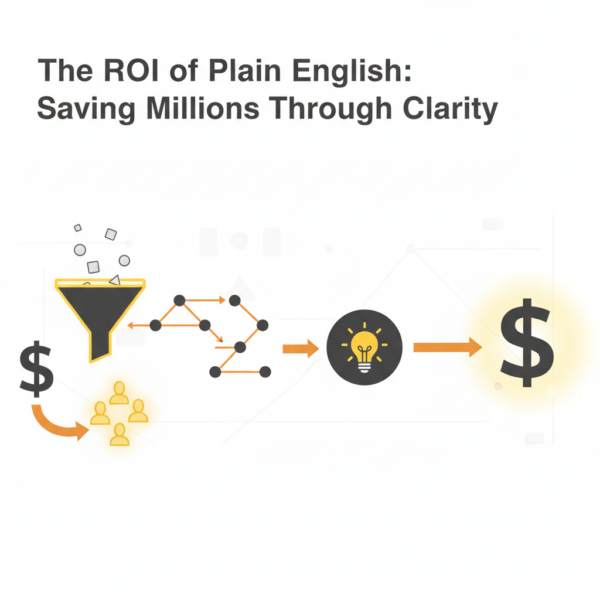
The ROI of Plain English: Saving Millions Through Clarity

Plain English delivers measurable financial returns by reducing avoidable contact, rework, complaints, and compliance risk. Organisations that replace complex correspondence with clear, customer-centred language consistently lower contact centre volumes and processing costs while improving trust. This article explains the business case for plain English, how ROI is realised in practice, and how CX leaders quantify…

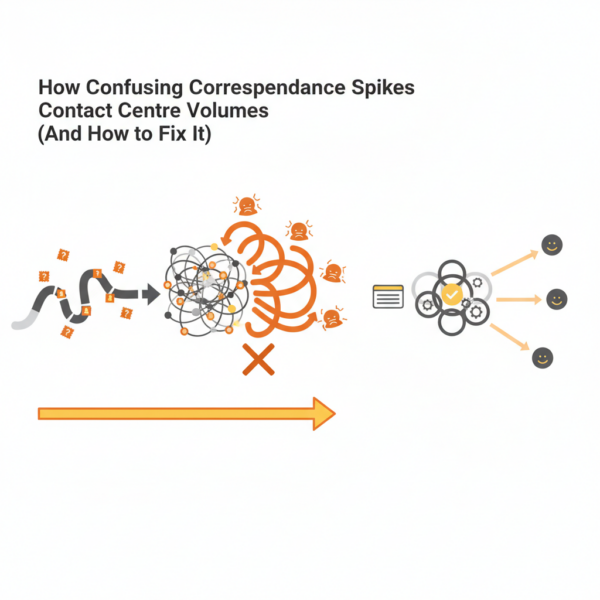
How Confusing Correspondence Spikes Contact Centre Volumes (And How to Fix It)

Confusing customer correspondence is a primary driver of avoidable contact centre demand. When letters, emails, and digital messages are unclear, customers call to seek clarification, correction, or reassurance. This article explains how poor writing increases contact volumes, how to identify correspondence-driven failure demand, and how CX leaders can redesign communications to reduce cost while improving…

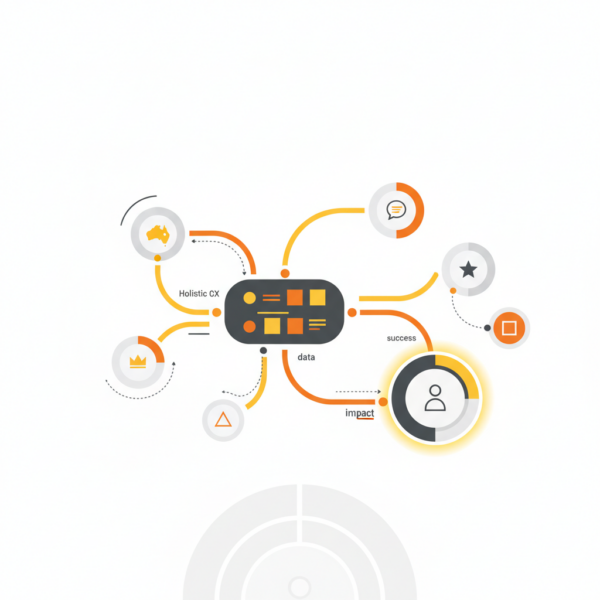
Australian Success Stories: The Impact of Holistic CX Integration

Holistic CX integration improves outcomes when it unifies service design, data, technology, and frontline ways of working into one operating model. In Australian organisations, this approach typically reduces channel friction, shortens resolution time, and improves complaint handling by connecting customer journeys to operational controls. The biggest gains come when a CX integrator aligns governance, measurement,…

Governance for Integrated CX: Managing Tech and Teams Holistically

Integrated CX governance aligns customer outcomes, technology choices, and operating decisions under one decision system. It clarifies who owns journeys, data, and change. It also makes priorities explicit across product, IT, risk, and service. The result is faster cross-functional delivery, fewer experience defects, stronger compliance controls, and a measurable link between CX investment and business…

Agile CX Integration: Delivering Wins in Weeks, Not Years | CX & Service Transformation

Agile CX integration compresses CX and service transformation into short delivery cycles by aligning teams, data, and decision rights around customer outcomes. It replaces multi-year programs with a governed backlog, small releases, and measurable feedback loops. When executed well, leaders get rapid CX transformation, lower operational friction, and higher customer trust without sacrificing compliance, risk…

Why CX Roadmaps Fail: Bridging the Gap Between Design and Tech

CX roadmaps fail when design, technology, and delivery operate as separate systems. The fix is an implementation-grade roadmap: clear service outcomes, testable requirements, strong governance, and a delivery model that connects journeys to platforms. A CX integrator function closes the gap by translating intent into build-ready work, managing risk, and proving value with operational and…

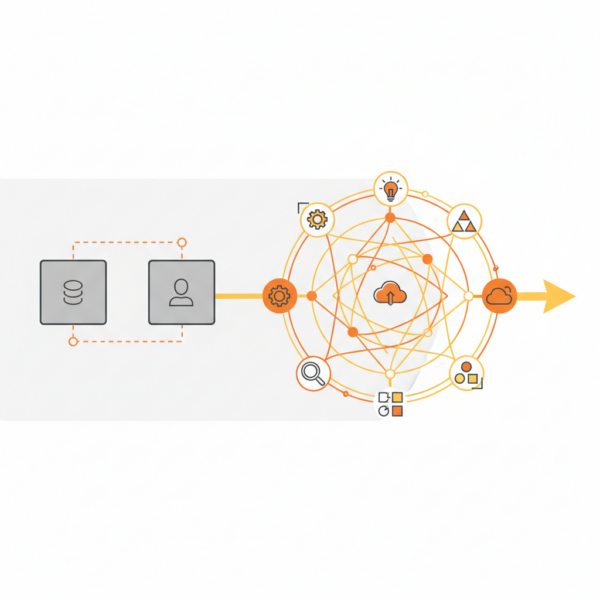
Beyond Systems Integration: Why You Need Business Process Orchestration

Business process orchestration turns disconnected CX tools into one governed, end-to-end operating model. It goes beyond systems integration by managing state, decisions, handoffs, and accountability across channels and teams. The result is fewer customer “dead ends”, faster resolution, clearer ownership, and measurable service outcomes, even as your CX ecosystem grows more complex. What is business…

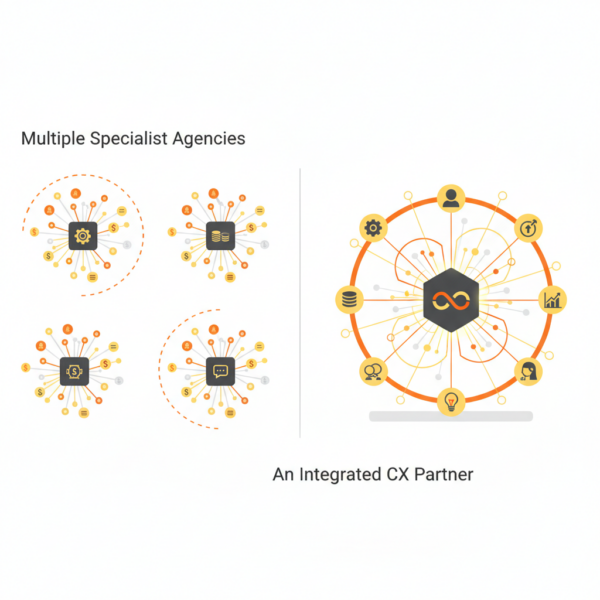
The Economic Case for an Integrated CX Partner vs. Multiple Specialist Agencies

An integrated CX partner often delivers a higher integrated services ROI than multiple specialist agencies because it reduces coordination cost, duplicate tooling, and delivery rework. It also improves governance, data consistency, and speed to value. A strong business case quantifies these effects across operating expenditure, risk, and revenue drivers, then validates results through service standards…