































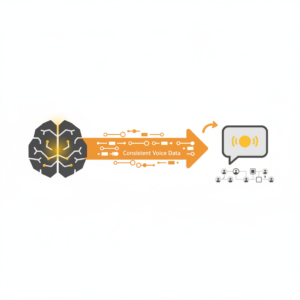
Brand voice consistency is no longer a marketing concern. It is a core driver of trust, comprehension, and service efficiency. When chatbots, emails, letters, and agents sound disconnected from leadership intent, customers experience friction and doubt. This article explains why consistent tone of voice matters across CX channels, how inconsistency increases cost and risk, and how leaders operationalise a single, executive-aligned brand voice.
Definition
What is brand voice consistency in customer service?
Brand voice consistency means that every customer-facing interaction reflects the same tone, values, and intent, regardless of channel or technology. A chatbot response, a service email, and a formal letter should all sound as if they come from the same organisation with the same authority.
In customer service, brand voice consistency reduces ambiguity. Customers know what the organisation stands for and how seriously to take a message. This is why consistent tone of voice customer service is linked to higher trust, faster resolution, and lower escalation rates¹.
Context
Why does inconsistent brand voice create CX problems?
Most organisations design brand voice at the executive or marketing level but lose it during operational execution. Chatbots are built by vendors. Letters are written by legal teams. Agents improvise under pressure.
The result is fragmentation. Customers receive mixed signals about empathy, urgency, and accountability. When tone shifts between channels, customers are more likely to question accuracy or intent, driving follow-up contact and complaints².
Mechanism
Why should a chatbot sound like the CEO?
The CEO sets the organisation’s public intent. Customers expect that intent to carry through every interaction. When a chatbot sounds robotic, dismissive, or overly casual compared to executive messaging, trust erodes.
Tone of voice acts as a cognitive shortcut. A consistent voice reassures customers that the message is official, considered, and reliable. Research shows that conversational systems aligned to brand voice reduce abandonment and repeat contact because customers feel understood and respected³.

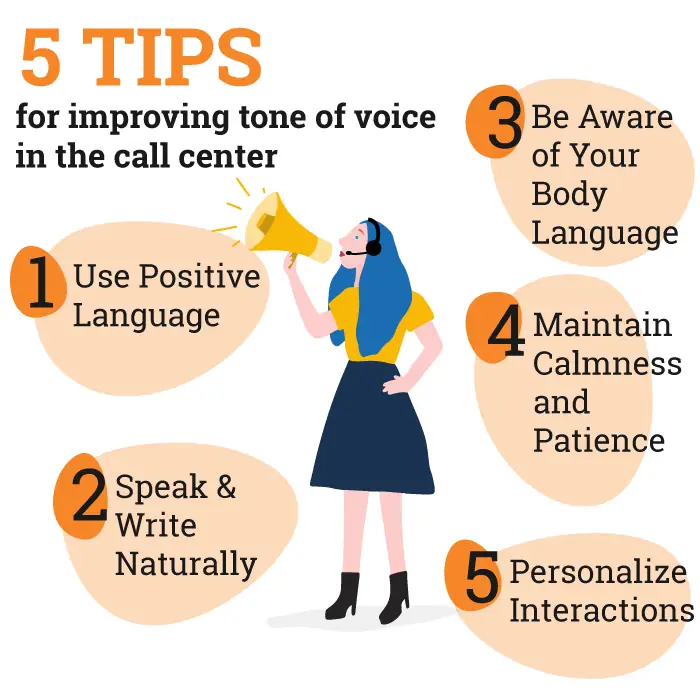

Comparison
Inconsistent tone versus consistent brand voice
Inconsistent tone shifts cognitive effort to the customer. They must interpret intent, credibility, and next steps each time. Consistent brand voice removes that burden.
Organisations with strong brand voice guidelines apply the same principles across human and automated channels. The outcome is simpler decisions, fewer clarifying questions, and higher confidence in self-service. This is where brand voice moves from aesthetics to operational performance⁴.
Applications
How do CX leaders enforce brand voice consistency?
Execution requires more than a style guide. CX leaders translate executive tone into practical rules for sentences, structure, and empathy markers. These rules are embedded into chatbot scripts, correspondence templates, and agent guidance.
Structured CX communications programs delivered by Customer Science operationalise brand voice across channels. This ensures that automation, including chatbots, reflects leadership intent while remaining clear and compliant.
https://customerscience.com.au/solution/cx-communications/
Risks
What risks arise from ignoring brand voice consistency?
Inconsistent voice increases perceived risk. Customers are more likely to call, complain, or disengage when tone feels untrustworthy or misaligned. Automation amplifies this risk by delivering inconsistent messages at scale.
There is also internal risk. Agents struggle to recover trust when automated messages sound careless or contradictory. Over time, this drives higher handling times and emotional labour⁵.
Measurement
How is brand voice impact measured?
Measurement focuses on behavioural outcomes. These include containment rates in chatbots, repeat contact rates, escalation frequency, and complaint sentiment linked to tone.
Advanced organisations run A B tests on tone variations to quantify impact on demand and resolution. CX consulting support accelerates this by linking tone changes to cost-to-serve and customer confidence metrics.
https://customerscience.com.au/service/cx-consulting-and-professional-services/
Next Steps
What should CX and digital leaders do first?
Start by auditing customer-facing tone across channels. Compare chatbot responses, emails, letters, and agent scripts against executive communications. Identify gaps in empathy, clarity, and authority.
From there, establish enforceable brand voice guidelines and embed them into tooling, training, and governance. Treat tone as a controllable CX variable, not an individual preference.
Evidentiary Layer
What evidence links brand voice to service outcomes?
Studies show that consistent tone of voice improves comprehension, trust, and task completion in service interactions. Conversational AI research demonstrates that aligned brand voice reduces friction and increases self-service success⁶˒⁷.
Standards bodies increasingly recognise communication clarity and consistency as components of service quality and risk management⁸.
FAQ
Is brand voice only a marketing concern?
No. In customer service, brand voice directly affects contact volumes, trust, and resolution.
Can chatbots really reflect executive tone?
Yes. With clear rules and governance, chatbots can consistently express leadership intent.
Does consistent tone reduce costs?
Yes. It reduces repeat contact and escalation driven by confusion or mistrust.
Is this relevant for regulated industries?
Yes. Consistent tone improves comprehension without reducing compliance accuracy.
Who helps organisations operationalise brand voice?
Specialist CX communications providers such as Customer Science support brand voice definition, embedding, and measurement across channels.
https://customerscience.com.au/solution/cx-communications/
Sources
-
Journal of Service Research. Tone of voice and customer trust.
-
Harvard Business Review. How Consistency Builds Brand Credibility.
-
ACM Transactions on Computer-Human Interaction. Conversational agent trust.
-
Journal of Marketing. Brand voice and customer perception.
-
Australian Competition and Consumer Commission. Consumer communication expectations.
-
IEEE Intelligent Systems. Conversational AI and user confidence.
-
OECD. Trust and digital service delivery.
-
ISO 10002 Customer satisfaction and complaints handling.