




















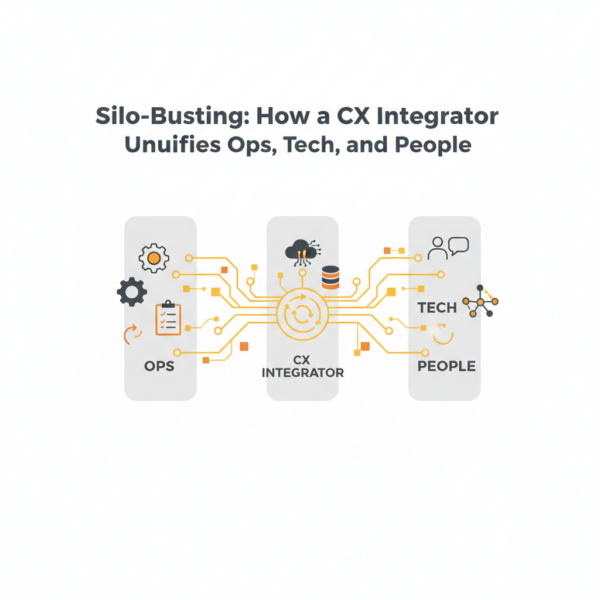
Silo-Busting: How a CX Integrator Unifies Ops, Tech, and People

A CX Integrator breaks down silos in business by aligning operating processes, enabling technology, and frontline capability around one shared service outcome. The work creates a unified CX operating model with clear decision rights, cross-functional value streams, and a single measurement spine. The result is faster change delivery, fewer handoffs, and more consistent customer outcomes…
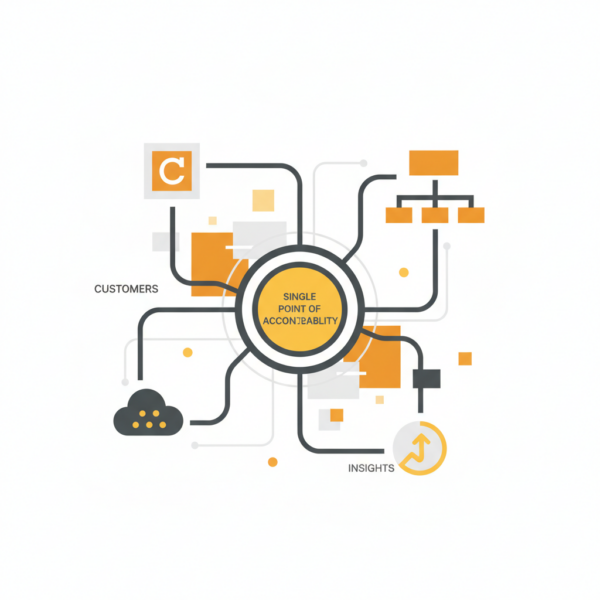

Single Point of Accountability: Reducing Risk in Digital Transformation

A single point of accountability (SPOA) reduces digital transformation risk by consolidating decision rights, delivery ownership, and vendor management into one accountable integrator. This model cuts coordination failures, prevents scope drift, strengthens controls, and improves service outcomes. It works best when governance is explicit, metrics are tied to customer and operational value, and third parties…

Moving from Strategy to Execution: The CX Orchestration Framework

A CX orchestration framework closes the CX strategy execution gap by translating intent into measurable journey outcomes, owned capabilities, governed decisions, and repeatable execution loops. It connects strategy, operating model, data, and service delivery so teams can prioritise the right fixes, implement them fast, and prove value through customer and cost outcomes.¹˒⁴ What is the…

The Hidden Cost of Multi-Vendor CX: Why Fragmentation Kills ROI

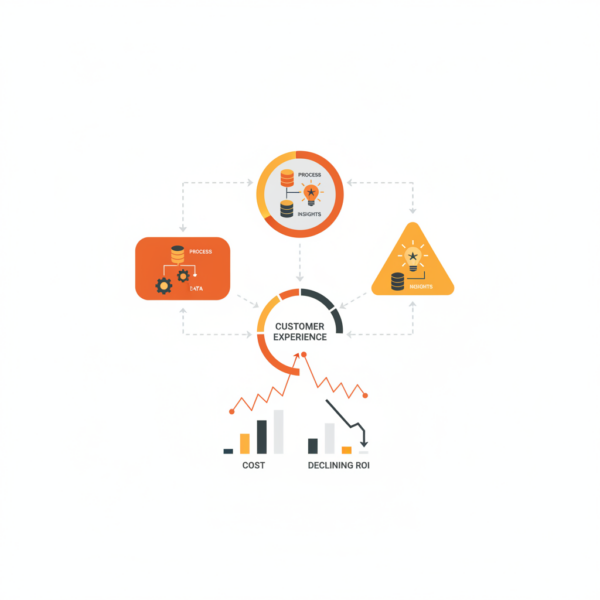
Fragmented, multi-vendor CX operating models quietly destroy ROI through duplicated work, inconsistent data, slower change, and higher risk exposure. A CX integrator with an integrated customer experience model reduces coordination overhead, improves service consistency, and makes outcomes measurable end to end. The business case is strongest where customer journeys cross channels, vendors, and governance domains,…