












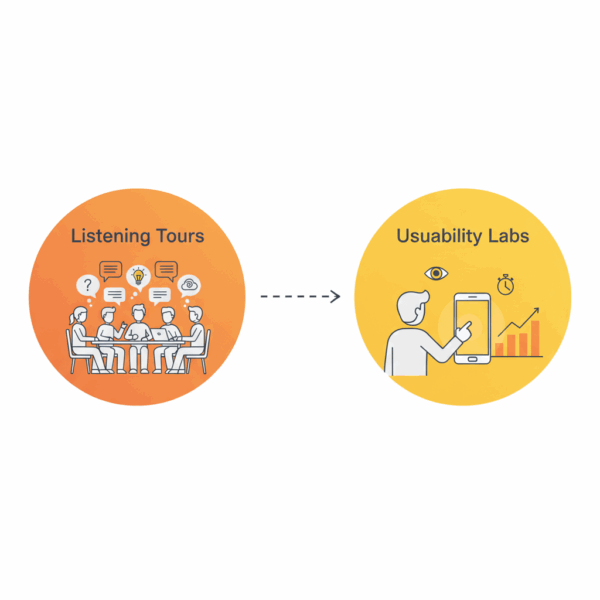
Listening Tours vs Usability Labs

Why do leaders confuse listening tours with usability labs? Executives chase insight but often mix up two very different instruments. A listening tour gathers narrative intelligence from stakeholders across the organisation to surface themes about culture, priorities, and operational friction. A usability lab examines how real users complete defined tasks with a product or service…
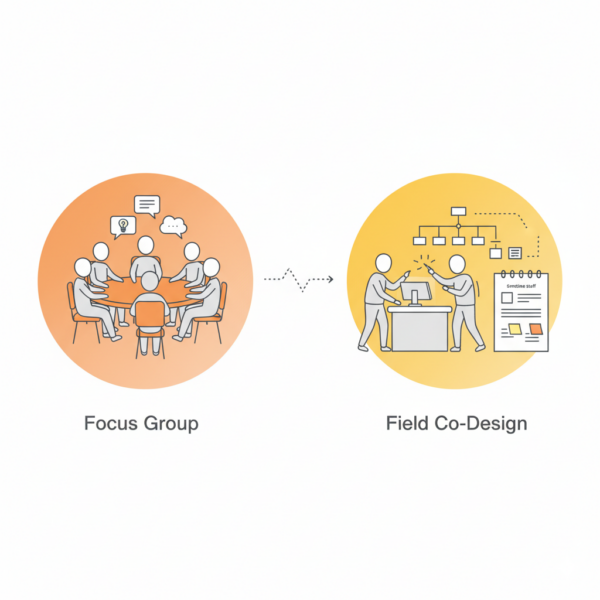
Focus Group vs Field Co-Design: When to Use Which

What do we mean by “focus group” and “field co-design”? Executives need clean definitions before they choose a method. A focus group is a moderated discussion with recruited participants who share reactions to prompts, concepts, or experiences in a group setting. The method seeks interaction effects, since participants build on each other’s comments and surface…

Service Prototyping Methods: Low to High Fidelity

Why does prototyping matter in service transformation? Service leaders reduce risk when they test ideas before scaling. Prototyping creates quick, learnable versions of a proposed service and exposes failure points early. Teams use prototypes to validate customer value, feasibility, and operational viability without committing full budgets or long timelines. In service contexts, prototypes span scripts,…

Recruitment, Incentives, and Ethics in Co-Creation

What is co-creation and why does it change CX delivery? Co-creation brings customers, employees, and partners into the design and delivery of services. The practice treats users as informed contributors who shape propositions, workflows, and policies. Leaders use co-creation to reveal unmet needs, reduce waste, and accelerate adoption. Co-creation differs from traditional research because participants…

Experiment-Driven Design: From Insight to Concept

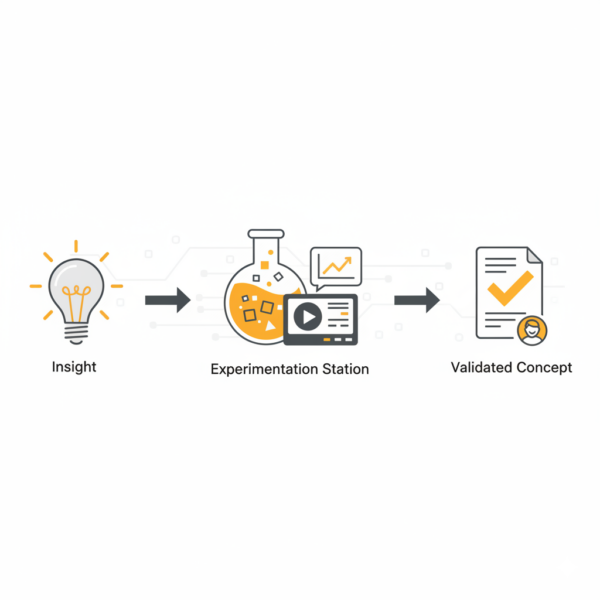
Why should service leaders shift from opinion to evidence? Executives face decision risk when ideas move from research to concept without real validation. Leaders invest in features, channels, and service models that customers never adopt. Experiment-driven design changes this pattern. Teams frame assumptions as hypotheses, test them with real users, and let evidence guide scope…

Personas vs Jobs-to-Be-Done in Co-Creation

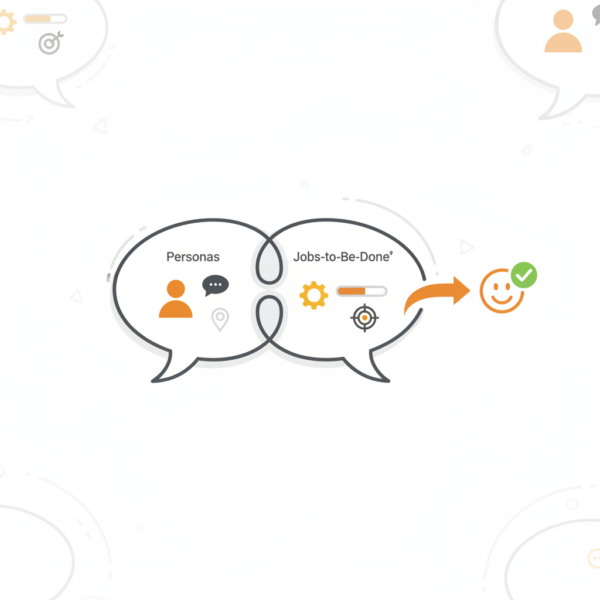
Why do executives still debate personas vs Jobs-to-Be-Done? Executives weigh personas against Jobs-to-Be-Done because both claim to improve relevance, yet they operate at different layers of understanding and decision-making. Personas describe who a segment represents and how that segment behaves in context. Jobs-to-Be-Done describes why a customer acts by focusing on the progress a customer…

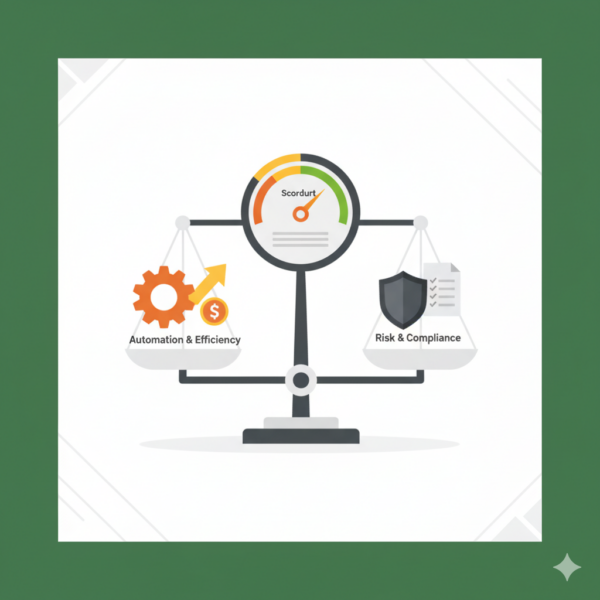
Risk & Compliance Scorecard for Automation

Why do CX leaders need a risk and compliance scorecard for automation? Executives face a dual mandate. Leaders must scale automation to reduce cost-to-serve while strengthening compliance and customer trust. Many programs move fast without guardrails, which increases exposure to privacy breaches, biased decisions, and operational disruption. A risk and compliance scorecard gives decision makers…

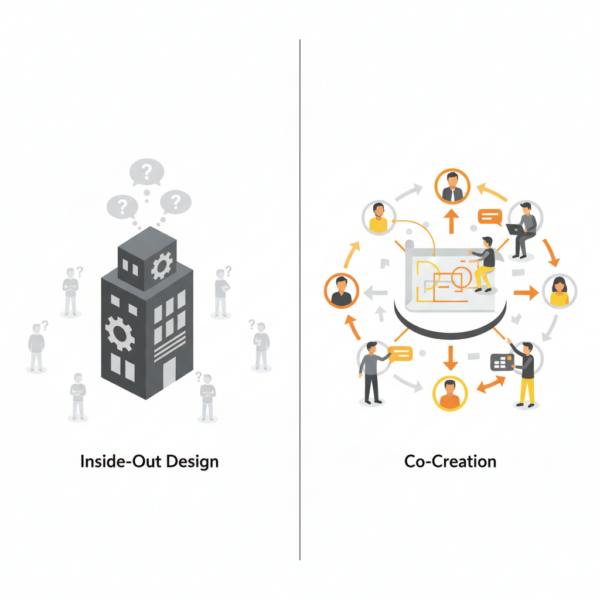
Why Co-Creation Beats Inside-Out Design

What is co-creation and why should leaders care? Executives face a common problem. Traditional, inside-out design optimizes for internal constraints, not for customer value. Co-creation solves this by inviting customers to shape value propositions, journeys, and operating models as equal partners. Co-creation is the structured involvement of customers in discovery, design, and delivery to produce…

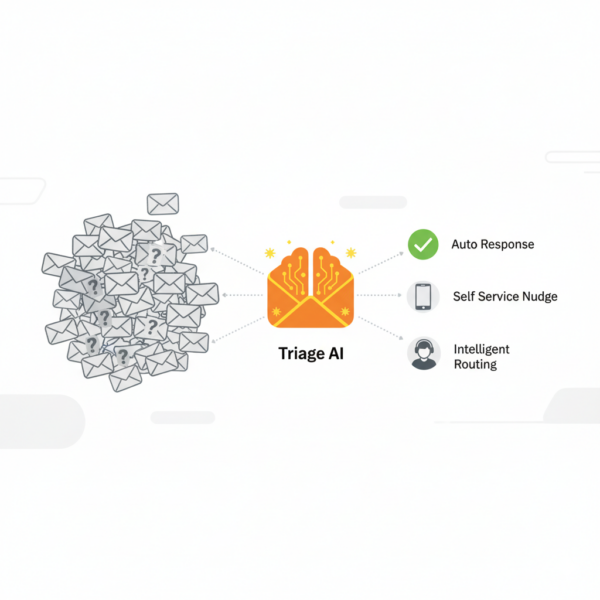
Case Study: 40% Email Deflection via Triage AI

What problem did the service organisation need to solve? A national services organisation faced a rising email backlog that drove missed SLAs, rising cost to serve, and low agent morale. Incoming demand outpaced staffing. Customers waited days for simple updates. Leaders lacked visibility into intent, priority, and risk across email channels. Manual triage created inconsistency…