





























Meeting the Digital Service Standard: A Compliance Checklist

Meeting the Digital Service Standard requires more than technical compliance. Agencies must demonstrate accessible design, measurable user outcomes, and disciplined governance across the full service lifecycle. This guide provides a practical digital service standard checklist, explaining what compliance means in practice and how agencies can embed accessibility and CX into everyday delivery. What is the…

Designing Around Life Events: The Future of Government Service Delivery

Life event service design reframes government delivery around major moments in people’s lives rather than agency structures. By aligning data, digital services, and CX around citizen needs, governments reduce friction, improve trust, and deliver measurable outcomes. This approach is becoming the foundation of citizen centric government services in digitally mature public sectors. What is life…

Navigating the Data and Digital Government Strategy: A Guide for Agencies

Data and Digital Government Strategy sets a clear direction for modern, citizen-centred public services. Agencies that align data governance, digital service design, and CX transformation can improve trust, efficiency, and policy outcomes. This guide explains what the strategy requires, how it works in practice, and how agencies can translate it into measurable service improvements across…

Writing for All: Meeting Australian Accessibility Standards in Customer Comms

customer communications ensure every customer can understand and act on information regardless of disability, literacy level, or technology. In Australia, accessibility is both a legal obligation and a practical driver of lower service demand. This article explains how Australian accessibility standards apply to customer correspondence, how inaccessible design increases cost and risk, and how CX…

Brand Voice Consistency: Why Your Chatbot Should Sound Like Your CEO

Brand voice consistency is no longer a marketing concern. It is a core driver of trust, comprehension, and service efficiency. When chatbots, emails, letters, and agents sound disconnected from leadership intent, customers experience friction and doubt. This article explains why consistent tone of voice matters across CX channels, how inconsistency increases cost and risk, and…

The ROI of Plain English: Saving Millions Through Clarity

Plain English delivers measurable financial returns by reducing avoidable contact, rework, complaints, and compliance risk. Organisations that replace complex correspondence with clear, customer-centred language consistently lower contact centre volumes and processing costs while improving trust. This article explains the business case for plain English, how ROI is realised in practice, and how CX leaders quantify…

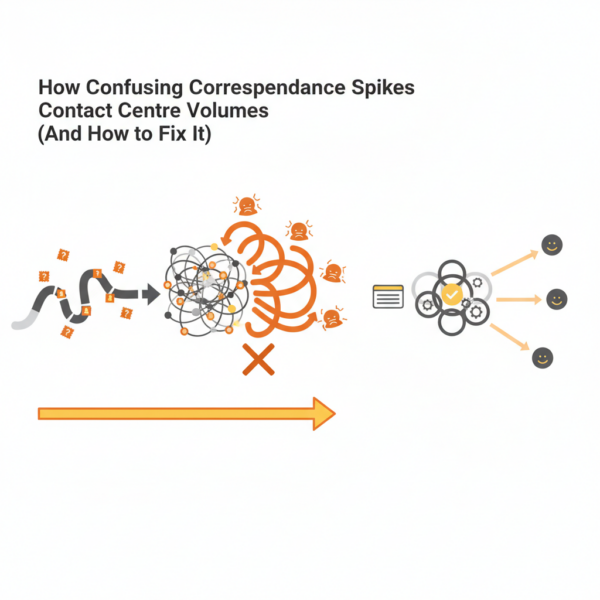
How Confusing Correspondence Spikes Contact Centre Volumes (And How to Fix It)

Confusing customer correspondence is a primary driver of avoidable contact centre demand. When letters, emails, and digital messages are unclear, customers call to seek clarification, correction, or reassurance. This article explains how poor writing increases contact volumes, how to identify correspondence-driven failure demand, and how CX leaders can redesign communications to reduce cost while improving…