




























Data and Digital Government Strategy sets a clear direction for modern, citizen-centred public services. Agencies that align data governance, digital service design, and CX transformation can improve trust, efficiency, and policy outcomes. This guide explains what the strategy requires, how it works in practice, and how agencies can translate it into measurable service improvements across digital, contact centre, and operational environments.
What is the Data and Digital Government Strategy?
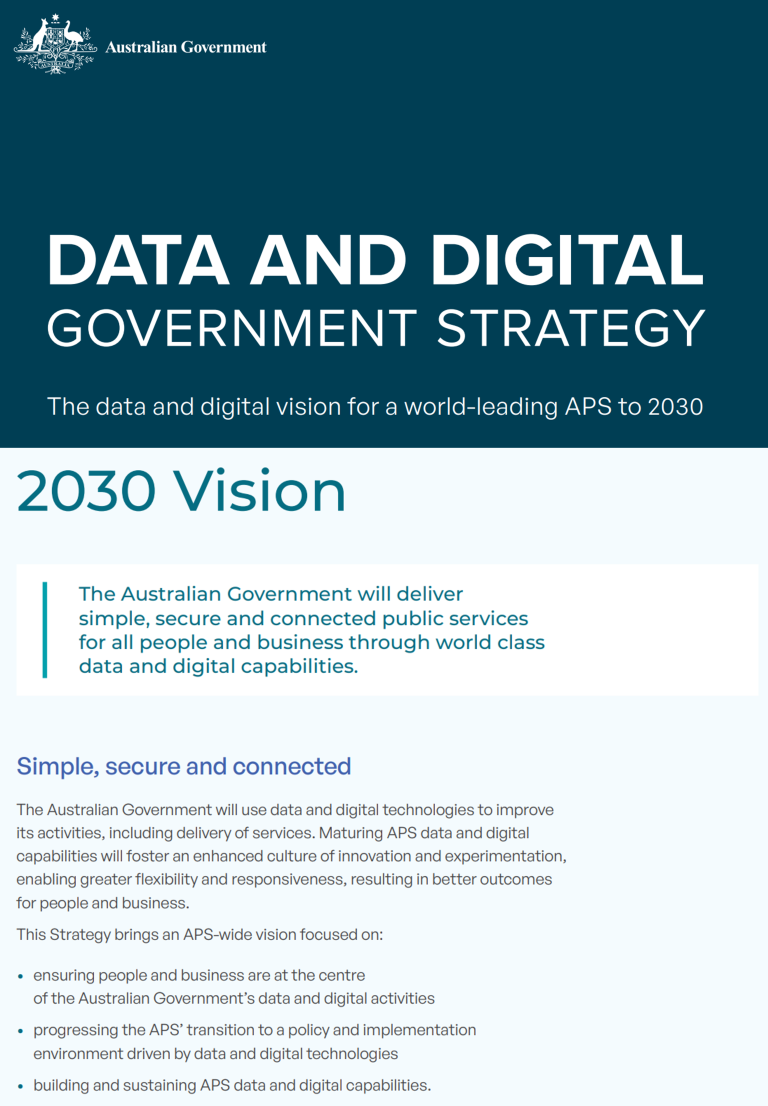
The Data and Digital Government Strategy is the Australian Government’s framework for using data and digital capabilities to deliver simpler, safer, and more connected public services. Led by the Australian Government, the strategy defines how agencies should collect, share, protect, and apply data while designing digital services around real user needs.
The core problem addressed by the strategy is fragmentation. Citizens experience government as a single system, but agencies often operate in silos. Disconnected data, inconsistent digital platforms, and legacy processes increase cost and reduce service quality. The strategy responds by setting common principles for interoperability, privacy, cyber security, and service design¹.
The intended impact is practical. Agencies are expected to move beyond digitising forms and toward end-to-end digital services that are measurable, accessible, and resilient. This aligns closely with CX and service transformation agendas across federal, state, and local government.
Why does the Australian government digital roadmap matter now?
The Australian government digital roadmap matters because demand for digital services has permanently shifted. Research from the Australian Bureau of Statistics shows sustained growth in digital channel usage across government services since 2020². Citizens now expect the same ease, speed, and transparency from government that they receive from regulated private services.
At the same time, regulatory scrutiny has increased. Agencies must comply with strengthened privacy, data sovereignty, and cyber security requirements³. Delivering better services without disciplined data management exposes agencies to operational and reputational risk.
The roadmap provides sequencing. It prioritises foundational data capabilities, secure digital identity, service standards, and shared platforms. Agencies that align early reduce duplication and avoid costly rework later in their transformation programs.
How does the Data and Digital Government Strategy work in practice?
Data as a managed asset, not a by-product
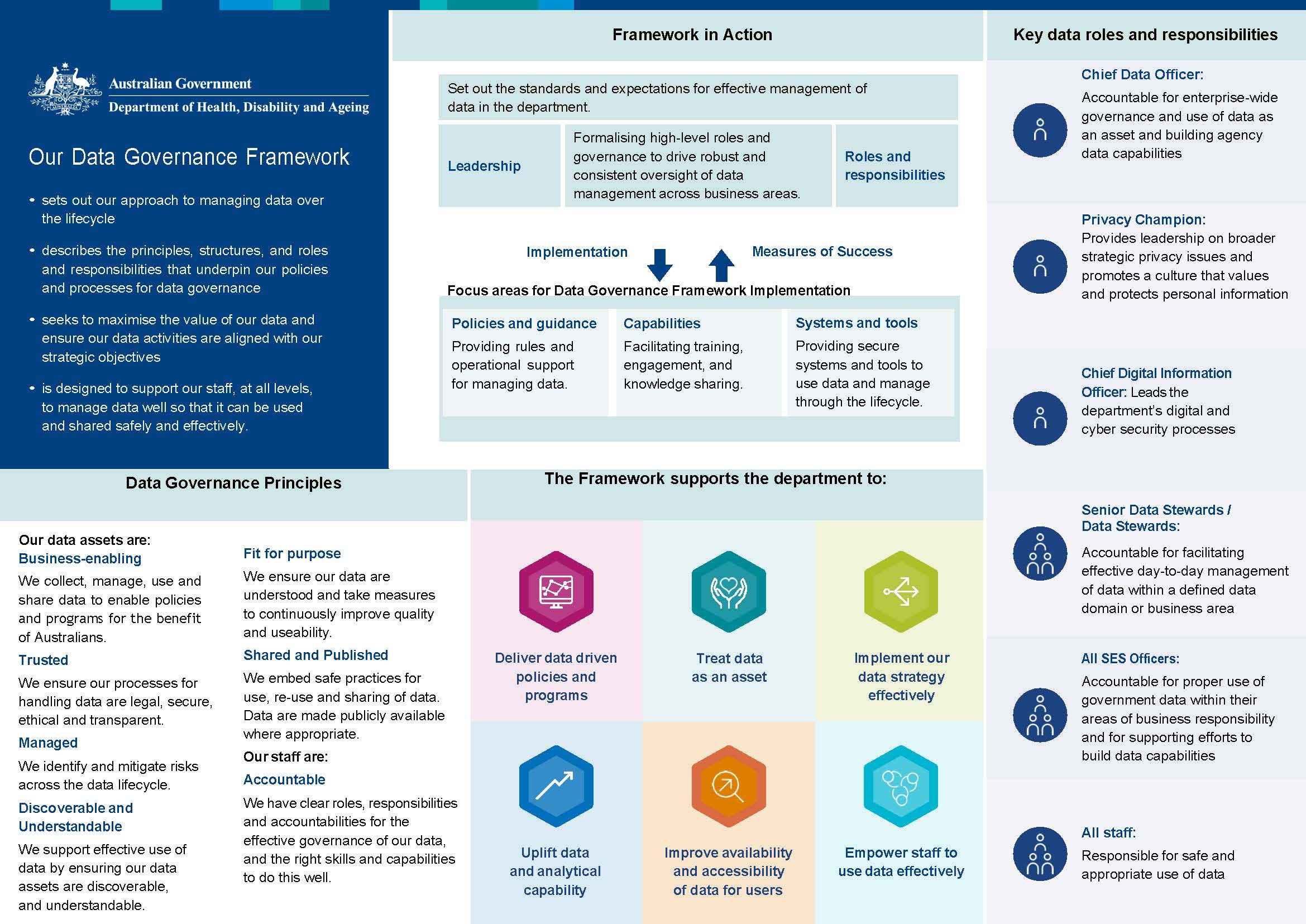
A central mechanism of the strategy is treating data as an enterprise asset. This means defined ownership, quality standards, lifecycle controls, and ethical use frameworks. Agencies are expected to design services with data requirements in mind from the outset, not retrofit analytics after deployment⁴.
Practically, this supports proactive services. When high-quality data flows securely between systems, agencies can reduce repeat data capture, predict demand, and intervene earlier in service journeys. This directly improves customer experience while lowering operational cost.
Digital services designed around user journeys
The strategy embeds human-centred design and service standards. Digital services must be tested with real users, accessible by default, and measured continuously. This shifts agencies from project-based delivery to product-style service ownership.
Measurement is critical. Service performance indicators such as task completion, effort, and resolution time are required alongside traditional IT metrics⁵. This creates a direct line between digital investment and service outcomes.
How does this strategy differ from earlier digital government initiatives?
Earlier digital government programs focused heavily on channel shift and cost reduction. Success was often measured by the number of services moved online rather than by service quality or user outcomes.
The current data and digital government strategy is broader and more mature. It integrates data governance, digital platforms, CX measurement, and workforce capability into a single operating model. It also places stronger emphasis on trust, ethics, and transparency, reflecting lessons from previous large-scale IT failures and data breaches⁶.
For agency leaders, this means success depends less on technology selection and more on operating discipline. Governance, skills, and measurement matter as much as platforms.
Where should agencies start applying the strategy?
CX and service transformation programs
The most effective entry point is CX-led service transformation. Mapping priority journeys allows agencies to identify where data gaps, system fragmentation, and process friction undermine outcomes. These insights then inform digital and data investment decisions.
Platforms such as Customer Science Insights provide integrated CX measurement and operational data analysis to support this work. By combining experience metrics with performance data, agencies can prioritise reforms with clear evidence of impact.
Digital service design and delivery
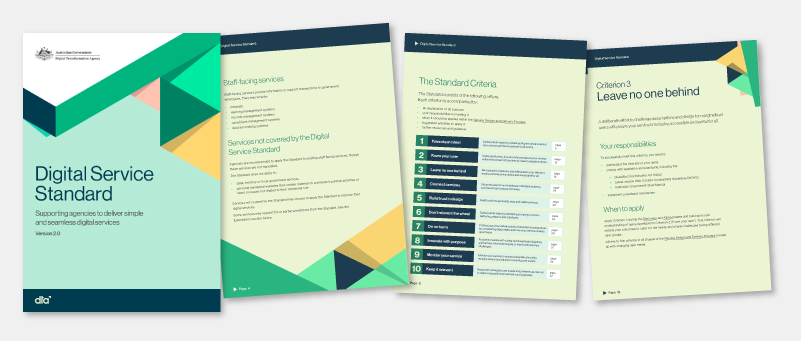
Digital service teams should align delivery models with the strategy’s service standards. This includes continuous user research, accessibility testing, and performance reporting. Knowledge Quest can support this by enabling consistent knowledge and guidance across digital and assisted channels, improving resolution quality and compliance.
Cross-agency data enablement
Shared outcomes require shared data. Agencies should invest in interoperability and analytics capabilities that support policy, service, and operational use cases. CommScore AI can assist by analysing unstructured interaction data at scale, providing insights into citizen needs, sentiment, and emerging risks.
What risks should agencies manage when implementing the strategy?
Implementation risks are primarily organisational rather than technical. Common issues include unclear data ownership, fragmented governance, and insufficient workforce capability. Without clear accountability, data quality deteriorates and trust erodes.
There is also a risk of over-automation. Automating poorly designed processes can amplify failure at scale. The strategy explicitly requires human oversight and ethical controls for data-driven and AI-enabled services⁷.
Agencies must also manage privacy and consent carefully. Public trust is fragile. Transparent communication and strong information protection practices are essential to sustain digital uptake.
How should agencies measure success?
Measurement should connect strategy to outcomes. This includes service performance metrics, CX indicators, and value realisation measures. Agencies that succeed typically define a small set of outcome-focused KPIs aligned to policy objectives and citizen needs⁸.
Measurement frameworks should integrate quantitative and qualitative data. Digital analytics alone is insufficient. Voice of customer, contact centre insights, and frontline feedback provide essential context.
CX Research and Design services support agencies in establishing these measurement models and ensuring insights translate into actionable change.
What are the next practical steps for agencies?
Agencies should begin with a capability assessment aligned to the data and digital government strategy. This identifies gaps in data governance, service design maturity, and measurement. From there, a sequenced roadmap can be developed.
CX Consulting and Professional Services can support this process by aligning strategy, operating models, and delivery plans. The goal is not compliance for its own sake, but sustainable improvement in service outcomes and trust.
Evidentiary Layer
The principles underpinning the Australian data and digital government strategy are consistent with international evidence on public sector digital transformation. OECD studies link integrated data governance and user-centred service design with improved efficiency and citizen satisfaction⁹. Australian National Audit Office reviews similarly emphasise the importance of clear accountability and performance measurement in digital programs¹⁰.
FAQ
What is the main objective of the data and digital government strategy?
The objective is to deliver simpler, safer, and more connected public services by treating data as a strategic asset and designing digital services around user needs.
How does this strategy affect CX and service transformation teams?
It makes CX measurement, journey design, and continuous improvement core requirements rather than optional enhancements.
Is this strategy only relevant to federal agencies?
No. State and local agencies increasingly align to the same principles to enable interoperability and consistent citizen experiences.
What tools support implementation of the strategy?
Platforms such as Customer Science Insights, Knowledge Quest, and CommScore AI support measurement, knowledge enablement, and insight generation aligned to the strategy.
How can agencies reduce implementation risk?
Clear governance, disciplined measurement, and professional support through CX Communications and Digital Service solutions reduce risk and improve outcomes.
Does the strategy require new legislation?
The strategy operates within existing legislative frameworks but strengthens expectations around privacy, security, and transparency.
Sources
Australian Government, Data and Digital Government Strategy, Department of Finance, 2023.
Australian Bureau of Statistics, Household Use of Information Technology, 2022.
Office of the Australian Information Commissioner, Privacy in Government, 2021.
ISO 8000-61, Data Quality Management, 2022.
Digital Service Standard, Australian Government, 2023.
Australian National Audit Office, Digital Transformation in Government, 2020.
OECD, AI and Data Ethics in the Public Sector, 2021.
ISO 9001, Quality Management Systems, 2018.
OECD, Government at a Glance, 2021.
Australian National Audit Office, Performance Measurement in Public Sector Programs, 2019.