















Life event service design reframes government delivery around major moments in people’s lives rather than agency structures. By aligning data, digital services, and CX around citizen needs, governments reduce friction, improve trust, and deliver measurable outcomes. This approach is becoming the foundation of citizen centric government services in digitally mature public sectors.
What is life event service design in government?
Life event service design is an approach to public service delivery that organises services around significant life moments rather than organisational boundaries. Examples include having a child, starting a business, experiencing illness, or retiring. Each life event typically requires interaction with multiple agencies, systems, and policies.
The core problem addressed is fragmentation. Citizens experience life events holistically, but governments often deliver services in disconnected silos. This increases effort, delays outcomes, and erodes trust. Life event service design responds by mapping end to end journeys from the citizen perspective and aligning services, data, and channels accordingly¹.
The impact is structural. Agencies shift from managing transactions to enabling outcomes. This creates a more coherent experience while also revealing duplication and inefficiency across the system.
Why are citizen centric government services becoming critical?
Citizen expectations have changed permanently. Digital services in banking, utilities, and health have established a baseline for simplicity and transparency. Citizens now expect government services to work in the same way².
At the same time, governments face rising demand, fiscal pressure, and complex social challenges. Transaction based service models struggle under this load. Citizen centric government services focus effort where it matters most, reducing repeat contact and failure demand.
Evidence from OECD member countries shows that services designed around life events improve satisfaction and reduce administrative cost when supported by integrated data and governance³. This makes life event service design both a CX and productivity strategy.
How does life event service design work in practice?
Mapping journeys across agencies
The mechanism begins with journey mapping anchored to real life events. This identifies every step a person must take, regardless of which agency owns it. Pain points often include repeated data submission, unclear eligibility, and inconsistent communication.
By viewing the journey as a single service, agencies can redesign handoffs, simplify eligibility rules, and remove unnecessary steps⁴. This requires cross agency governance and shared accountability for outcomes.
Aligning data and digital services
Life event design depends on high quality, shareable data. When agencies can securely reuse trusted data, citizens no longer need to repeatedly prove the same facts. Digital services become proactive rather than reactive.
This approach aligns closely with whole of government data strategies led by the Australian Government, which emphasise interoperability, privacy, and ethical use of data⁵.
How does life event design differ from traditional service design?
Traditional service design often focuses on improving a single channel or agency interaction. While valuable, it rarely addresses systemic friction. Life event service design operates at a higher level, spanning policy, operations, data, and technology.
The difference is accountability. In a life event model, success is measured by the citizen outcome, not by individual agency efficiency. This forces collaboration and exposes policy misalignment that would otherwise remain hidden⁶.
International examples show that this shift requires strong central coordination, clear standards, and shared measurement frameworks, often supported by digital service units.
Where should governments apply life event service design first?
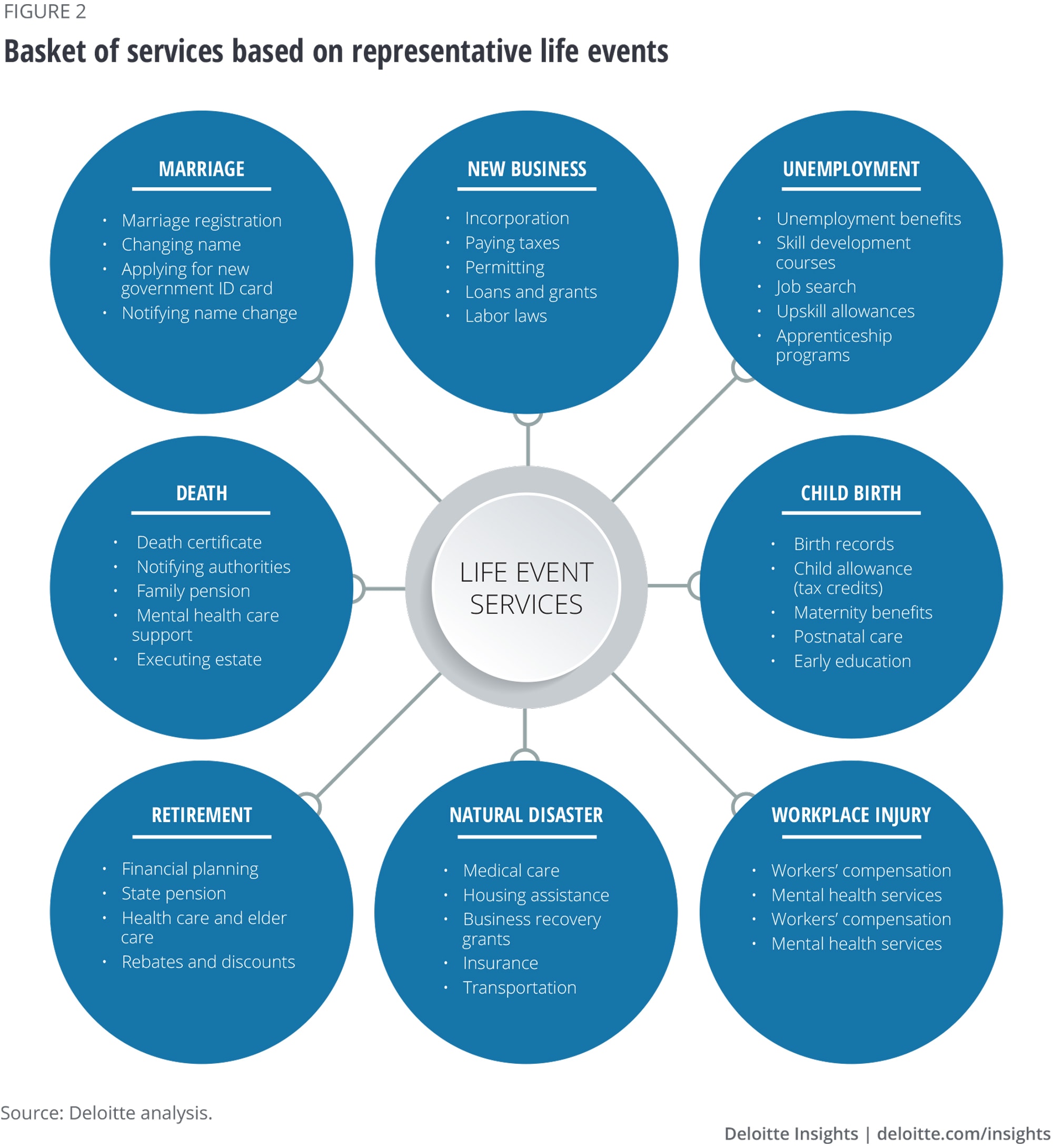

High impact life events
Governments should start with life events that are frequent, complex, and emotionally significant. Birth, death, job loss, and starting a business consistently rank high in impact and service volume.
Focusing on these events delivers visible benefits quickly and builds momentum for broader reform. It also creates reusable patterns for other life events.
CX and service transformation programs
Life event design should be embedded within CX and service transformation initiatives. Platforms such as Customer Science Insights support this by combining journey data, operational metrics, and citizen feedback into a single evidence base.
This enables agencies to prioritise reforms based on impact rather than anecdote, strengthening business cases and governance decisions.
What risks do agencies face with life event service design?
The primary risk is governance failure. Life event services cut across organisational boundaries, which can dilute accountability if roles are unclear. Strong sponsorship and outcome ownership are essential.
There is also a data risk. Sharing data without robust controls undermines trust. Privacy by design, consent management, and transparent communication are non negotiable⁷.
Finally, there is a delivery risk. Attempting to redesign too many life events at once can overwhelm capability. Sequencing and capability building are critical to success.
How should success be measured?
Measurement must reflect citizen outcomes. This includes effort, time to resolution, and successful completion of the life event. Operational measures such as cost to serve and repeat contact remain important but secondary.
Combining quantitative metrics with qualitative insight provides the full picture. Knowledge Quest supports consistent guidance across channels, improving resolution quality and reducing variation.
CommScore AI adds further value by analysing unstructured interaction data, revealing emerging issues and unmet needs across life event journeys.
What are the next steps for agencies?
Agencies should begin with a life event readiness assessment. This evaluates governance, data capability, service maturity, and measurement. The result is a prioritised roadmap aligned to policy and CX objectives.
CX Consulting and Professional Services can support agencies in designing operating models, facilitating cross agency collaboration, and embedding life event design into delivery practice. The objective is sustainable change, not one off redesigns.
Evidentiary Layer
International evidence supports life event based government design. Studies by the OECD link life event services with improved trust and reduced administrative burden⁸. Australian audit reviews similarly highlight the importance of outcome based accountability and shared data in complex service delivery⁹.
FAQ
What is life event service design?
It is a government service design approach that organises services around major life moments rather than agency structures.
How does this improve citizen centric government services?
It reduces duplication, lowers effort, and aligns services to real needs across the full journey.
Does life event design require new technology?
Technology enables it, but governance, data quality, and service design discipline matter more.
Which life events should be prioritised first?
High volume and high impact events such as birth, death, job loss, and business start up.
What tools support life event service delivery?
Customer Science Insights, Knowledge Quest, and CommScore AI support measurement, knowledge consistency, and insight generation.
How can agencies manage cross agency complexity?
Clear outcome ownership, shared metrics, and CX Communications services help coordinate delivery.
Sources
-
OECD, Public Service Design for Life Events, 2020. https://doi.org/10.1787/9f6c1e9a-en
-
Australian Bureau of Statistics, Digital Service Use in Australia, 2022.
-
OECD, Government at a Glance, 2021. https://doi.org/10.1787/1c258f55-en
-
ISO 9241-210, Human Centred Design for Interactive Systems, 2019.
-
Australian Government, Data and Digital Government Strategy, 2023.
-
Australian National Audit Office, Cross Agency Program Governance, 2020.
-
Office of the Australian Information Commissioner, Privacy by Design, 2021.
-
OECD, Trust in Government, 2022. https://doi.org/10.1787/b4076ef1-en
-
Australian National Audit Office, Service Delivery Performance, 2019.