

























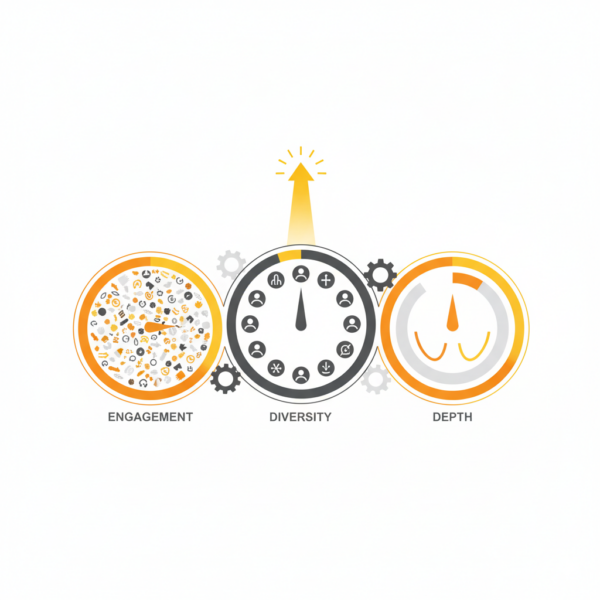
Participation Metrics: Engagement, Diversity, Depth

What do “participation metrics” actually measure? Leaders measure participation to see who shows up, how they contribute, and what value co-creation generates. Participation metrics track engagement, diversity, and depth to give an evidence base for service innovation. Engagement counts the volume and frequency of interactions across channels and moments in a journey. Diversity records the…


Case Library: Co-Creation Wins and Misses

What is co-creation, really? Executives define co-creation as a structured approach to designing products and services with customers, partners, and employees to generate mutual value. Co-creation differs from feedback collection because participants influence problem framing, solution generation, and testing. Research summarises co-creation as a family of methods that import outside knowledge into innovation programs and…

Signal-to-Noise: Validating Co-Creation Inputs

Why does validation make co-creation strategic rather than cosmetic? Executives want co-creation to surface opportunity, not opinion. Co-creation brings customers, frontline staff, and partners into the design of services to accelerate relevance and reduce waste. Validation converts raw input into evidence by separating signal from noise and by quantifying reliability. The discipline matters because human…

Beta Program Management Kit

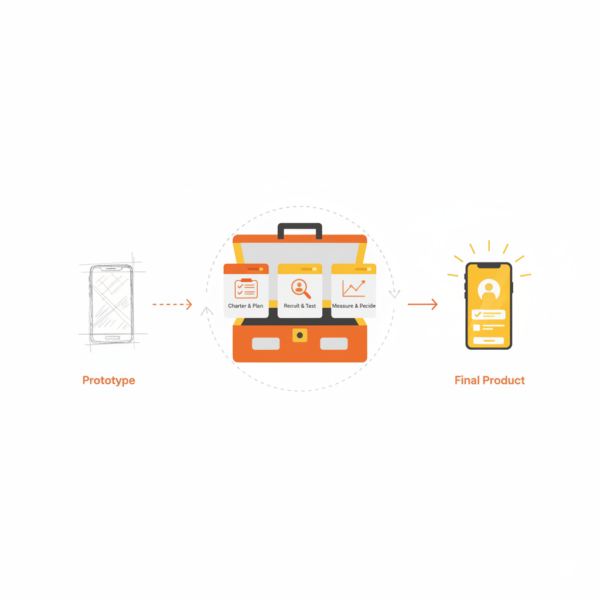
Why does every transformation need a disciplined beta? Leaders ship change, not slides. A disciplined beta program turns strategy into learning and risk into signal. A beta program is a structured market trial that recruits real users, exposes them to a near-final product or service, and captures evidence to decide whether to scale, pivot, or…

Prototype-to-Pilot Handoff Checklist

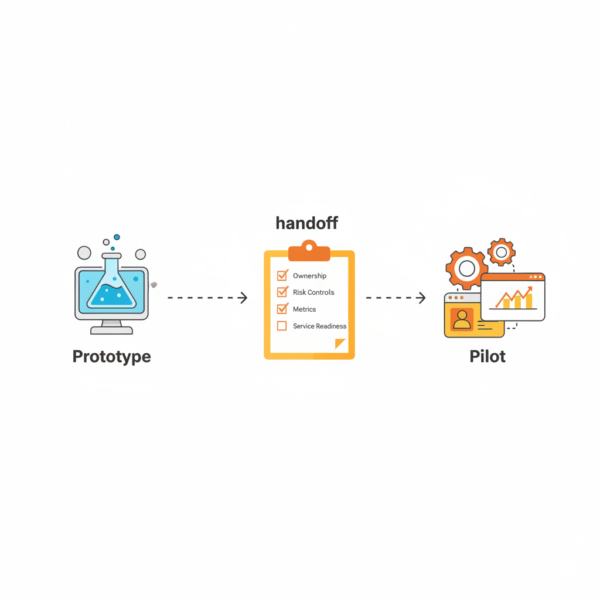
Why do prototypes stall when they meet real operations? Executives approve bold proofs of concept, yet too many stall when they enter pilots that must run in the real world. Leaders risk sunk cost, damaged credibility, and confused teams when the handoff from prototype to pilot lacks clear ownership, risk controls, and measurable outcomes. Independent…

Listening Tours vs Usability Labs

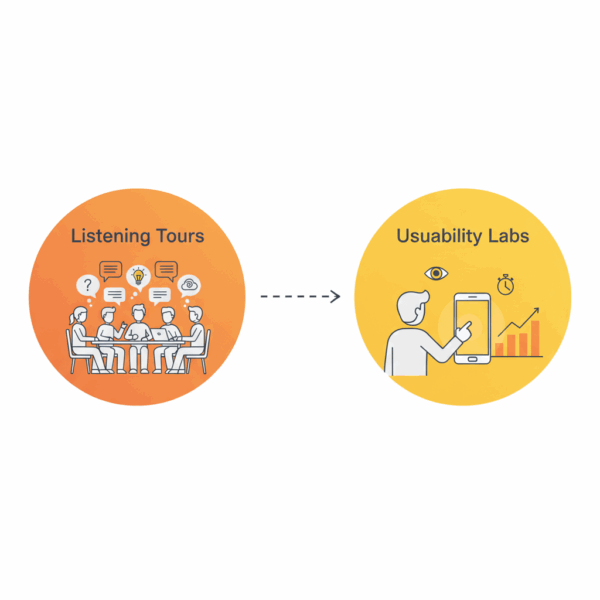
Why do leaders confuse listening tours with usability labs? Executives chase insight but often mix up two very different instruments. A listening tour gathers narrative intelligence from stakeholders across the organisation to surface themes about culture, priorities, and operational friction. A usability lab examines how real users complete defined tasks with a product or service…

Focus Group vs Field Co-Design: When to Use Which

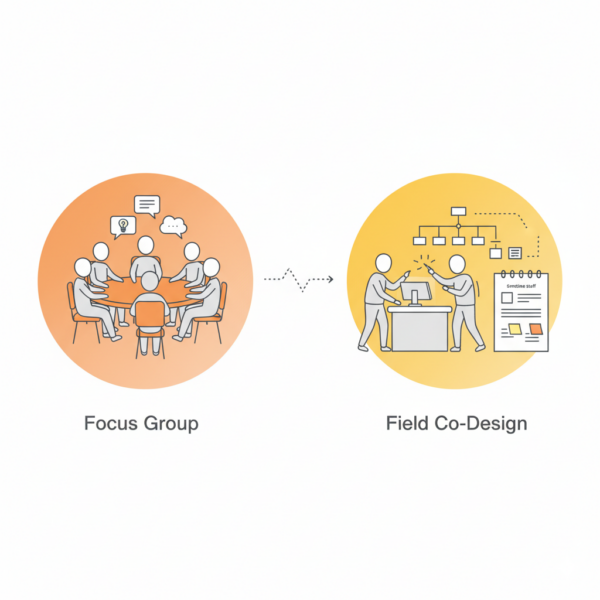
What do we mean by “focus group” and “field co-design”? Executives need clean definitions before they choose a method. A focus group is a moderated discussion with recruited participants who share reactions to prompts, concepts, or experiences in a group setting. The method seeks interaction effects, since participants build on each other’s comments and surface…

Service Prototyping Methods: Low to High Fidelity

Why does prototyping matter in service transformation? Service leaders reduce risk when they test ideas before scaling. Prototyping creates quick, learnable versions of a proposed service and exposes failure points early. Teams use prototypes to validate customer value, feasibility, and operational viability without committing full budgets or long timelines. In service contexts, prototypes span scripts,…

Recruitment, Incentives, and Ethics in Co-Creation

What is co-creation and why does it change CX delivery? Co-creation brings customers, employees, and partners into the design and delivery of services. The practice treats users as informed contributors who shape propositions, workflows, and policies. Leaders use co-creation to reveal unmet needs, reduce waste, and accelerate adoption. Co-creation differs from traditional research because participants…