























BI Governance: Balancing Self-Service with Data Integrity

Summary BI governance enables self-service analytics without sacrificing data integrity. It defines how data is created, accessed, and used so insight scales safely. Without governance, self-service creates inconsistency and risk. With it, organisations gain speed, trust, and control. The balance is not restrictive versus open. It is intentional versus accidental. What is BI governance? BI…

The KPIs that Matter: Defining Your Business Intelligence Metric Tree

Summary A BI metric tree aligns strategy to action by linking enterprise outcomes to operational drivers. It ensures KPIs explain performance, not just report it. By structuring metrics hierarchically, leaders reduce noise, improve accountability, and enable faster, more confident decisions across the organisation. What is a business intelligence metric tree? A BI metric tree is…

Patient-Centric Digital Health: Mapping the Care Journey

Patient-centric digital health works when it maps the real care journey, removes avoidable friction, and connects data and channels safely. The practical approach is to define moments that matter, align digital and clinical workflows, design for inclusion, and measure outcomes with PROMs, PREMs, safety, and cost-to-serve. Interoperability, privacy, and governance make the gains durable. What…

The Australian Aged Care Data Landscape: Gaps and Opportunities

Aged care outcomes increasingly depend on data that is complete, timely, and shareable across providers and settings. Australia has strengthened direction through the Aged Care Data and Digital Strategy 2024–2029¹, but practical gaps remain in interoperability, data quality, privacy-safe sharing, and frontline usability. The opportunity is to standardise core clinical and operational data, reduce duplication,…

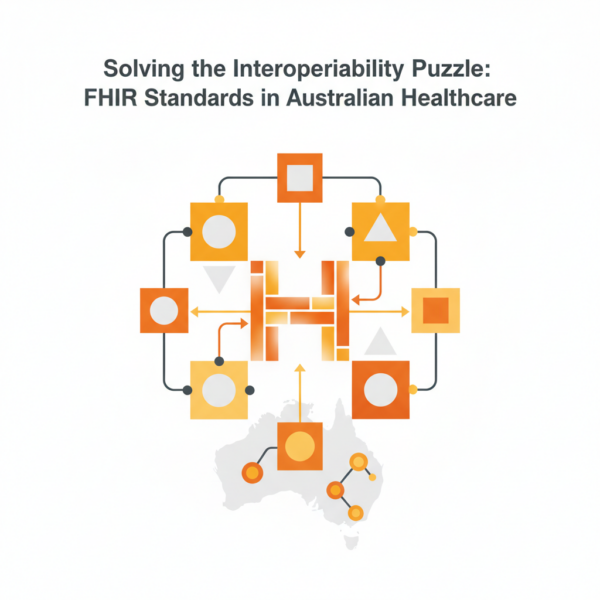
Solving the Interoperability Puzzle: FHIR Standards in Australian Healthcare

A practical interoperability strategy in Australian healthcare uses HL7 FHIR APIs plus national implementation guides, identity, and terminology. The goal is consistent data exchange between clinical, consumer, and administrative systems without losing meaning or privacy. Success depends on governance, conformance testing, and security controls, not just “turning on” an API. Done well, FHIR reduces integration…

Power BI vs. Tableau: Choosing the Right Tool for Australian Enterprises

Summary Power BI and Tableau are both mature BI platforms, but they serve different enterprise needs. The right choice depends on data strategy, governance, cost structure, and operating model. For Australian enterprises, regulatory alignment, Microsoft ecosystem integration, and scalability often outweigh visual flexibility alone. Tool selection should follow strategy, not preference. What problem are Australian…

Garbage In, Garbage Out: The Data Engineering Behind Successful BI

Summary Business intelligence fails when poor data enters the system. Garbage in, garbage out remains the defining risk in BI. Data engineering creates the structures, controls, and quality foundations that make analytics reliable. Without it, dashboards mislead, decisions degrade, and trust collapses. Strong data engineering turns BI from opinion support into decision infrastructure. What does…

Data Storytelling: Communicating Insights to Stakeholders Effectively

Summary Data storytelling converts analysis into action. Insights only create value when stakeholders understand meaning, relevance, and implication. Effective data storytelling combines accurate data, clear visuals, and structured narrative to guide decisions. Without it, even high-quality analytics fail to influence outcomes, funding, or strategy. What is data storytelling in business intelligence? Data storytelling is the…