






























Summary
Power BI and Tableau are both mature BI platforms, but they serve different enterprise needs. The right choice depends on data strategy, governance, cost structure, and operating model. For Australian enterprises, regulatory alignment, Microsoft ecosystem integration, and scalability often outweigh visual flexibility alone. Tool selection should follow strategy, not preference.
What problem are Australian enterprises trying to solve with BI tools?
Australian enterprises use BI to support regulatory reporting, executive decision-making, and operational performance across complex environments. Data volumes are growing. Compliance expectations are increasing. Stakeholders expect fast, consistent insight.
BI tools are often selected based on visual appeal or analyst preference. This creates misalignment with enterprise needs. Research shows that BI value is driven more by governance, integration, and adoption than by visual sophistication¹. Tool choice must align to how decisions are made and controlled.

What is Power BI and how is it positioned?
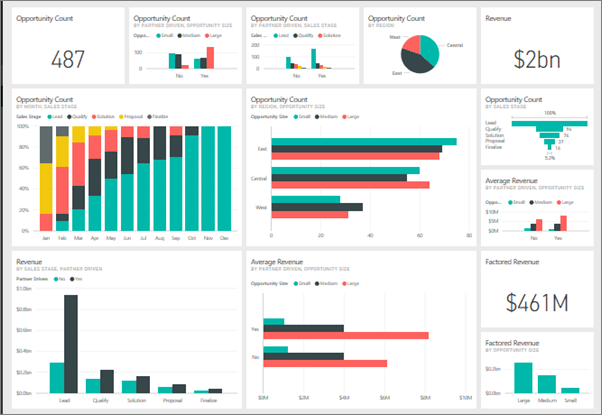
Power BI is a cloud-first BI platform tightly integrated with the Microsoft ecosystem. It is designed for broad enterprise adoption, governed self-service, and cost efficiency.
Power BI integrates natively with Microsoft 365, Azure, and Dynamics. For organisations standardised on Microsoft, this reduces integration effort and licensing complexity. Its semantic models, security controls, and deployment options support large-scale rollout.
What is Tableau and how does it differ?
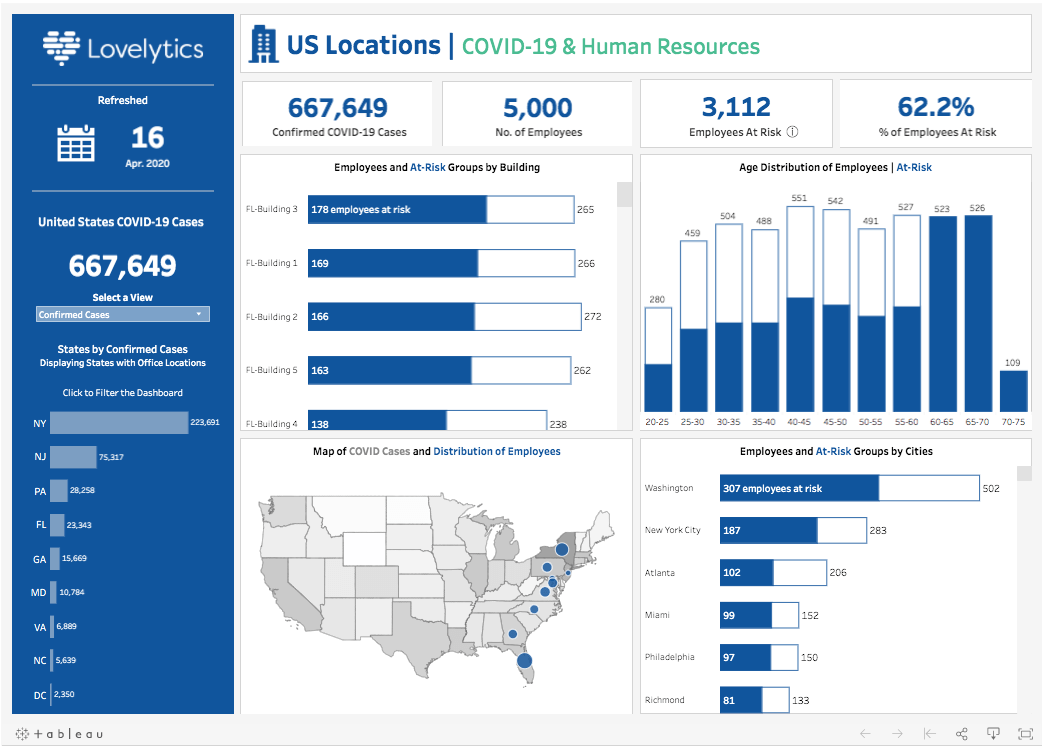
Tableau is recognised for advanced visual analytics and flexibility. It is popular with analysts who require exploratory analysis and custom visual expression.
Since its acquisition by Salesforce, Tableau has strengthened CRM and cloud integration. However, enterprise governance and cost control often require additional layers and operating discipline. Tableau excels in insight discovery. Scaling it consistently requires strong data foundations.
How do Power BI and Tableau compare on governance?
Governance is a decisive factor for enterprises. Power BI provides centralised dataset management, role-based access, and integration with Microsoft identity and security services. This supports controlled self-service and regulatory alignment.
Tableau governance is more decentralised by default. It offers flexibility but relies heavily on organisational discipline. In regulated Australian environments, this can increase operational risk if not carefully managed. Governance maturity often matters more than feature depth².
What about cost and licensing in Australia?
Power BI typically offers lower entry and scaling costs, particularly for organisations already licensed for Microsoft 365. Licensing is predictable and aligns with enterprise procurement models.
Tableau licensing is often higher per user and can escalate as adoption grows. This is not inherently negative, but it requires clear value justification. Total cost of ownership includes platform, administration, and support, not just licences.
Which tool better supports enterprise-scale adoption?
Power BI is optimised for mass consumption. Executives, managers, and frontline users can access consistent dashboards with minimal training. This supports a data culture built on shared metrics.
Tableau is often strongest in specialist teams. Without careful design, enterprises risk creating parallel analytics environments. This fragmentation undermines trust and increases reconciliation effort³.
How should Australian regulatory and data residency needs influence choice?
Australian enterprises must consider data residency, privacy, and security obligations. Both platforms can meet these requirements when configured correctly.
Power BI benefits from Azure’s Australian data centres and alignment with ISO 27001 and IRAP controls. Tableau can also comply but may require more bespoke architecture. Simpler compliance reduces risk and operational overhead⁴.
Where does business intelligence strategy matter more than tools?
Tools do not create insight. Strategy does. Organisations with clear decision frameworks, governed data models, and strong data culture succeed on either platform.
Customer Science Insights supports both Power BI and Tableau by providing governed analytics models and metric consistency. This allows enterprises to focus on outcomes rather than tool limitations.
What are the risks of choosing the wrong BI tool?
The biggest risk is not technical failure but organisational friction. Poor adoption, inconsistent metrics, and escalating cost erode confidence in BI.
Once embedded, BI platforms are difficult to replace. A misaligned choice can constrain analytics maturity for years. Independent assessment reduces this risk.
How should enterprises make the final decision?
Enterprises should evaluate:
-
Existing technology stack
-
Governance and security maturity
-
User diversity and scale
-
Cost predictability
-
Regulatory obligations
Customer Science CX Consulting and Professional Services and Business Intelligence services support independent BI tool assessment and operating model design, ensuring decisions align with enterprise strategy rather than vendor influence.
Evidentiary Layer
Customer Science product and service references in this article are based on official Customer Science documentation and solution descriptions.
FAQ
Is Power BI better than Tableau?
Neither is universally better. Power BI suits enterprise-scale, governed environments. Tableau suits advanced exploratory analysis.
Which tool is more common in Australia?
Power BI adoption is higher in large Australian enterprises due to Microsoft ecosystem alignment.
Can organisations use both tools?
Yes, but this increases complexity. Clear role separation is required to avoid duplication.
Which Customer Science products support BI tools?
Customer Science Insights supports governed analytics across Power BI and Tableau environments.
How long does BI tool selection take?
With a structured assessment, decisions can be made in weeks rather than months.
Should cost be the main decision factor?
No. Governance, adoption, and strategic fit usually matter more than licence cost alone.
Sources
-
McKinsey & Company. Analytics at scale. 2020.
-
Gartner. BI governance and operating models. 2021.
-
Harvard Business Review. Why analytics initiatives fail. 2019.
-
Australian Government. Protective Security Policy Framework.