


























Cyber Security Basics for Business Leaders: Beyond the Firewall

Cybersecurity is a strategic imperative for business leaders, extending beyond firewalls and antivirus solutions. Executives must implement comprehensive data protection strategies, ensure regulatory compliance, and cultivate a security-aware culture to mitigate operational, reputational, and financial risks. A structured cyber security checklist for executives provides actionable guidance for governance, risk management, and incident readiness. What is…

Creating a Technology Roadmap That Aligns with Business Growth

Summary A technology roadmap aligns digital investment with business growth by sequencing systems, automation, and data capabilities against clear commercial outcomes. For SMEs, effective technology roadmap planning translates strategy into execution, reduces waste, and ensures IT decisions scale with revenue, customers, and operational complexity over time. What is a technology roadmap in a business growth…

Why Mid-Sized Businesses Are Switching to Virtual CIOs (vCIO)

Mid-sized Australian businesses are adopting virtual CIO services to gain senior technology leadership without the cost and rigidity of a full-time executive. A vCIO aligns technology, automation, and cybersecurity with business outcomes, clarifies the difference between vCIO vs MSP models, and enables scalable decision-making that supports growth, resilience, and regulatory compliance. What is a Virtual…

Automation in Government: Streamlining Citizen Services Securely

Automation in government can cut wait times, reduce errors, and free staff for complex work. The safe path combines process automation, human review for high-impact decisions, and strong controls for privacy and cybersecurity. Success depends on selecting the right service journeys, hardening identity and access, monitoring outcomes, and proving compliance through measurable service, risk, and…

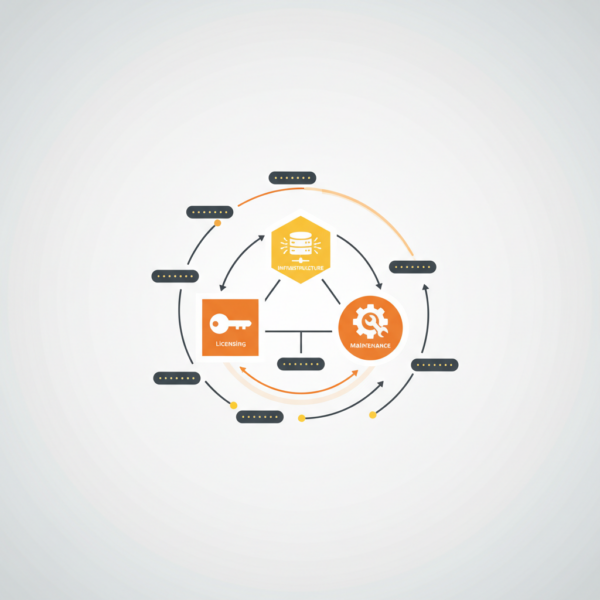
The True Cost of Automation: Licensing, Infrastructure, and Maintenance

Automation TCO is usually higher than the initial business case because recurring licence tiers, cloud and security run costs, and ongoing change-driven maintenance accumulate faster than expected. A defensible model treats automation as a product with a lifecycle: build, run, change, and govern. This article shows how to quantify licensing, infrastructure, and maintenance so leaders…

The Balance of Automation and Empathy: When to Hand Off to a Human

Automation should remove effort, not remove care. The best balance comes from designing clear human handoff triggers, preserving customer context, and training agents to complete service recovery quickly. Done well, automation handles routine work while humans handle emotion, exceptions, and risk. This approach improves resolution, protects trust, and reduces repeat contact. Definition What is an…

Migrating from Legacy RPA to Next-Gen Intelligent Automation Platforms

Migrating from legacy RPA to next-gen intelligent automation succeeds when you treat it as a product modernisation program, not a tool swap. Inventory and stabilise what you have, then replatform in waves using process discovery, API-first redesign, security and privacy controls, and governed delivery. The outcome is fewer brittle automations, faster change cycles, and clearer…

Governance for Generative AI: Mitigating Risk in Automated Service

Generative AI in automated service needs governance that treats model output as a controlled operational risk, not a feature. A practical generative AI governance framework aligns accountability, privacy, security, and quality controls to recognised standards, then proves performance with measurable monitoring. For Australian organisations, this means mapping AI risks to Privacy Act obligations, operational resilience…

Top 5 High-ROI Automation Use Cases for Australian Service Organsations

Automation delivers the highest ROI when it removes avoidable contact, shortens time to resolve, and reduces rework without reducing service quality. For Australian service organisations, the top opportunities are conversational self-service, agent assist, automated quality and compliance, proactive notifications, and back-office automation. These use cases align to local channel mix and cost drivers and can…