


























Ethical User Research: Managing Consent and Privacy in 2026

Ethical user research in Australia in 2026 relies on evidence-based consent and privacy-by-design controls across recruitment, sessions, analysis, storage, and reuse. Organisations lower risk by minimising collection, separating identity from insight, securing tools and vendors, and proving compliance through measurable governance. This protects participants, reduces breach impact, and increases confidence in Customer Insight & Design…
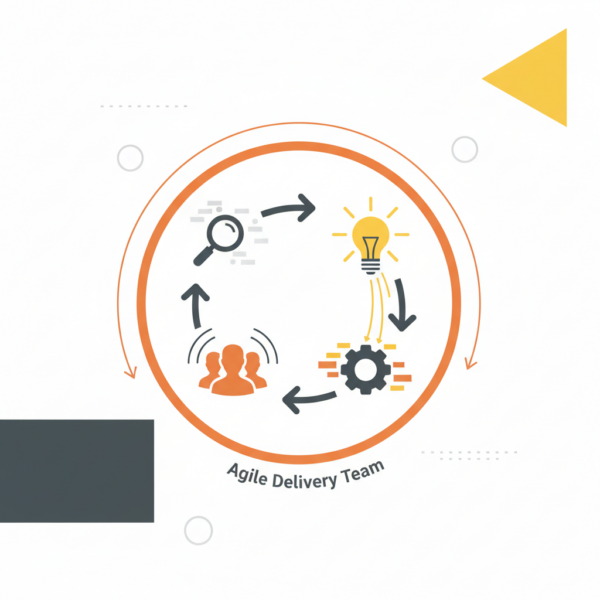

The Feedback Loop: Integrating Research into Agile Delivery Teams

Agile delivery teams integrate research reliably when they run continuous discovery tracks alongside delivery, convert Voice of Customer signals into testable decisions, and close the loop with measurable outcomes. The practical shift is to replace episodic “big research” with small, frequent touchpoints, shared synthesis, and clear decision rules that protect speed while improving customer relevance.…

Service Blueprints: Mapping the Employee Experience Behind the Customer Journey

A service blueprint connects the customer journey to the employee and operational work that makes it happen. It exposes hidden handoffs, failure points, and policy constraints that customer journey maps often miss. For contact centres and service teams, blueprinting enables EX and CX alignment by linking frontline behaviours, backstage processes, and supporting systems to customer…

Rapid Prototyping: Testing Digital Services Before You Build

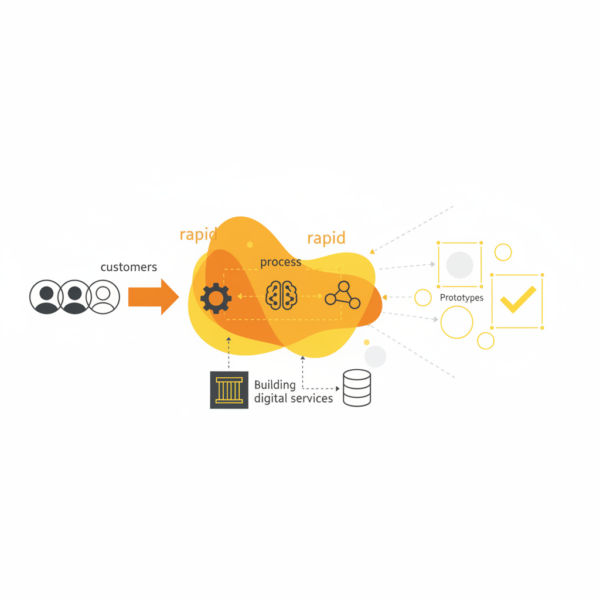
Rapid prototyping helps organisations test a digital service with real users before committing to build. It reduces rework, clarifies requirements, and improves adoption by making customer needs visible early. When paired with structured user testing, prototype evidence supports better investment decisions, faster delivery, and measurable CX outcomes, including lower cost-to-serve and fewer avoidable contacts. What…

Qualitative vs. Quantitative Research: Finding the “Why” Behind the Data

Qualitative research explains the reasons behind customer behaviour, while quantitative research measures how often it happens and how strongly it affects outcomes. Strong CX decisions combine both in mixed methods user research, using qualitative insight to form hypotheses and quantitative evidence to validate priority, scale, and impact. This customer insights methodology reduces risk, speeds design,…

Designing for All: Accessibility and Inclusion in Public Services

Accessible, inclusive public services require teams to design for disability, ageing, language, literacy, and situational limits from day one. In Australia, that means aligning with the Digital Service Standard and meeting recognised accessibility expectations such as WCAG. The outcome is practical: fewer failed transactions, lower support demand, stronger compliance posture, and better trust in government…

Data-Driven Personas: Moving Beyond “Fictional” Customer Profiles

Data-driven customer personas replace assumptions with measurable behavioural patterns, validated needs, and transparent evidence. They reduce bias, improve alignment across CX, product, and operations, and remain current as customer behaviour changes. The shift requires clear segmentation logic, mixed-method research, privacy-safe data practices, and ongoing measurement so personas become decision tools, not storytelling artefacts. What is…

From Shelfware to Strategy: Making Customer Journey Maps Actionable

Actionable customer journey mapping turns a static artefact into an operating rhythm for prioritising, fixing, and measuring customer and cost outcomes. The shift requires quantified moments that matter, clear owners, a funded backlog, and instrumentation that links journey friction to operational metrics. The result is faster decision-making, fewer avoidable contacts, and a repeatable pathway from…

Service Design vs. UX Design: What Australian Government Agencies Need to Know

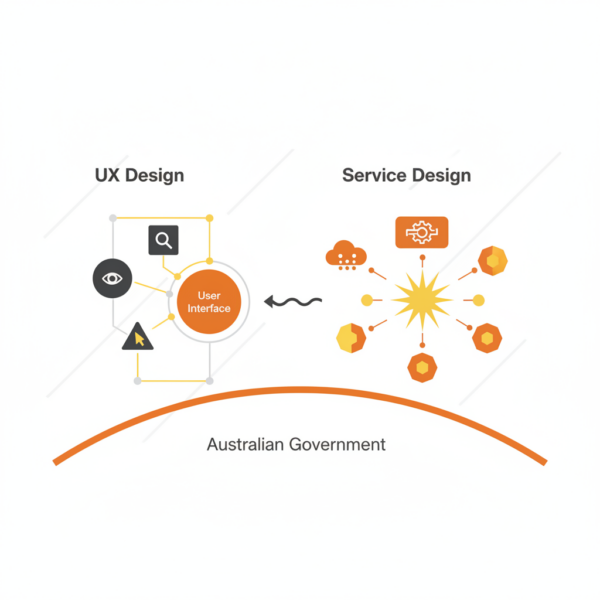
Service design sets up the whole service so people can complete an outcome across channels, teams, policies, data, and operations. UX design shapes the usability of a specific interface or touchpoint. Australian Government agencies need both to meet digital standards, reduce rework, improve accessibility, manage privacy, and deliver measurable outcomes that work in real operating…

Calculating the ROI of User Research: Preventing Expensive Digital Failures

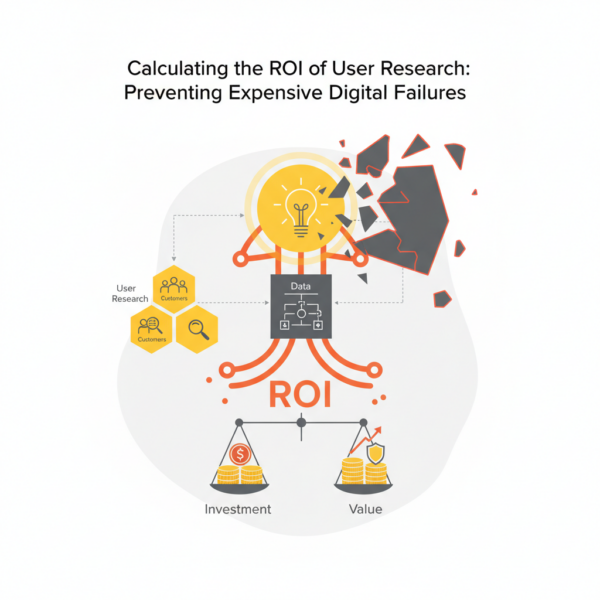
User research prevents expensive digital failures by reducing rework, lowering avoidable contact centre demand, and improving task completion before launch. The ROI of user research becomes measurable when you treat it as risk control: compare the cost of research to the avoided cost of remediation, lost conversion, and non-compliance. A practical ROI model uses baseline…