































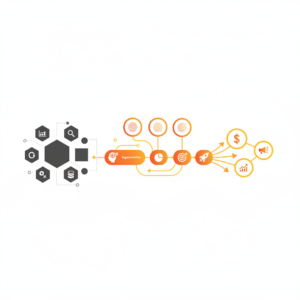
A persona system turns customer insight into operational decisions. The difference between shelfware and impact is governance: clear decision use-cases, evidence-backed segments, measurable hypotheses, and regular refresh. The most effective customer persona development links personas to journeys, channel design, and contact centre performance, then tracks outcomes such as reduced customer effort, fewer repeat contacts, and higher satisfaction.
Definition
What is a customer persona in this article?
A customer persona is a research-based archetype that represents a real cluster of customers with shared needs, behaviours, and constraints, written in a way that helps teams make consistent decisions. Human-centred design guidance emphasises understanding users, their context, and their needs as a foundation for designing effective services¹.
What is the difference between personas and buyer personas?
This article uses “customer personas” to mean service and experience personas used to design and operate journeys. Buyer personas, by contrast, are typically used for acquisition and messaging. The difference matters because service transformation decisions depend on context of use, channel constraints, and operational feasibility¹.
Context
Why do most persona programs fail to drive action?
Most “creating personas” efforts fail because they do not specify what decisions the persona will change. If a persona cannot be tied to a priority journey, a channel choice, a policy constraint, or a contact centre workflow, it becomes decorative rather than operational. Human-centred design approaches require an explicit link between user understanding and design activities across the lifecycle¹.
What conditions make personas valuable for Customer Experience and Service Transformation?
Personas become valuable when they reduce debate, speed decisions, and prevent rework. In contact centres, service standards emphasise consistent service delivery and meeting customer needs over time². That makes personas a practical alignment tool when they are embedded into scripts, knowledge articles, QA rubrics, and digital containment design, not just slide decks.
Mechanism
How does customer persona development turn insight into decisions?
An action-driving persona system uses a simple chain: evidence → segmentation logic → persona narrative → decision rules → measures. Government user research guidance reinforces that understanding users and their needs increases the likelihood of building services that work well for them³.
Start with three “decision use-cases” that matter to executives:
Which journeys to simplify first.
Which customer needs to resolve in the contact centre vs digital.
Which experience promises to protect in service policies.
Then design research to answer those decisions. Use interviews and call listening to capture needs and barriers, and quantify prevalence using interaction data, complaint themes, and behavioural signals. Research shows personas can be derived from quantitative and mixed methods when the data structure supports it⁸.
What must a persona contain to be operational?
Include only fields that enable action:
Primary need and trigger context¹
Success definition and constraints (time, confidence, accessibility)¹
Channel preferences tied to reasons, not demographics³
Failure modes that drive repeat contact and complaints²˒¹²
“Do / Don’t” decision rules for design and service teams
Avoid invented stats, decorative backstories, and stereotypes. Where data-driven personas are used, transparency about how attributes were produced improves trust and adoption⁷.
Comparison
When should you use personas vs segmentation vs Jobs-to-Be-Done?
Segmentation is primarily about grouping customers for targeting, economics, or risk. Personas are about making trade-offs in service and product decisions by representing context and constraints¹. Jobs-to-Be-Done is useful when you need a consistent language for the progress a customer seeks, independent of who they are. In practice, executives get the best results by using segmentation for prioritisation, personas for design decisions, and Jobs-to-Be-Done for journey intent and outcome framing³.
Should you build “needs-state” personas for omnichannel service?
Yes, when your operating model needs to respond to what the customer is trying to do right now. Needs-state personas are typically fewer, more dynamic, and easier to connect to channel routing, containment design, and next-best-action rules. The key is to keep the evidence trail and refresh cadence explicit so the system remains credible⁷.
Applications
Where do personas create the fastest value in contact centres?
Personas drive action fastest where decisions repeat daily:
Knowledge article structure and findability (mapped to persona intent)
Agent prompts and empathy statements that fit constraints and emotions
Digital self-service flows that remove avoidable effort
QA scorecards aligned to what “good” looks like for each persona
To operationalise this, link persona intents to the exact knowledge objects agents and bots use. An effective way to keep persona guidance “in the flow of work” is AI-powered knowledge management that turns live interactions into accurate answers, such as Customer Science’s Knowledge Quest: AI-powered knowledge management that keeps personas actionable in the contact centre (https://customerscience.com.au/csg-product/knowledge-quest/).
How do personas support Customer Experience transformation across channels?
Use personas to set consistent experience promises across web, app, branch, and phone. The Australian Digital Service Standard’s focus on understanding users and validating designs supports this approach by pushing teams to test assumptions with real users³. In practice, personas become the shared language that aligns policy, process, content, and technology changes into a single service transformation roadmap².
Risks
What are the main risks when creating personas at enterprise scale?
The highest-impact risks are governance and ethics, not creativity:
Privacy risk: collecting or inferring personal information beyond what is reasonably necessary⁴
Bias risk: under-representing priority or vulnerable groups, leading to systematic exclusion³
Staleness risk: behaviour changes, channel shifts, and policy changes make personas inaccurate over time¹
Overfitting risk: too many personas create fragmentation and reduce adoption
Australian Privacy Principles guidance makes it clear that collection should be limited to what is reasonably necessary and that individuals should be notified appropriately when personal information is collected⁴. Translate that into persona practice by minimising identifiable data, documenting lawful basis, and separating research repositories from operational summaries.
How do you prevent personas becoming stereotypes?
Use evidence rules:
Every attribute must trace to a source: research finding, interaction data, or complaint theme¹²
Separate “observed” from “assumed” attributes in drafts⁷
Validate with frontline staff and customers, then update based on exceptions and edge cases³
Systematic research on persona use cases highlights that personas are applied in many ways, so discipline in how they are created and used is what protects quality⁶.
Measurement
How do you measure whether personas are driving action?
Measure adoption, decision quality, and outcomes as three layers.
Adoption measures:
Percentage of priority initiatives referencing personas in decision records
Contact centre script and knowledge coverage by persona intent²
Training completion and calibration variance by team
Decision quality measures:
Reduction in design rework or policy reversals after launch¹
Faster resolution of cross-functional disputes (fewer escalations, fewer cycles)
Outcome measures:
Customer satisfaction monitoring and measurement guidance supports tracking satisfaction systematically⁵
Complaint reductions aligned to persona failure modes¹²
Interaction efficiency (repeat contact, transfer rate) aligned to contact centre service requirements²
Evidence shows customer feedback metrics can be linked to firm performance, which supports treating experience measures as management indicators rather than vanity reporting⁹.
If you need an operating partner to implement measurement and embed persona systems into delivery, use a CX research and design delivery team to operationalise persona systems (https://customerscience.com.au/solution/cx-research-design/).
Next Steps
What is a practical 90-day plan to build a persona system that sticks?
Weeks 1–2: Decision framing. Choose three priority journeys, define the decisions personas must change, and set success measures tied to effort, satisfaction, and complaint reduction²˒⁵˒¹².
Weeks 3–6: Research and synthesis. Combine qualitative interviews, call listening, and service data. Draft 3–6 personas with explicit evidence notes⁸.
Weeks 7–10: Operational integration. Map personas to knowledge, scripts, digital flows, and QA rubrics. Train teams with scenario-based practice aligned to real service constraints².
Weeks 11–12: Validate and govern. Test persona-driven changes with users³, document data handling practices⁴, and set a quarterly refresh cadence.
How do you keep personas current during continuous service transformation?
Treat personas like living assets:
Quarterly refresh using contact drivers, complaint themes, and digital drop-off patterns²˒¹²
Annual deep research to revisit needs and contexts³
Transparency notes for any data-driven attributes to maintain trust⁷
Evidentiary Layer
What evidence supports the use of personas in complex services?
Peer-reviewed work shows personas can be developed using structured methods and used to represent user groups in domain settings such as healthcare and digital participation⁸˒¹¹. Research also suggests that increasing transparency in data-driven personas can improve perceived credibility and usefulness⁷. Standards-based guidance supports the broader operating context: human-centred design across the lifecycle¹ and service requirements for contact centres², complemented by structured approaches to monitoring customer satisfaction⁵ and handling complaints¹².
FAQ
What is the best number of personas for an enterprise?
Most organisations get the best adoption with 3–6 primary personas per domain, plus optional needs-states for high-volume journeys. More than this typically increases confusion and reduces operational use¹˒⁶.
How is customer persona development different from segmentation?
Segmentation groups customers for targeting or economics. Customer personas translate evidence about needs and constraints into decision-ready guidance for service and experience design¹˒³.
What data should not be included in a persona?
Avoid identifiable or sensitive personal information unless it is demonstrably necessary and appropriately governed. Australian Privacy Principles guidance supports minimising collection and ensuring appropriate notification⁴.
How do personas improve contact centre performance?
They help standardise service decisions, reduce avoidable effort, and align knowledge and scripts to customer intent, consistent with contact centre service requirements².
How do we know if teams are actually using the personas?
Track whether initiatives reference personas in decision records, whether knowledge and scripts map to persona intents, and whether key outcomes move (complaints, satisfaction, repeat contact)²˒⁵˒¹².
What tooling helps maintain persona impact over time?
Use real-time service data dashboards that monitor persona-led outcomes (https://customerscience.com.au/csg-product/customer-science-insights/), then feed the results into a quarterly persona refresh cycle²˒⁵.
Sources
ISO. ISO 9241-210:2019 Ergonomics of human-system interaction — Human-centred design for interactive systems. https://www.iso.org/standard/77520.html
ISO. ISO 18295-1:2017 Customer contact centres — Part 1: Requirements for customer contact centres. https://www.iso.org/standard/64739.html
Australian Government Digital Transformation Agency. Digital Service Standard, Criterion 2: Know your user. https://www.digital.gov.au/policy/digital-experience/digital-service-standard/criterion-2
Office of the Australian Information Commissioner (OAIC). APP Guidelines, Chapter 3: APP 3 Collection of solicited personal information. https://www.oaic.gov.au/privacy/australian-privacy-principles/australian-privacy-principles-guidelines/chapter-3-app-3-collection-of-solicited-personal-information
ISO. ISO 10004:2018 Quality management — Customer satisfaction — Guidelines for monitoring and measuring. https://www.iso.org/standard/71582.html
ACM Digital Library. Use Cases for Design Personas: A Systematic Review and New Frontiers. DOI: 10.1145/3491102.3517589. https://dl.acm.org/doi/10.1145/3491102.3517589
Salminen, J. et al. Persona Transparency: Analyzing the Impact of Explanations on User Trust. International Journal of Human–Computer Interaction (2020). DOI: 10.1080/10447318.2019.1688946. https://www.tandfonline.com/doi/full/10.1080/10447318.2019.1688946
Holden, R.J. et al. Know thy eHealth user: Development of biopsychosocial personas from quantitative data. Journal of Medical Internet Research (2017). https://pmc.ncbi.nlm.nih.gov/articles/PMC5793874/
Agag, G. et al. Understanding the link between customer feedback metrics and firm performance. Journal of Business Research (2023). https://www.sciencedirect.com/science/article/pii/S0969698923000486
Nielsen Norman Group. Personas Make Users Memorable (2025). https://www.nngroup.com/articles/persona/
NSW Government. Digital Service Toolkit: Persona creation. https://www.digital.nsw.gov.au/delivery/digital-service-toolkit/resources/user-research-methods/persona-creation
ISO. ISO 10002:2018 Quality management — Customer satisfaction — Guidelines for complaints handling. https://www.iso.org/standard/71580.html