































What is service recovery with smart automation?
Service leaders define service recovery as the structured response to a customer-impacting failure that restores confidence, resolves the issue, and protects lifetime value. Smart automation applies rules, analytics, and AI to detect failures, triage root causes, orchestrate workflows, and deliver timely, human-calibrated remedies across channels. The goal is simple. The organization fixes the problem fast, prevents repeat incidents, and communicates with empathy while controlling cost to serve. The classic “service recovery paradox” shows that an excellent recovery can leave customers more satisfied than if no error occurred, which makes recovery a strategic capability rather than a cost center.¹
Why does service recovery deserve board-level attention now?
Executives face a convergence of pressure. Customers expect immediate answers, consistent status visibility, and proactive make-goods. Investors expect leaner operations. Digital leaders deploy AI in care and push self-service to the front line. Research shows AI-enabled customer service can lift resolution rates and reduce handling time when embedded into the flow of work, not bolted on after the fact.² New analyst outlooks forecast that agentic AI will autonomously resolve the majority of common service issues by decade’s end, with significant cost impacts for early movers.³ Meanwhile, consumers still pay a premium for reliable, friendly experiences, which means recovery quality directly influences revenue, not just retention.⁴
How do leading firms define the recovery operating model?
Leaders design an explicit operating model for recovery that aligns moments, methods, and measures.
Subject signals trigger action. Telemetry from orders, payments, devices, journeys, and contact reasons feeds an event backbone. The backbone flags anomalies such as missed delivery windows, error codes, or repeat contacts.
Decisioning selects the next best recovery action. A policy engine blends rules, segmentation, and generative AI assistants to recommend fixes, credits, or escalations with thresholds that respect financial guardrails.
Orchestration executes consistently. An automation layer coordinates bots, case updates, workforce assignments, and proactive notifications across channels and partners.
Learning prevents recurrence. A closed-loop mechanism updates knowledge, content, root-cause backlogs, and process controls so the same failure declines over time. Organizations that codify this loop see higher containment, faster resolution, and lower attrition among agents.²
What makes automation “smart” in recovery scenarios?
Smart automation combines three mechanisms.
Detection uses anomaly models to spot failures before customers complain. Common patterns include failed payments, order exceptions, and software crash loops. The system raises an event with a confidence score and a customer impact estimate.
Resolution uses guided flows and AI copilots to resolve end to end. Copilots draft responses, summarize case history, fill forms, and suggest policy-compliant remedies. Field and back-office tasks trigger automatically so the customer receives one coherent fix. Controlled experiments show that generative AI support can increase issues resolved per hour while shortening handling time.⁵
Assurance validates the outcome. The platform confirms that the fix worked, closes related tickets, and schedules a follow-up message with a simple satisfaction poll. The poll result feeds quality models and knowledge updates. This loop enforces consistency and makes recovery a learning system, not a set of one-off gestures.²
Where should executives begin to capture value quickly?
Executives accelerate traction by narrowing scope and sequencing use cases with clear economics. Start where frequency, frustration, and fixability intersect. Typical candidates include delivery delays, billing errors, password lockouts, warranty claims, and appointment no-shows. Design each use case with a crisp owner, a single success metric, and a service playbook that states what to detect, how to decide, and how to resolve. Analyst research indicates that organizations that focus on frequent, generalizable tasks realize measurable cost reductions and containment gains faster than broad, undirected deployments.⁶
How should teams balance automation with the human touch?
Teams should put humans at the apex of empathy and judgment. Automation works best on tasks. Advisors thrive on emotions, tradeoffs, and trust. Build guardrails that route high-stakes or ambiguous cases to skilled people with context-rich summaries. Train agents on recovery conversation structure: acknowledge the failure, explain the fix, state the make-good, and confirm satisfaction. Customers consistently value friendly and convenient experiences, and they reward brands that deliver these traits during stressful moments.⁴ Automation enables this by removing drudgework and freeing humans for reassurance, coaching, and creative problem solving.²
What does a pragmatic architecture look like?
Leaders standardize a recovery architecture that slots into existing CX and contact center stacks without complexity.
Event backbone. Capture journey, order, and system events with consistent schemas.
Decisioning core. Combine a business rules engine with AI models and a policy library that encodes legal and financial limits.
Workflow and RPA fabric. Execute cross-system tasks such as refunds, rebookings, entitlement checks, and entitlement provisioning.
GenAI copilot layer. Provide agents and customers with generation, summarization, translation, and guidance within policy. Studies report improved resolution and reduced escalations when copilots assist agents in real time.⁵
Experience layer. Deliver proactive messages, self-service steps, and consistent status across web, app, IVR, and chat.
Analytics and learning. Track recovery KPIs, run experiments, and feed defects to engineering or operations backlogs.
Which metrics prove that recovery automation works?
Boards care about repeatable value. Use a short set of metrics that decision-makers understand and finance can audit.
First contact resolution. Measure when the customer’s issue is fully resolved without additional touchpoints. Controlled trials link FCR improvements to agent assistance and guided flows.⁵
Containment rate by intent. Quantify how many recovery events resolve in self-service or proactive flows without live intervention. Analyst predictions point to major containment potential as agentic systems mature.³
Time to resolution. Report median and 90th percentile to expose long-tail pain.
Make-good efficiency. Track the cost and perceived fairness of remedies across segments.
Prevented incidents. Count avoided failures from upstream fixes to prove learning effects.
Customer trust lift. Measure satisfaction or trust explicitly after recovery. Classic service research and modern analyst surveys both tie recovery to loyalty and economics.¹ ⁷
What risks and controls matter in regulated and scaled environments?
Risk management is essential. Establish policy libraries with strict thresholds for refunds, credits, and overrides. Require human review on out-of-policy cases and sensitive contexts such as fraud, vulnerable customers, and safety incidents. Adopt content moderation and data privacy controls for generative responses. Audit trails must capture prompts, decisions, and outcomes. Equip the learning loop with bias checks and rollback plans. As firms scale AI, governance separates those who realize value from those who accumulate tech sprawl and stalled pilots.⁷
How do you build the business case that survives scrutiny?
Finance signs off when the model links use cases to measurable outcomes. Tie each recovery use case to a base volume, an average handle time, a make-good cost, and a churn risk. Estimate automation impact on FCR, containment, and AHT using pilot data. Translate improvements into avoided contacts, faster cash resolution, and protected revenue. Analyst houses forecast structural cost reductions from autonomous resolution, while consumer research shows customers reward convenient, friendly recovery with higher willingness to pay and repeat purchase.³ ⁴ Package the case as a portfolio with stage gates, not a monolithic program. This keeps governance tight and momentum visible.
What does great look like in 90 days?
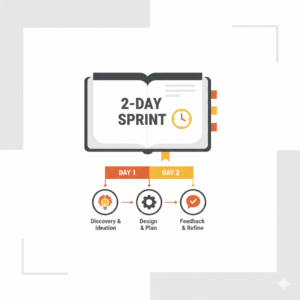
Leaders move from concept to compounding value in three sprints.
Sprint 1 sets foundations. Instrument events, define two recovery intents, and publish a recovery playbook per intent.
Sprint 2 proves value. Launch proactive detection, close the loop with a copilot in the agent desktop, and run an A/B to validate FCR and time gains. Report outcomes with finance.
Sprint 3 scales safely. Add a third intent, expand channels, and fold learnings into knowledge and upstream defect backlogs. Prepare an executive readout with a simple architecture diagram, a KPI dashboard, and customer verbatims. Maintain an explicit principle. Automation accelerates empathy when designed with policy, telemetry, and human judgment.
How does service recovery automation compare to traditional improvement programs?
Traditional programs aim to reduce defects by improving processes and training people. Recovery automation complements that work by absorbing inevitable failures with orchestration, intelligent decisioning, and proactive outreach. Academic and practitioner work has shown that service failures are inevitable in live service environments. Effective recovery therefore acts as insurance against variability while feeding quality improvement with evidence and prioritization.¹ Leaders who treat recovery as a first-class capability gain resilience, consistent costs, and a brand reputation for fairness and speed.
What are the next steps for C-level and CX leaders?
Executives should sponsor a cross-functional recovery program with a clear mandate and an accountable owner. Appoint a recovery product manager who partners with operations, digital, finance, and risk. Fund a 12-month roadmap anchored in eight to ten high-frequency intents. Select a platform approach that integrates rules, AI, and workflow, rather than stitching together point tools. Establish governance that audits outcomes and customer fairness. Share results in quarterly business reviews. As automation matures, leaders should explore agentic patterns that coordinate multi-step resolutions with minimal handoffs. Analyst predictions indicate that autonomous resolution will be a defining capability in customer service.³ The firms that invest now will set the bar for proactive, trustworthy recovery.
FAQ
What is “service recovery with smart automation” for Customer Science clients?
Service recovery with smart automation is the disciplined use of detection, decisioning, and orchestration to resolve customer-impacting failures quickly, communicate with empathy, and prevent recurrence, using AI and automation within policy and workflow.
How does AI improve first contact resolution in contact centers?
AI copilots summarize context, recommend policy-compliant remedies, and trigger back-office tasks from the agent desktop. Controlled deployments report higher issues resolved per hour and shorter handling time when copilots assist agents.⁵
Which recovery use cases should enterprises automate first?
Start where frequency, frustration, and fixability intersect. Common intents include delivery delays, billing errors, password lockouts, warranty claims, and appointment no-shows. Prioritize each with a single owner, one success metric, and a codified playbook.
Why does proactive detection matter more than reactive handling?
Proactive detection spots failures before complaints, triggers immediate fixes, and communicates status transparently. This reduces repeat contacts, protects trust, and lowers make-good costs. Analysts forecast rising autonomous resolution, so detection maturity compounds value.³
What metrics prove that recovery automation protects revenue?
Track first contact resolution, containment by intent, median and 90th percentile time to resolution, prevented incidents, make-good efficiency, and post-recovery trust lift. Tie improvements to avoided contacts, faster cash resolution, and churn reduction.¹ ³ ⁴ ⁵
Who should own the recovery program inside large enterprises?
Appoint a recovery product manager reporting to Customer Experience and Service Transformation leadership, with joint governance from operations, digital, finance, and risk to enforce policy, audit outcomes, and scale safely.
Which platforms and capabilities matter for service automation and AI enablement?
Select a platform that unifies an event backbone, rules and policy decisioning, workflow and RPA, and a generative AI copilot layer inside the agent desktop and customer channels. Ensure strong analytics, audit trails, and knowledge management.
Sources
The Profitable Art of Service Recovery — Christopher W. Hart, James L. Heskett, W. Earl Sasser Jr. — 1990 — Harvard Business Review. https://hbr.org/1990/07/the-profitable-art-of-service-recovery (Harvard Business Review)
The Next Frontier of Customer Engagement: AI-enabled Customer Service — McKinsey & Company — 2022 — McKinsey Insights. https://www.mckinsey.com/capabilities/operations/our-insights/the-next-frontier-of-customer-engagement-ai-enabled-customer-service (McKinsey & Company)
Gartner Predicts Agentic AI Will Autonomously Resolve 80% of Common Customer Service Issues by 2029 — Gartner Press Release — 2025 — Gartner Newsroom. https://www.gartner.com/en/newsroom/press-releases/2025-03-05-gartner-predicts-agentic-ai-will-autonomously-resolve-80-percent-of-common-customer-service-issues-without-human-intervention-by-20290 (Gartner)
Consumer Intelligence Series: Future of Customer Experience — PwC — 2018 — PwC Research. https://www.pwc.com/us/en/services/consulting/library/consumer-intelligence-series/future-of-customer-experience.html (PwC)
The Economic Potential of Generative AI: The Next Productivity Frontier — McKinsey & Company — 2023 — Research Report. https://www.mckinsey.com/~/media/mckinsey/business%20functions/mckinsey%20digital/our%20insights/the%20economic%20potential%20of%20generative%20ai%20the%20next%20productivity%20frontier/the-economic-potential-of-generative-ai-the-next-productivity-frontier.pdf (McKinsey & Company)
Companies Are Struggling to Drive a Return on AI. It Doesn’t Have to Be That Way. — Wall Street Journal — 2025 — Feature Article. https://www.wsj.com/articles/companies-are-struggling-to-drive-a-return-on-ai-it-doesnt-have-to-be-that-way-f3d697aa (The Wall Street Journal)
Gartner Identifies Three Trends That Will Shape the Future of Customer Service — Gartner Press Release — 2025 — Gartner Newsroom. https://www.gartner.com/en/newsroom/press-releases/2025-06-25-gartner-identifies-three-trends-that-will-shape-the-future-of-customer-service (Gartner)