

















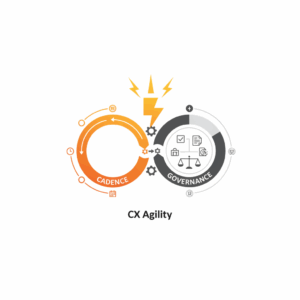
Why do cadence and governance decide CX agility?
Cadence sets the rhythm for how customer experience teams plan, test, and learn. Governance defines the rules that make that rhythm safe, consistent, and scalable. Together they create a repeatable operating system that lets leaders move quickly without losing control. High performing service organizations pair short learning cycles with simple guardrails so the business can change direction based on evidence, not opinion. Harvard Business Review describes this balance as scaling agile ways of working through clear roles, lightweight controls, and rapid learning loops.¹
What is CX agility in practical terms?
CX agility is the capability to sense customer needs and respond with iterative improvements to products, services, and operations. This capability blends service design, data, and frontline feedback into cycles of discovery, delivery, and measurement. Scrum formalizes these cycles through timeboxed events that focus teams on outcomes rather than output.² In a service context, these cycles include channel design, policy changes, knowledge updates, and training that move as fast as the digital experience. The result is a system that lowers risk by reducing batch size while raising quality through frequent inspection and adaptation.³
How does cadence create momentum without chaos?
Cadence creates predictable touchpoints that align strategy with execution. Leaders establish a simple calendar of recurring events with clear intent:
Weekly value room to review customer signals, queue top opportunities, and unlock decisions.
Fortnightly sprint review to demo improvements to customers and stakeholders.
Monthly portfolio sync to rebalance investment across journeys, channels, and segments.
This structure minimizes ad hoc requests because teams know when decisions happen and what evidence will be expected. The Scrum Guide codifies the value of timeboxes because fixed intervals reduce complexity and make progress transparent.² The DORA program has shown that smaller batch sizes and shorter lead times correlate with higher delivery performance and stability.⁴
Where does governance accelerate rather than slow teams?
Governance accelerates when it sets clear boundaries and then gets out of the way. Effective CX governance defines simple decision rights, minimum evidence for change, and shared standards for data, design, and risk. ISO 9001 frames this as a process approach that links inputs, activities, and outputs through controlled changes.⁵ In service transformation, this translates to three practical controls:
A change charter that states the customer outcome, hypothesis, and metric.
A nonfunctional checklist for privacy, accessibility, reliability, and service continuity.
A tiered approval path that matches risk level with the speed of sign off.
Australian government guidance for digital services reinforces these ideas by asking teams to demonstrate user needs, measure outcomes, and manage risks as they iterate.⁶ Good governance reduces rework and audit noise because it guides decisions up front.
How do we anchor cadence and governance to customer truth?
Organizations anchor the system to customer truth by agreeing on a common evidence base and by reviewing that evidence at the same rhythm. Teams instrument journeys, close the loop on feedback, and refresh a prioritized backlog of customer problems. Net Promoter Score can provide directional insight when paired with verbatim analysis and operational metrics across the journey.⁷ Service design practices add context by mapping moments that matter and the backstage activities that support them.⁸ The combination turns signals into decisions and decisions into tickets that flow through the cadence. Leaders keep the focus on customer outcomes and cost-to-serve improvements that can be observed within weeks, not quarters.⁴
What operating model helps leaders scale agility beyond pilots?
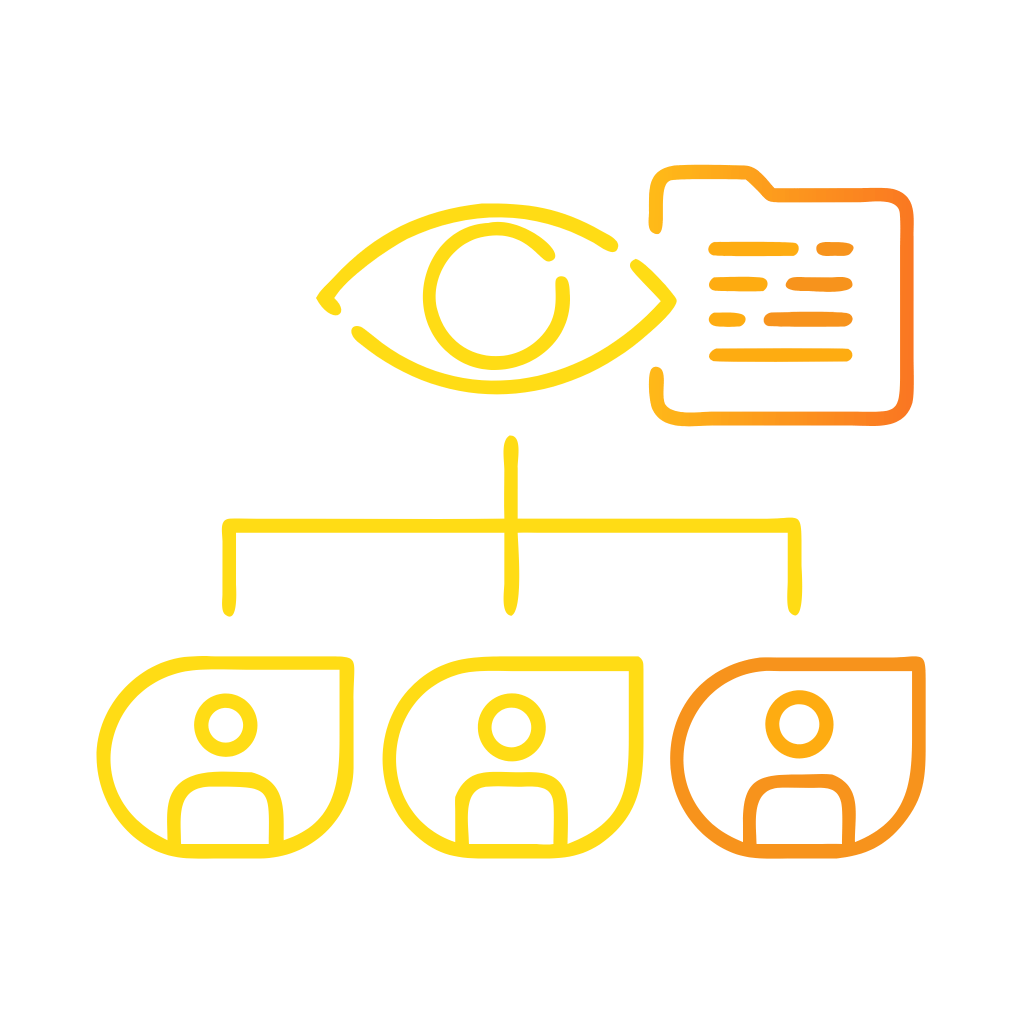
Leaders scale agility by adopting an operating model with three units that work in cadence:
Value rooms align strategy to a sequenced backlog of customer and business outcomes. This unit signs off hypotheses, allocates capacity, and removes blockers.
Journey squads deliver improvements to a specific end-to-end journey or channel. This unit runs sprints, shows working changes, and maintains standards.
Enablement guilds steward shared practices such as research, content, knowledge, analytics, and service operations.
This model spreads ownership while maintaining coherence. HBR’s research on agile at scale highlights the need for persistent teams, clear mandates, and limited work in progress.¹ ITIL 4 complements this by promoting value stream thinking and continual improvement routines that fit service environments.⁹
How do we pick the right tempo for service change?
You calibrate tempo by matching cycle length to risk, dependency, and verification effort. Low risk content or knowledge changes might run daily. Policy or pricing changes might run fortnightly to allow for testing. Platform or contact center routing changes might run monthly if multiple systems and controls are affected. Leaders set default tempos, then allow teams to deviate with evidence. DORA findings support shorter lead times where automated testing, deployments, and monitoring are mature.⁴ The goal is to shorten the idea-to-impact window while protecting the customer and the brand.
Which metrics signal that cadence and governance are working?
Metrics must show both speed and quality. An effective dashboard includes four categories that roll up to the executive view:
Flow metrics such as lead time for change, queue time, and work in progress.⁴
Quality metrics such as first contact resolution, error rates, and knowledge accuracy.⁵
Outcome metrics such as customer satisfaction on target journeys, cost-to-serve per interaction, and digital containment.⁶
Reliability metrics such as service availability, incident frequency, and recovery time.⁹
Executives review this set in the monthly portfolio sync. They use trends to rebalance investment and to inspect the health of cadence and governance. This reduces surprises and builds trust between product, operations, and risk.
How do we bring risk and compliance into the rhythm?
You bring risk and compliance into the rhythm by defining a light, predictable path that scales with impact. Teams attach a short impact assessment to every change. The assessment points to predefined controls for privacy, security, and vulnerable customers. Higher risk changes add evidence and approvals, not meetings. ISO 9001 and ITIL 4 both emphasize documented controls, fit-for-purpose records, and continual improvement.⁵ ⁹ Regulated services should preagree on sampling and audit artifacts, such as screenshots of the live change, test results, and customer communications. This reduces audit scramble and maintains speed.
What are pragmatic rituals that keep CX agility human?
Rituals keep the system human and focused. Start with three:
Voice of customer standup. A short weekly session where researchers, frontline leaders, and analysts read verbatims, hear calls, and watch sessions. Teams pull two to three opportunities into the backlog.⁸
Demo with customers. A fortnightly review that shows working changes to real customers or frontline staff, collects feedback, and decides to iterate or scale.²
Service retro. A monthly reflection on policies, processes, and handoffs that slow service. The group picks one constraint to remove next month.
These rituals keep empathy high and reduce the risk of building in isolation. They also create teachable moments that build capability across the organization.
How do we start without reorganizing the enterprise?
You start by launching a three-month CX cadence pilot around one journey with clear scope, budget, and goals. The executive sponsor sets decision rights. The product owner defines outcomes and backlog. The squad commits to two to three sprints and visible improvements each cycle. Leaders measure lead time for change, satisfaction on the target journey, and cost-to-serve. If results improve, the organization scales the model to a second journey. HBR and DORA research suggest that executive support, disciplined timeboxes, and data-driven decisions significantly increase the odds of sustained performance.¹ ⁴
What does good look like after six months?
Good looks like a portfolio of journeys running on a shared cadence, a common backlog taxonomy, and consistent governance artifacts. Teams deliver small changes weekly and release larger changes on a predictable schedule. Leaders resolve cross-team blockers in hours, not weeks. Flow, quality, and outcome metrics trend in the right direction. Customers notice faster fixes and clearer communications. Frontline teams feel heard and equipped. Risk sees fewer late surprises. This is the hallmark of a learning system that compounds value over time.⁵
How will cadence and governance change leadership behaviors?
Leaders will move from project oversight to product stewardship. They will spend less time in status updates and more time in decision reviews that connect customer signals to investment choices. They will ask for evidence, not templates. They will protect focus by limiting concurrent work. They will celebrate learning velocity as much as delivery velocity. These shifts match the attributes of high performing digital and service organizations documented across the agile, service design, and IT service management literature.¹ ⁴ ⁸ ⁹
What is the Customer Science point of view?
Customer Science views cadence and governance as twin levers for enterprise responsiveness. Cadence creates predictable momentum. Governance creates safe autonomy. Together they unlock service innovation across channels, contact centers, and operations without sacrificing control. Customer Science helps leaders set the rhythm, simplify decision rights, and build the measurement backbone that keeps everyone honest. The approach is practical, evidence based, and designed for C-level accountability. It respects the realities of legacy platforms and operational constraints while building a path to faster, better service change.⁶
What next step should executives take this quarter?
Executives should choose one journey that matters, form a persistent squad, and run a three-month cadence pilot with explicit governance. They should schedule the calendar, define the minimum evidence, and agree on metrics. They should communicate the purpose and invite customers and frontline staff to the demos. They should publish the results and decide whether to scale. The cost is small. The signal is strong. The impact is clear.⁴
FAQ
How does Customer Science define cadence for CX agility?
Customer Science defines cadence as a predictable schedule of planning, delivery, and review events that align strategy to working service changes. The schedule typically includes weekly value reviews, fortnightly demos, and monthly portfolio decisions that keep teams focused on measurable customer outcomes.² ⁴ ⁶
What governance artifacts speed up service change without adding burden?
The most effective artifacts are a short change charter, a nonfunctional checklist for risk areas such as privacy and accessibility, and a tiered approval path that scales with impact. These artifacts set clear boundaries and reduce late surprises, which accelerates delivery.⁵ ⁶ ⁹
Which metrics should executives review to judge agility and control?
Executives should review flow metrics like lead time and work in progress, quality metrics like error rates and first contact resolution, outcome metrics like satisfaction and cost-to-serve, and reliability metrics like availability and incident rates. These categories provide a balanced view of speed and safety.⁴ ⁵ ⁹
Why do small batch sizes and timeboxed events matter in service environments?
Small batches and timeboxes reduce complexity, increase transparency, and improve learning speed. Scrum formalizes these concepts through fixed-length sprints and reviews, while DORA research links shorter lead times with better performance and stability.² ⁴
Who should sit in the value room and what decisions are made there?
The value room should include an executive sponsor, product owner, operations lead, risk advisor, and analytics or research lead. This group sequences the backlog, approves hypotheses, allocates capacity, and removes blockers so journey squads can deliver.¹ ⁶
What is the first step for a regulated service wanting to go faster?
Start by agreeing on minimum evidence for change, a simple impact assessment, and a set of predefined controls for privacy, security, and vulnerable customers. Attach these to each change and review them on a fixed cadence with risk and compliance.⁵ ⁶ ⁹
Which Customer Science services support cadence and governance setup?
Customer Science supports cadence design, portfolio governance, service design, analytics, and contact center transformation. The team helps establish value rooms, stand up journey squads, and implement measurement and continuous improvement practices across www.customerscience.com.au.⁶ ⁸
Sources
“Agile at Scale,” Darrell K. Rigby, Jeff Sutherland, Hirotaka Takeuchi, 2018, Harvard Business Review. https://hbr.org/2018/05/agile-at-scale
“The Scrum Guide,” Ken Schwaber, Jeff Sutherland, 2020, Scrum.org. https://scrumguides.org/scrum-guide.html
“Kanban and Lean Concepts for Agile Teams,” David J. Anderson, 2010, Blue Hole Press. https://kanban.university/what-is-kanban/
“DORA: The 2023 Accelerate State of DevOps Report,” Forsgren et al., 2023, Google Cloud. https://dora.dev/research/
“ISO 9001:2015 Quality Management Systems — Requirements,” International Organization for Standardization, 2015. https://www.iso.org/standard/62085.html
“Digital Service Standard,” Digital Transformation Agency, Australian Government, 2023. https://www.dta.gov.au/help-and-advice/digital-service-standard
“The One Number You Need to Grow,” Frederick F. Reichheld, 2003, Harvard Business Review. https://hbr.org/2003/12/the-one-number-you-need-to-grow
“This Is Service Design Doing,” Stickdorn, Lawrence, Hormess, Schneider, 2018, O’Reilly Media. https://www.thisisservicedesigndoing.com/
“ITIL 4: High-velocity IT,” Axelos, 2019, TSO. https://www.axelos.com/best-practice-solutions/itil/what-is-itil-4