


















Why does every transformation need a disciplined beta?
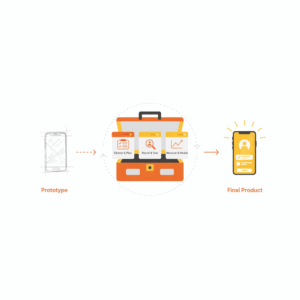
Leaders ship change, not slides. A disciplined beta program turns strategy into learning and risk into signal. A beta program is a structured market trial that recruits real users, exposes them to a near-final product or service, and captures evidence to decide whether to scale, pivot, or stop. The best beta programs run short, focused cycles that follow a build–measure–learn loop and use minimum viable artifacts to validate value, usability, and operability before full release. The approach lowers release risk, compresses time to product-market fit, and builds stakeholder confidence by grounding decisions in observable behavior, not opinion. A Beta Program Management Kit gives teams the templates, checklists, and governance to run that loop repeatedly. It creates a common cadence across product, CX, operations, risk, and IT so the organization learns together, fast. The outcome is a safer, smarter path to scale.¹
What is included in a Beta Program Management Kit?
Great kits combine method and muscle. Your kit should include: a charter template that defines the problem, scope, and exit criteria; a recruitment plan with target segments and screening logic; consent language and privacy notices; test plans with scenarios and success metrics; instrumentation plans for analytics and feedback; a comms pack for onboarding and updates; runbooks for incident and change control; and a decision forum with a clear go or no-go rubric. Add tool-specific guides for app stores, web experiences, contact flows, AI copilots, and connected devices. Include playbooks for closed, open, and internal betas with guidance on when to use each mode. Document the roles across product managers, CX researchers, service operations, legal, and support so accountability is visible. The kit should help teams recruit, test, learn, and decide with speed and control.² ³ ⁴
How do you select the right beta model?
Leaders choose the model that fits the risk. Internal betas validate operability with employees on non-production data. Closed betas validate value and usability with a screened cohort under NDA. Open betas validate scale, edge cases, and market appetite with larger numbers. Mobile products often run internal tests first, then a small closed cohort, and then expand to open testing to validate scale and distribution. Cloud and enterprise tools may prefer closed cohorts to protect IP and customer data. Regulated services may require additional control points and audit trails. Move up the ladder only when exit criteria are met. This stepwise expansion protects the brand while steadily increasing external exposure and diversity of environments.³ ⁵
Define success like an operator, not a spectator
Executives anchor betas on observable outcomes. Success metrics should cover four lenses: value, usability, operability, and growth. Value metrics confirm the core job to be done, such as task completion rate and time to value. Usability metrics confirm ease of use through qualitative sessions and friction scores. Operability metrics confirm reliability, security, and supportability, such as error budgets and mean time to restore. Growth metrics confirm adoption potential through activation, retention, and referral. Use a small, diverse cohort for qualitative discovery and a broader cohort for behavioral analytics. Many UX programs reach strong qualitative insights with five to eight participants per round, then iterate quickly before scaling.⁶ ⁷
How do you recruit and manage participants ethically?
Trust fuels good data. Recruit participants who match real user profiles, with explicit consent and clear expectations. Provide incentives that respect time and avoid coercion. Use plain language privacy notices and explain how feedback and telemetry are used. Store test data with the same care as production data. Respect regional privacy laws, including lawful basis for processing, data minimization, and rights to access and erasure. Provide a simple off-ramp for participants to leave the program and request deletion. Keep communication tight and regular. Share what is changing and why. Thank participants and close the loop by showing how their input shaped the product. Clear ethics and compliance reduce risk and increase signal quality.⁸ ⁹
Mechanisms: How do you collect feedback that decision makers trust?
Teams earn trust by combining signals. Blend in-product feedback, structured surveys, usability sessions, interviews, and telemetry. For mobile apps, enable native feedback capture so testers can submit annotated screenshots from within the beta build. Tag all feedback with participant segment, device, and environment to make analysis reliable. Pair attitudinal metrics like task ease and satisfaction with behavioral metrics like activation rate, feature adoption, session length, and error counts. Use a simple loyalty or advocacy question such as a Net Promoter Score survey when appropriate, but keep it as one input among many. Summaries should separate facts, interpretations, and decisions. Decision forums should receive a single-page brief that ties evidence to exit criteria and recommends a clear action.² ⁴ ¹⁰ ¹¹
Comparison: Beta vs. UAT vs. Pilot
Leaders avoid confusion by naming the right ritual. Beta tests validate value and usability in near-real conditions with external users. User Acceptance Testing validates whether a solution meets agreed business requirements and is often owned by the business sponsor. Pilots validate service viability and operating model in a controlled slice of production, including support, billing, and training. Each activity has different owners, environments, and success criteria. The kit should include definitions, gates, and handoffs so teams coordinate rather than duplicate effort. Beta informs build decisions. UAT protects scope and compliance. Pilots prove run-the-business readiness. Clear boundaries keep work focused and stakeholders aligned.
Applications: Where does a beta deliver outsized value?
Beta shines when ambiguity is high and cost of failure is real. New digital channels benefit from a closed beta to refine navigation, flows, and accessibility. AI assistants benefit from a staged beta to tune prompts, guardrails, and escalation paths using red-team tasks and human-in-the-loop review. Contact center changes benefit from an internal beta with agents to validate guidance quality and handling time impacts before exposing customers. Hardware and IoT products benefit from environment diversity in open betas to surface interoperability issues. Enterprise SaaS benefits from cohort-based betas to shape permissions, audit logs, and change management. In each case, the kit ensures the right participants, the right instruments, and the right decisions.
Risks: What can sink a beta, and how do you mitigate it?
Risk hides in four places. Poor recruitment yields unrepresentative feedback. Mitigate with clear screeners and a recruiting plan. Weak instrumentation hides outcomes. Mitigate with an analytics plan and event taxonomy. Scope creep dilutes learning. Mitigate with a short charter, fixed hypotheses, and weekly decisions. Privacy and compliance gaps create legal and reputational exposure. Mitigate with explicit consent, data minimization, and regional controls. Mobile distribution adds its own risks. App store test tracks require specific setup and reviewer guidance. Manage distribution with internal, closed, and open tracks that match your risk appetite. Treat incidents like production by using a simple severity rubric and a clear rollback plan.³ ⁵ ⁹
Measurement: What should you track across the beta lifecycle?
Executives track throughput and outcome. Throughput includes recruiter yield, opt-in rate, environment coverage, and time to first insight. Outcome includes task completion, error rates, satisfaction, activation, retention, and support burden. Qualitative rounds should run quickly with small groups to fuel design changes. Behavioral rounds should run long enough to observe activation and repeat use. Post-beta metrics should show whether the experience is ready to scale. Leaders should maintain a living scorecard that contrasts exit criteria with observed evidence. A simple decision rubric helps teams move with confidence: meet, meet with mitigations, or miss. Publish the rubric with every beta so expectations are unambiguous.⁶ ¹⁰
Next steps: How do you stand up the kit in 30 days?
Start small and ship the kit like a product. Week 1 defines the charter and exit criteria template and aligns a decision forum. Week 2 builds the recruitment and consent pack and selects analytics and feedback tools. Week 3 develops the test plan library with scenarios and event taxonomies. Week 4 runs a thin-slice beta on a real change, holds the first decision forum, and updates the kit based on feedback. Train product, CX, and operations to use the same artifacts. Integrate the kit with release governance and service management. Make the kit the path of least resistance by hosting templates, examples, and a schedule. The kit should reduce friction, not add process. Continuous improvement keeps it relevant.¹
The Beta Program Management Kit: Contents and templates
Charter and governance. Problem statement, hypotheses, scope, exit criteria, roles, cadence, and a decision rubric.
Recruitment and ethics. Target segments, screeners, sample sizes, incentives, consent, and privacy notices aligned to local regulation.
Test design. Scenario library, artifact inventory, and measurement plans for value, usability, operability, and growth.
Instrumentation. Event taxonomy, logging standards, and dashboards that surface activation, errors, and engagement.
Distribution guides. Internal, closed, and open track guides, plus app store checklists for iOS and Android where relevant.
Runbooks. Onboarding and offboarding flows, comms templates, incident handling, and rollback procedures.
Decision forum. One-page decision brief, exit criteria scorecard, and release notes that tie changes to evidence.² ³ ⁵
Impact: What changes when you operationalize beta?
Organizations move from hope to evidence. Product teams make clearer decisions with smaller waste. CX and service teams prevent failure demand before it hits the contact center. Risk and compliance teams see clean audit trails and informed consent. Engineering teams get faster feedback on performance and reliability. Executives receive a weekly, simple view of progress and risk. Over time, the kit becomes a shared language for learning and transformation. It improves customer outcomes by listening early, often, and well. It improves business outcomes by reducing rework, improving adoption, and protecting the brand. The outcome is not just a better release. The outcome is a better way of working.¹ ¹¹
FAQ
What is a Beta Program Management Kit in Customer Science terms?
It is a standardized set of templates, checklists, governance, and runbooks that helps teams recruit participants, run controlled trials, collect ethical feedback, and make go or no-go decisions based on observable evidence across value, usability, operability, and growth lenses.¹
How many participants do we need for qualitative beta rounds?
Most usability programs generate strong insights with five to eight participants per round, then iterate before scaling to larger cohorts for behavioral data.⁶
Which beta model should we choose for a high-risk service change?
Start with internal testing to prove operability, move to a closed beta with screened customers to validate value and usability, and consider an open beta only after exit criteria are met and privacy and brand risk is controlled.³ ⁵
How do we collect feedback inside a mobile beta?
Enable native in-app feedback so testers can send annotated screenshots and comments from within the beta build, then triage and tag feedback by segment, device, and environment for analysis and action.²
Which metrics should leaders track to decide on scale?
Track throughput metrics like recruiter yield and time to first insight, and outcome metrics like task completion, error rates, activation, retention, and support burden. Use a published exit-criteria scorecard and a decision rubric on every beta.¹⁰
Why do ethics and privacy matter in beta programs?
Consent, data minimization, and user rights protect customers and the brand. Clear privacy notices and compliant processing align with regional requirements such as the GDPR and build participant trust that improves signal quality.⁹
Which frameworks support a learn-before-scale approach?
The build–measure–learn loop from Lean Startup complements beta programs by structuring short cycles of learning and adjustment before broad release.¹
Sources
The Lean Startup: Methodology and Build–Measure–Learn. Eric Ries. 2011. The Lean Startup website. https://theleanstartup.com/principles
TestFlight Overview and Feedback Capture. Apple Developer Documentation. 2024. Apple. https://developer.apple.com/help/app-store-connect/test-a-beta-version/testflight-overview
Set up an open, closed, or internal test. Google Play Console Help. 2024. Google. https://support.google.com/googleplay/android-developer/answer/9845334
Product Release Guide: Key Phases and Best Practices. Atlassian. 2023. Atlassian. https://www.atlassian.com/agile/product-management/product-release
Closed testing overview. Google Play Console. 2024. Google. https://play.google.com/console/about/closed-testing/
Usability Testing 101 (participant guidance 5–8). Nielsen Norman Group. 2019. NN/g. https://media.nngroup.com/media/articles/attachments/Usability-Testing-101_SizeA4.pdf
A Guide to Using User-Experience Research Methods. Christian Rohrer. 2014. NN/g. https://media.nngroup.com/media/articles/attachments/User_Research_Methods_A4-compressed.pdf
ISO 9241-210:2019 Ergonomics of human-system interaction. International Organization for Standardization. 2019. ISO. https://www.iso.org/standard/77520.html
General Data Protection Regulation summary. 2016/2018. EUR-Lex, European Union. https://eur-lex.europa.eu/EN/legal-content/summary/general-data-protection-regulation-gdpr.html
Measuring Your Net Promoter Score. Bain & Company. 2020. Bain. https://www.netpromotersystem.com/about/measuring-your-net-promoter-score/
UX Activities in the Product and Service Design Cycle. Nielsen Norman Group. 2017. NN/g. https://media.nngroup.com/media/articles/attachments/ux_methods_activities_NNg_A4.pdf