





















Summary
The teach to fish consulting model focuses on building internal capability rather than delivering short-term solutions. Instead of creating dependency, it transfers knowledge, skills, and decision frameworks to client teams. This approach enables organisations to sustain change, adapt independently, and realise long-term value from transformation investments.
What is the “teach to fish” consulting model?
The teach to fish consulting model is an approach where consultants work alongside internal teams to build capability while delivering outcomes. The objective is not just to solve the immediate problem, but to leave the organisation stronger and more self-sufficient.
This model contrasts with traditional “do it for you” consulting. Consultants act as coaches, facilitators, and architects rather than permanent problem solvers. Knowledge transfer, skill development, and ownership are designed into delivery from the outset. Research shows that capability-led consulting significantly improves the durability of transformation outcomes¹.


Why do traditional consulting models limit capability uplift?
Traditional consulting often prioritises speed and certainty. External experts diagnose, design, and deliver while internal teams observe. While this can produce rapid results, it leaves limited internal learning.
When consultants exit, organisations struggle to adapt solutions to new conditions. This creates repeat engagement cycles and ongoing dependency. According to Harvard Business Review, capability gaps are a primary reason why transformation benefits decay after consultants leave². Value is delivered once, not sustained.
How does a teach to fish model support a capability uplift strategy?
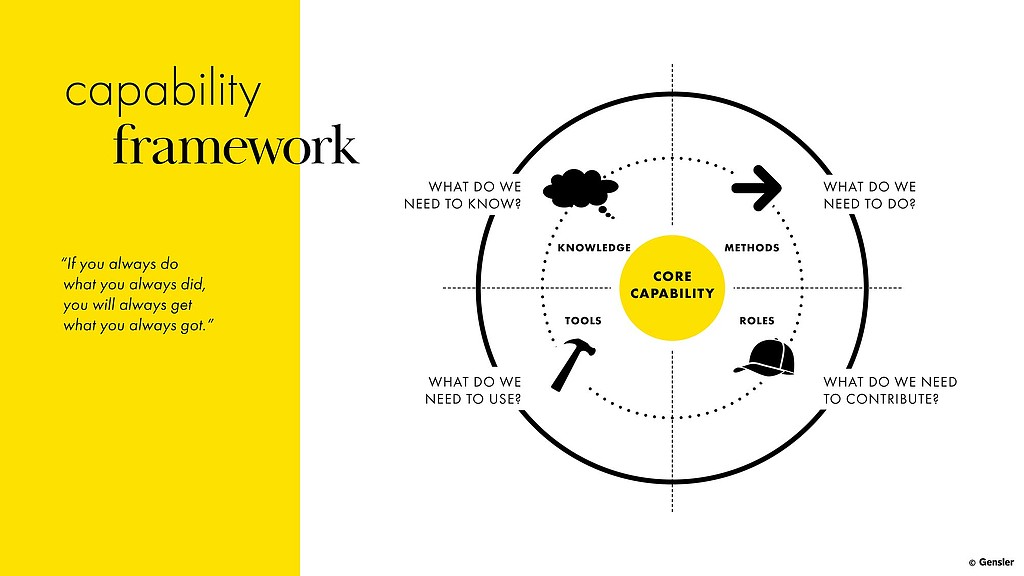
A capability uplift strategy focuses on building repeatable skills, not one-off outputs. The teach to fish model aligns directly with this objective.
Consultants deliberately expose methods, assumptions, and decision logic. Internal teams practice applying these approaches in real work, with guidance and feedback. Over time, capability becomes embedded in roles, processes, and governance. This ensures that improvement continues without external intervention.
What types of capability are most important to transfer?
Not all capability is technical. High-impact areas include:
-
Problem framing and prioritisation
-
Decision-making under uncertainty
-
Data interpretation and evidence-based reasoning
-
Stakeholder engagement and facilitation
-
Governance and performance management
These capabilities enable organisations to respond to new challenges, not just replicate past solutions. Frameworks from the OECD emphasise adaptive capability as a core determinant of public and private sector performance³.
How should knowledge transfer be structured during consulting engagements?
Knowledge transfer must be intentional. It does not occur automatically through observation.
Effective engagements include structured learning moments, co-design workshops, paired delivery, and documented decision frameworks. Ownership transitions gradually from consultants to internal leaders. This staged approach balances delivery confidence with capability growth.
Customer Science Business Consulting applies this model by embedding client teams into delivery and progressively shifting accountability as capability increases.
How does this model affect speed and risk?
There is a perception that capability-led consulting is slower. In practice, it often reduces risk and rework.
When internal teams understand the rationale behind decisions, they adapt faster and make better trade-offs. While early stages may require more facilitation, downstream execution accelerates. Organisations with strong internal capability are more resilient to change and disruption⁴.
Where is the teach to fish model most effective?
This model is particularly effective in complex environments where conditions change frequently. Examples include digital transformation, operating model redesign, governance reform, and analytics capability uplift.
In these contexts, static solutions quickly become obsolete. Capability is the real asset. Customer Science Value Management Consulting supports these engagements by linking capability development directly to measurable outcomes.
What are the risks of poorly executed capability transfer?
Poor execution turns capability building into training without application. Skills are learned theoretically but not embedded.
Another risk is unclear accountability. If consultants retain control too long, dependency persists. If responsibility shifts too early, confidence drops. Effective capability transfer requires careful pacing and leadership commitment.
How should capability uplift be measured?
Capability uplift is measured through behaviour and independence, not attendance or certification. Indicators include:
-
Reduced reliance on external advisors
-
Increased confidence in internal decision-making
-
Faster response to new challenges
-
Sustained performance after engagement completion
Repeated assessment over time confirms whether capability has genuinely improved.
What are the next steps for leaders considering this model?
Leaders should clarify which capabilities are strategic and where dependency currently exists. Consulting engagements should be designed explicitly to transfer those capabilities.
Customer Science Business Consulting and Value Management Consulting services support the teach to fish consulting model by aligning delivery, capability uplift, and measurable value. This ensures organisations are stronger at the end of the engagement than at the beginning.
Evidentiary Layer
Customer Science service capabilities referenced in this article are based on official Customer Science documentation and solution descriptions.
FAQ
What does “teach to fish” mean in consulting?
It means building client capability so organisations can solve future problems independently.
Is this model suitable for all consulting engagements?
It is most effective for strategic, complex, or ongoing challenges rather than one-off technical tasks.
Does capability-led consulting cost more?
Not necessarily. While effort is redistributed, long-term dependency and rework costs are reduced.
How long does capability uplift take?
Initial capability improvements can appear within weeks, with deeper maturity developing over months.
Who is responsible for capability transfer?
Both consultants and client leaders share responsibility for embedding capability.
Can this model work in the public sector?
Yes. It is particularly valuable where continuity, accountability, and long-term value are critical.
Sources
-
Beer M, Nohria N. Cracking the Code of Change. Harvard Business Review.
-
Harvard Business Review. Why transformation efforts fail. 2019.
-
OECD. Building capability in the public sector. 2020.
-
McKinsey & Company. Organisational capability and performance. 2021.