






















Unstructured data is the largest and least controlled information asset in most organisations. When left unmanaged, it creates compliance risk, weakens customer experience, and blocks AI value. This article explains how organisations can move from SharePoint sprawl to a governed knowledge graph, applying unstructured data management and SharePoint governance best practices to restore trust, findability, and resilience.
What is unstructured data and why is it so hard to manage?
Unstructured data includes documents, emails, presentations, chat messages, images, and free text stored across collaboration tools and content platforms. Unlike structured data, it lacks consistent schema, ownership, and metadata.
The core problem is scale without structure. Collaboration platforms make content creation easy but governance optional. Over time, content duplicates, diverges, and loses context. Staff cannot tell which version is current or authoritative¹.
This problem is most visible in enterprise SharePoint environments, where team sites and libraries grow rapidly without shared architecture or lifecycle control.
Why does SharePoint sprawl create risk?
SharePoint sprawl occurs when sites, libraries, and documents proliferate without governance. Information becomes fragmented across personal drives, team spaces, and legacy sites.
The impact is operational and regulatory. Staff waste time searching. Inconsistent guidance reaches customers. Sensitive information may be overshared or retained too long².
From a security perspective, sprawl undermines access control and data classification. From an AI perspective, it introduces noise and contradiction into training and retrieval pipelines.
What do SharePoint governance best practices actually require?
Governance beyond site provisioning
Effective SharePoint governance is not about limiting creation. It is about defining purpose, ownership, and lifecycle.
Best practice includes clear site types, ownership accountability, metadata standards, retention rules, and review cycles. Without these, technical controls fail to deliver consistency³.
Governance must be embedded into how content is created and used, not applied retrospectively.
Information architecture as the control layer
Information architecture provides the structure governance relies on. Taxonomies, content types, and metadata enable consistent classification across sites and teams.
This structure aligns with expectations increasingly emphasised in frameworks led by the Australian Government, where information must be findable, defensible, and reusable across digital services.
Why is traditional unstructured data management no longer enough?
Traditional approaches focus on folders, permissions, and retention. These controls assume humans will navigate complexity correctly.
In reality, scale defeats manual discipline. AI systems further expose the weakness. When generative AI or enterprise search consumes unstructured content, inconsistency becomes visible instantly⁴.
The challenge shifts from storage to meaning. Organisations need to understand relationships between people, policies, processes, and content. This is where knowledge graphs become critical.
What is a knowledge graph and how does it help?
A knowledge graph represents information as connected entities rather than isolated files. Documents, topics, people, and systems are linked through defined relationships.
This model captures context. Instead of searching for files, users and AI systems navigate meaning. For example, a policy is linked to procedures, guidance, owners, and applicable services.
For unstructured data management, this changes the game. Authority, relevance, and currency become explicit rather than implied by location or naming.
How does a knowledge graph tame SharePoint sprawl?

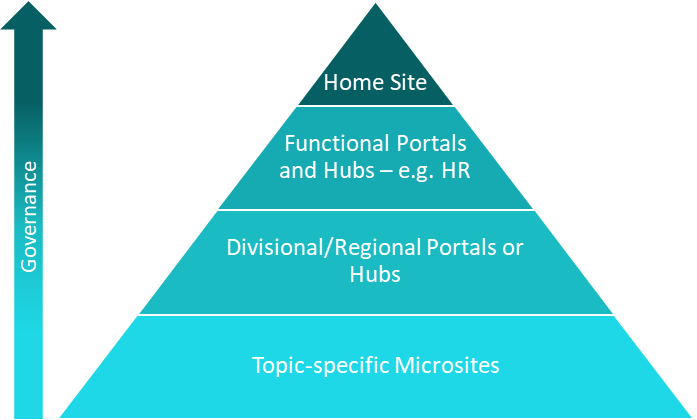

A knowledge graph does not replace SharePoint. It overlays intelligence and structure.
Content remains where it is created, but meaning is centralised. Duplicate documents can be linked to a single authoritative concept. Outdated content can be flagged through relationship and lifecycle rules.
Knowledge Quest supports this approach by enforcing content models, metadata, and authority rules while enabling knowledge graph style relationships across unstructured content.
Customer Science Insights then connects governed knowledge to CX and operational outcomes, showing where poor structure creates friction or risk.
What risks arise if unstructured data remains unmanaged?
The most obvious risk is compliance failure. Inability to locate records, prove currency, or demonstrate retention undermines audits and legal defensibility.
There is also a CX risk. Inconsistent information leads to conflicting advice across channels, increasing complaints and repeat contact.
For AI, unmanaged unstructured data is a critical failure point. Models trained or prompted with inconsistent content generate unreliable outputs, eroding trust and forcing human rework⁵.
How should organisations transition from sprawl to structure?
The transition should be incremental and impact driven.
Start by identifying high value and high risk domains such as policy, customer guidance, and regulatory content. Define authoritative sources and relationships before attempting enterprise wide change.
CX Research and Design services support this by mapping how information is used across journeys, identifying where unstructured content directly affects outcomes.
How should success be measured?
Success is measured by behaviour change and outcomes, not by content volume.
Indicators include improved findability, reduced duplication, faster resolution times, fewer compliance issues, and stable AI outputs over time.
Customer Science Insights links these indicators to service performance and cost to serve, creating a defensible case for continued investment.
What are the next steps toward a knowledge driven organisation?
Organisations should begin with an unstructured data and information architecture assessment. This establishes a baseline and prioritises where structure delivers the greatest value.
CX Consulting and Professional Services can support design of governance models and knowledge graph roadmaps aligned to business strategy. Information Management and Protection solutions ensure privacy, security, and lifecycle controls are embedded.
CommScore AI should be applied only once knowledge foundations are in place, ensuring insights are drawn from trusted, connected information rather than noisy content sprawl.
The goal is not to eliminate unstructured data, but to make it intelligible, governable, and valuable.
Evidentiary Layer
Research consistently shows that unstructured data governance and semantic modelling improve information reliability and AI effectiveness. ISO standards link metadata, classification, and lifecycle control with trustworthy information use⁶. OECD analysis similarly highlights knowledge based architectures as enablers of digital government and advanced analytics⁷.
FAQ
What is unstructured data management?
It is the governance and control of documents, text, and content that lack predefined structure.
Why is SharePoint sprawl a problem?
Because it fragments information, increases risk, and undermines trust and productivity.
What are SharePoint governance best practices?
Clear ownership, metadata standards, lifecycle control, and embedded governance at creation.
How does a knowledge graph help?
It connects content through meaning, making authority and context explicit.
What tools support this transition?
Knowledge Quest, Customer Science Insights, and CommScore AI when foundations are ready.
Where should organisations start?
With high impact content that affects customers, compliance, or decision making.
Sources
ISO 15489, Records Management, 2016.
ISO IEC 38505-1, Governance of Data, 2017.
Microsoft, SharePoint Information Architecture Guidance, 2020.
ISO IEC 42001, Artificial Intelligence Management Systems, 2023.
DAMA International, DAMA-DMBOK2, 2017.
ISO 8000-61, Data Quality Management, 2022.
OECD, Data Governance for the Public Sector, 2021. https://doi.org/10.1787/0d3a89f5-en