

















SLA management in customer service works when service level agreements are tied to customer outcomes, measured with reliable service level indicators, and governed as an operating rhythm, not a document. The best approach defines scope, targets, and trade-offs, then uses consistent measurement, complaint feedback loops, and continuous improvement to prevent metric gaming and improve customer experience and service operations.
What is SLA management in customer service?
SLA management customer service is the end-to-end discipline of designing, running, and improving service level agreements so they protect customer experience while remaining operationally achievable. In this article, “SLA” means performance commitments for customer-facing service operations (contact centre, digital service, and case handling), not purely legal procurement terms.
A service level agreement should describe what customers can reasonably expect, when they can expect it, and how performance will be measured and reviewed. Effective SLA management also requires a service management system mindset, where services are planned, delivered, monitored, and continually improved as a closed loop.¹ This turns SLAs from static promises into a repeatable way to control service quality at scale.
Why do service level agreements fail in Customer Experience and Service Transformation programs?
Most SLA failures are not caused by bad intent. They come from unclear scope, weak measurement design, and misaligned incentives. When an SLA target is set without an agreed definition, time window, and data source, teams can argue forever about whether a breach happened. That weakens trust and delays remediation.
Another common failure is choosing internal activity metrics that do not represent customer outcomes. Call centres often optimise speed alone, but research shows customer satisfaction is shaped by expectations and the overall service encounter, not just elapsed seconds.¹² When speed targets are pushed without balancing quality and resolution, organisations can reduce wait times while increasing repeat contacts, complaints, and cost.
How does SLA management work in day-to-day service operations?
Strong SLA management starts with a service catalogue and clear service boundaries. ISO/IEC 20000-1 frames this as designing and delivering services to meet requirements and value outcomes.¹ In practical terms, that means translating customer journeys into measurable service commitments, then aligning workforce, process, and technology to deliver them.
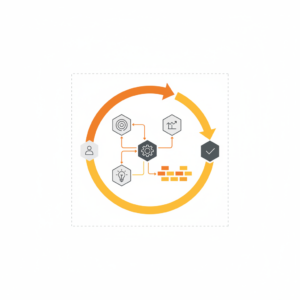
Operationally, SLA management is a cycle:
Define service level indicators (SLIs) that represent what customers experience, such as time to answer, time to resolve, or digital availability.⁶
Set service level objectives (SLOs) and thresholds that reflect demand variability and business risk.⁶
Use governance cadences (weekly service reviews, monthly steering) to track performance, decide fixes, and prevent repeat breaches.¹
Improve continuously using customer feedback and complaints insights, not only operational dashboards.³˒⁴
SLA vs SLO vs SLI: what is the difference in service level management?
Service level management often fails because teams mix up three different concepts. An SLI is the measure. An SLO is the internal target range for that measure. An SLA is the externally meaningful commitment that may carry remedies or escalation when not met.⁶
This distinction matters because it creates room for sensible trade-offs. If you set an SLA equal to your internal aspiration, you leave no tolerance for uncertainty and surge events. SRE guidance recommends using error budgets to manage this tension, so teams can balance reliability with change and improvement work.⁶˒⁷ In customer service operations, the equivalent is agreeing what “good enough, most of the time” means for each journey stage, then reserving capacity and playbooks for exceptions.
Where should you apply SLA management across contact centres and digital service?
In a contact centre, SLAs should be built around end-to-end customer value, not a single queue metric. ISO 18295-1 positions contact centres as multi-channel service environments with required performance metrics and an explicit focus on meeting or exceeding customer needs.² That supports a practical SLA set that combines access, quality, and resolution.
Typical SLA groupings that work in service operations:
Access SLAs: answer time, abandonment rate, callback completion.
Resolution SLAs: time to resolve by case type, first contact resolution targets, reopen rates.
Quality SLAs: compliance, accuracy, and critical-to-quality behaviours linked to customer outcomes.²
Digital SLAs: availability and latency for self-service journeys, aligned to “monitor your service” expectations in government-grade digital standards.⁸
If your environment includes platform or telephony change, aligning service levels to technology design and vendor management is critical. Customer Science supports this through contact centre technology design, implementation, and managed operations via its contact centre technology solutions offering: https://customerscience.com.au/solution/contact-centre-technology/
What risks undermine SLA management and create unintended harm?
The biggest risk is metric gaming. When targets are narrow, teams shift work across channels, time windows, or categories to “hit the number” while customers feel no improvement. This is why standards emphasise measurable, defined processes and feedback loops that detect unintended outcomes.¹˒⁴
A second risk is over-promising. An SLA that ignores demand volatility, staffing constraints, or upstream dependencies will be breached repeatedly, which trains stakeholders to stop believing the agreement. Error budget thinking provides a safer alternative: define acceptable miss rates, decide what happens when budgets are consumed, and prioritise stabilisation work before adding new demand.⁶˒⁷
A third risk is customer trust exposure. In regulated environments, complaint handling expectations and timeframes can become de facto service commitments. Australian regulators such as APRA set explicit expectations for complaint standards aligned to Australian complaint management guidance.¹⁰ This makes it essential that SLA management connects to complaint pathways, root cause removal, and customer remediation.
How do you measure SLA performance without gaming the metrics?
Measurement must be designed as a control system, not a scoreboard. Start by validating that your SLA metrics represent customer experience and that the data is stable, timely, and auditable. ISO 10004 provides guidance for monitoring and measuring customer satisfaction in a structured way, complementing operational metrics with customer perception signals.⁴ ISO 10002 supports the complaint handling loop that often reveals where SLAs are misleading or incomplete.³
Practical measurement disciplines that reduce gaming:
Use a small set of primary SLIs per journey, then secondary diagnostics behind them.⁶
Report distributions, not only averages, so tail performance is visible.¹¹
Segment by customer type and intent, so vulnerable and high-risk cohorts are protected.⁸
Review breaches with an agreed decision record: cause, fix, prevention, and customer impact.¹
What are the next steps to improve SLA management maturity?
Mature SLA management is built into service operating models and Customer Experience and Service Transformation governance. The near-term goal is consistency: one definition per metric, one source of truth, and one rhythm of review. The medium-term goal is optimisation: targets that change with evidence, not politics.
A pragmatic maturity path looks like this:
Stabilise: clean metric definitions, instrument the customer journey, and eliminate ambiguous “stop the clock” rules.¹
Align: connect SLAs to SLOs and error budgets so teams can trade reliability and change transparently.⁶˒⁷
Improve: embed customer feedback and complaint insights into service level management decisions.³˒⁴
Scale: standardise playbooks, vendor alignment, and continuous improvement cadences across business units.¹
If you want to operationalise this without building every capability in-house, Customer Science’s managed service ecosystem model can provide SLA governance, specialist support, and delivery alignment through CX Integrator: https://customerscience.com.au/solution/cx-integrator/
Evidentiary layer: what the standards and research say about service level management
ISO/IEC 20000-1 formalises service management system requirements that directly support service level agreement design, monitoring, and continual improvement.¹ ISO 18295-1 extends this into the customer contact centre domain, framing consistent multi-channel service delivery and required performance metrics.²
Customer perception research reinforces why SLAs must reflect expectations and full-journey experience. Waiting shorter than expected can lift satisfaction materially, while slightly longer than expected has a smaller effect until thresholds are exceeded.¹² This supports setting SLAs that are realistic, paired with proactive communication, and backed by surge playbooks. Broader call centre operations research also shows service level decisions interact with forecasting, capacity planning, routing, and staffing, making SLA targets inseparable from workforce and operating design.¹¹
For public-sector and regulated services, “monitor your service” requirements and performance standards reinforce the need for measurable service outcomes, not only internal efficiency.⁸˒⁹ Complaint standards and guidance expectations further tighten the loop between service levels, remediation, and trust.¹⁰
FAQ
What is the best way to set a service level agreement target?
Set the target from customer journey needs and risk, then validate it against demand variability and capacity constraints. Use SLIs and SLOs to test feasibility before committing to an SLA.⁶˒¹¹
Which metrics matter most for SLA management customer service?
Start with access (time to answer), resolution (time to resolve), and quality (accuracy and compliance), then add customer perception measures to ensure the SLA improves experience, not just efficiency.²˒⁴
How often should service level management be reviewed?
Use weekly operational reviews for trend control and breach response, plus monthly governance to address structural causes and investment decisions. This matches service management system practices for monitoring and improvement.¹
How do you stop teams gaming SLA metrics?
Use a small number of primary SLIs, publish distributions and tail performance, and connect operational outcomes to customer satisfaction and complaints signals.³˒⁴˒⁶
What tools help keep SLAs aligned to what customers ask and do?
Knowledge health and fast updates reduce avoidable contacts and rework, which protects SLA performance without adding headcount. Customer Science’s Knowledge Quest suite supports this by identifying emerging topics, gaps, and threshold breaches: https://customerscience.com.au/knoweldge-quest/
Do SLAs apply to digital self-service as well as contact centres?
Yes. Digital services should have measurable availability and performance commitments, supported by monitoring and continuous improvement expectations in digital service standards.⁸˒⁹
Sources
International Organization for Standardization. ISO/IEC 20000-1:2018 Information technology — Service management — Service management system requirements (2018). https://www.iso.org/standard/70636.html
International Organization for Standardization. ISO 18295-1:2017 Customer contact centres — Requirements for customer contact centres (2017). https://www.iso.org/standard/64739.html
International Organization for Standardization. ISO 10002:2018 Quality management — Customer satisfaction — Guidelines for complaints handling in organizations (2018). https://www.iso.org/standard/71580.html
International Organization for Standardization. ISO 10004:2018 Quality management — Customer satisfaction — Guidelines for monitoring and measuring (2018). https://www.iso.org/standard/71582.html
AXELOS. ITIL® 4 Practitioner: Service Level Management (n.d.). https://uat2.axelos.com/certifications/itil-service-management/itil-practices-manager/itil-4-specialist-collaborate-assure-and-improve/itil-4-practitioner-service-level-management
Beyer, B., Jones, C., Petoff, J., Murphy, N. R. Service Level Objectives (Chapter 4). In: Site Reliability Engineering: How Google Runs Production Systems. O’Reilly Media (2016). https://sre.google/sre-book/service-level-objectives/
Beyer, B., Murphy, N. R., Rensin, D. K., Kawahara, K., Thorne, S. Implementing SLOs (Chapter 2). In: The Site Reliability Workbook: Practical Ways to Implement SRE. O’Reilly Media (2018). https://sre.google/workbook/implementing-slos/
Digital Transformation Agency (Australian Government). Digital Service Standard (Last updated 24 Jul 2024). https://www.digital.gov.au/policy/digital-experience/digital-service-standard
Digital Transformation Agency (Australian Government). Digital Performance Standard (Last updated 24 Jul 2024). https://www.digital.gov.au/policy/digital-experience/digital-performance-standard
Australian Prudential Regulation Authority (APRA). APRA’s complaints handling standards (n.d.). https://www.apra.gov.au/apras-complaints-handling-standards
Aksin, Z., Armony, M., Mehrotra, V. The Modern Call Center: A Multi‐Disciplinary Perspective on Operations Management Research. Production and Operations Management (2007), 16(6), 665–688. DOI: 10.1111/j.1937-5956.2007.tb00288.x. https://doi.org/10.1111/j.1937-5956.2007.tb00288.x
Caruelle, D., Lervik-Olsen, L., Gustafsson, A. The clock is ticking—Or is it? Customer satisfaction response to waiting shorter vs. longer than expected during a service encounter. Journal of Retailing (2023), 99(2), 247–264. DOI: 10.1016/j.jretai.2023.03.003. https://doi.org/10.1016/j.jretai.2023.03.003
Ilk, N., Shang, G. The impact of waiting on customer-instigated service time: Field evidence from a live-chat contact center. Journal of Operations Management (2022), 68(5), 487–514. DOI: 10.1002/joom.1199. https://doi.org/10.1002/joom.1199
COPC Inc. COPC Customer Experience (CX) Standard, Release 7.0 (n.d.). https://www.copc.com/copc-standards/cx-standard/