































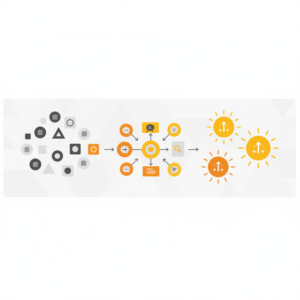
Customer feedback analysis turns messy, multi-channel customer signals into decisions that improve service, reduce cost-to-serve, and lift loyalty. Done well, it combines disciplined data handling, consistent taxonomy, and human-verified analytics to identify root causes, prioritise fixes, and prove impact. This article explains how to analyse customer feedback end to end, with practical governance, risk controls, and measurement suited to enterprise CX and contact centre leaders.
What is customer feedback analysis?
Customer feedback analysis is the structured process of collecting, cleaning, classifying, and interpreting customer signals to produce actionable insights. In this article, the scope includes both structured feedback (ratings, NPS, CSAT, CES) and unstructured feedback (free-text survey comments, complaints narratives, call and chat transcripts, social reviews, and emails). It is a core component of a Voice of Customer program, but it is not limited to surveying. It also covers indirect and operational feedback embedded in service interactions.
The outcome is not a dashboard. The outcome is a prioritised set of service and product decisions, each linked to evidence, owners, and expected impact. When the process aligns to complaint-handling and service standards¹˒³ it becomes easier to defend decisions, scale across business units, and satisfy regulators in complaint-heavy industries.
Why do organisations struggle to analyse customer feedback at scale?
Most programs fail in three predictable places. The first is fragmented data. Feedback sits across CX tools, contact centre platforms, CRM, case management, and public review sites, with inconsistent identifiers. The second is inconsistent meaning. Teams use different categories for the same issue, so trends are not comparable over time. The third is weak activation. Insights are published, but actions are not routed, tracked, and validated.
These failures create a credibility gap. Leaders stop trusting the signals because the method is unclear, samples are biased, or the categories change each quarter. Standards-based complaint and satisfaction practices¹˒² help close this gap by forcing repeatable definitions, clear workflows, and auditable evidence, which is essential when customer feedback drives operational and policy decisions.
How does customer feedback analysis turn comments into decisions?
Data pipeline and controls you need
Start with a single view of feedback where every record has: channel, timestamp, product or journey step, customer segment, and a stable identifier that links to operational outcomes. This is where many teams underinvest. If “refund delay” comments cannot be linked to case cycle time, you cannot quantify impact. For regulated complaint environments, align intake, classification, response, and remediation steps to established complaint-handling guidance¹ and any applicable dispute resolution obligations⁵.
Privacy and consent must be designed in, not added later. If you will reuse transcripts or survey comments for analytics, confirm that use is consistent with the collection purpose and permitted secondary uses under the Australian Privacy Principles guidance⁴. This is especially important when sharing verbatims across teams or using generative AI summarisation.
Taxonomy, modelling, and human verification
Customer feedback analysis usually combines three analytic layers:
Descriptive tagging: what customers are talking about (topic) and what they want (intent).
Evaluative tagging: sentiment, effort, and perceived fairness, with calibration against human-coded samples.
Causal inference support: root-cause hypotheses tested against operational data, not assumed.
Modern NLP can accelerate classification using transformer models⁹ and topic modelling methods such as BERTopic¹⁰, but it still needs governance. A small, trained human coding panel improves reliability and prevents model drift. Use inter-rater reliability approaches to keep manual labels consistent, including established reliability principles¹³, especially for high-impact categories like vulnerability, misconduct allegations, or safety issues.
How is customer feedback analysis different from VoC and complaints management?
Voice of Customer is the operating system. Customer feedback analysis is one engine inside it. VoC covers collection design, governance, insight production, and activation across the organisation. Complaints management is a specific workflow for dissatisfaction and redress, often with mandated timeframes and reporting. Complaint handling standards¹ and customer contact centre requirements³ make this distinction practical by separating intake and resolution obligations from the broader learning loop.
A mature model connects all three. Complaints and contact reasons feed the same taxonomy used for surveys and reviews, while operational systems record the actions taken. Online reviews should be treated as a governed channel, with integrity and moderation processes aligned to review principles and requirements⁶ so leaders can trust what they are seeing.
Where should you apply customer feedback insights first?
Prioritise use cases where feedback can be converted into measurable outcomes within one quarter. Common high-value starting points include:
Contact centre friction: repeat contacts, transfers, poor containment, and unclear policies, validated against contact centre performance requirements³.
Service recovery: complaint themes linked to fixable process defects, supported by structured complaints handling guidance¹ and satisfaction monitoring practices².
Journey leakage: steps with high negative sentiment and high cost-to-serve, validated against operational metrics.
Operationalising these use cases requires fast integration of interaction data, survey results, and case outcomes. For organisations running complex channel stacks, a purpose-built analytics layer can reduce time-to-insight and enable consistent governance, such as real-time contact centre feedback dashboards and unified insight activation via Customer Science Insights: https://customerscience.com.au/csg-product/customer-science-insights/
What risks can undermine feedback analysis?
The biggest risks are not technical. They are governance and trust risks.
Bias risk: Feedback is not a census. Survey response bias and channel bias can distort priorities, particularly when NPS is treated as a universal growth proxy rather than one signal among many¹⁴. Mitigate this by weighting samples, segmenting results, and triangulating with operational and behavioural data.
Privacy and misuse risk: Sharing raw verbatims or transcripts without controls can breach customer expectations and privacy requirements⁴. Define access tiers, redact sensitive data, and document permissible uses before scaling analytics.
AI risk: Automated summarisation and classification can hallucinate or amplify spurious patterns. Apply AI risk management practices that emphasise accountability, validity, and monitoring across the lifecycle⁷. Secure the data environment under recognised information security management requirements⁸, especially when feedback includes payment details, health information, or vulnerability markers.
How do you measure whether feedback insights changed outcomes?
Measurement must connect three layers: signal quality, action execution, and business impact.
Signal quality: track coverage (how much feedback is captured), consistency (taxonomy stability), and reliability of human-coded labels using reliability measures and coding discipline¹³. Monitor model drift and recalibrate regularly if using machine learning⁹˒¹⁰.
Action execution: measure cycle time from insight to decision, decision to change, and change to verified closure. For complaint-heavy operations, also track compliance with complaint response standards and dispute obligations¹˒⁵.
Business impact: link actions to outcomes using ISO-aligned customer satisfaction monitoring guidance². Typical impact metrics include repeat contact rate, complaint rate per 1,000 contacts, first contact resolution, digital containment, rework, and loyalty indicators such as NPS¹⁴, interpreted alongside operational and financial measures.
A practical way to sustain this is to run VoC measurement as a managed cadence, with owners, governance, and value tracking embedded in operations. For organisations that want a structured operating model rather than ad hoc workshops, a managed CX Integrator model can provide the governance and delivery rhythm: https://customerscience.com.au/solution/cx-integrator/
What are the next steps to operationalise Voice of Customer?
Start with a 90-day build that proves value and establishes the operating system:
Define the decision areas: pick 3–5 service outcomes that matter to customers and executives.
Standardise the taxonomy: one set of categories across surveys, complaints, and interaction data, with controlled change management.
Build the minimum viable pipeline: integrate channels, add identifiers, and create a single view of feedback with privacy controls⁴ and security baselines⁸.
Establish the closed loop: route insights to owners, track actions, and confirm outcomes using satisfaction monitoring guidance².
Scale through governance: calibrate models, maintain coding reliability¹³, and apply AI risk controls⁷ as automation increases.
Evidentiary layer: what evidence makes insights credible?
Credible customer feedback analysis uses triangulation. A theme is “real” when it is visible across multiple sources and linked to outcomes. Combine at least three forms of evidence:
Customer narrative evidence: verbatims and themes using a clear thematic approach¹², with documented coding rules and reviewer calibration¹³.
Quantitative evidence: trend and segment analysis that controls for sample bias, with channel-level confidence indicators.
Operational evidence: proof the theme correlates with cost, time, defects, or compliance measures, aligned to contact centre and complaint standards¹˒³.
When these layers agree, leaders can confidently prioritise investment, even when volumes are low but risk is high, such as vulnerability, safety issues, or systemic process failures.
FAQ
What is the difference between “customer feedback analysis” and “analyse customer feedback” in practice?
They refer to the same capability. “Customer feedback analysis” is the formal operating process, while “analyse customer feedback” usually describes the activity of extracting themes, sentiment, and root causes from comments and interaction data.
Which channels should be included in a Voice of Customer program?
Include surveys, complaints, transcripts, emails, and online reviews, with review integrity controls aligned to online review requirements⁶ and privacy controls aligned to APP guidance⁴.
How much automation is safe for feedback classification?
Automation is safest when it is monitored and verified. Use lifecycle risk controls from AI risk management guidance⁷ and keep a human verification loop for high-impact categories.
How do you keep your feedback taxonomy stable over time?
Use controlled change management, publish clear definitions, and validate new categories against historical mapping so trend lines remain comparable.
How do you turn feedback insights into faster resolutions for customers?
Link feedback themes to knowledge and policy updates, then monitor outcomes. For contact centres, an AI-powered Knowledge Quest capability can convert interaction insights into knowledge updates and reduce repeat contacts: https://customerscience.com.au/csg-product/knowledge-quest/
What metrics best prove that feedback analysis delivered value?
Combine signal quality measures, closed-loop execution measures, and business outcomes using customer satisfaction monitoring guidance² and complaint-handling expectations¹, interpreted alongside operational KPIs.
Sources
ISO. ISO 10002:2018 Quality management — Customer satisfaction — Guidelines for complaints handling in organizations. https://www.iso.org/standard/71580.html
ISO. ISO 10004:2018 Quality management — Customer satisfaction — Guidelines for monitoring and measuring. https://www.iso.org/standard/71582.html
ISO. ISO 18295-1:2017 Customer contact centres — Part 1: Requirements for customer contact centres. https://www.iso.org/standard/64739.html
Office of the Australian Information Commissioner (OAIC). Australian Privacy Principles guidelines (updated 14 Nov 2025). https://www.oaic.gov.au/privacy/australian-privacy-principles/australian-privacy-principles-guidelines
ASIC. Regulatory Guide 271: Internal dispute resolution (Sept 2021). https://download.asic.gov.au/media/3olo5aq5/rg271-published-2-september-2021.pdf
ISO. ISO 20488:2018 Online consumer reviews — Principles and requirements for their collection, moderation and publication. https://www.iso.org/standard/68193.html
NIST. Artificial Intelligence Risk Management Framework (AI RMF 1.0). NIST AI 100-1 (2023). https://nvlpubs.nist.gov/nistpubs/ai/nist.ai.100-1.pdf
ISO. ISO/IEC 27001:2022 Information security management systems — Requirements. https://www.iso.org/standard/27001
Devlin, J., Chang, M-W., Lee, K., Toutanova, K. BERT: Pre-training of Deep Bidirectional Transformers for Language Understanding. arXiv:1810.04805. https://arxiv.org/abs/1810.04805
Grootendorst, M. BERTopic: Neural topic modeling with a class-based TF-IDF procedure. arXiv:2203.05794. https://arxiv.org/abs/2203.05794
Blei, D. M., Ng, A. Y., Jordan, M. I. Latent Dirichlet Allocation. Journal of Machine Learning Research, 3:993–1022 (2003). DOI: 10.1162/jmlr.2003.3.4-5.993. https://dl.acm.org/doi/10.5555/944919.944937
Braun, V., Clarke, V. Reflecting on reflexive thematic analysis. Qualitative Research in Sport, Exercise and Health (2019). DOI: 10.1080/2159676X.2019.1628806. https://www.tandfonline.com/doi/abs/10.1080/2159676X.2019.1628806
Krippendorff, K. Reliability in content analysis: Some common misconceptions and recommendations. Human Communication Research (2004). DOI: 10.1111/j.1468-2958.2004.tb00738.x. https://onlinelibrary.wiley.com/doi/abs/10.1111/j.1468-2958.2004.tb00738.x
Reichheld, F. F. The One Number You Need to Grow. Harvard Business Review (Dec 2003). PMID: 14712543. https://pubmed.ncbi.nlm.nih.gov/14712543/