



























Modern records management is no longer about storing files at the end of a process. In a digital first world, records are created continuously across systems, channels, and AI enabled services. Organisations must manage compliance in real time while enabling service delivery, analytics, and automation. This article explains how modern records management works, why digital records management standards matter, and how VERS compliance fits into contemporary practice.
What is modern records management?
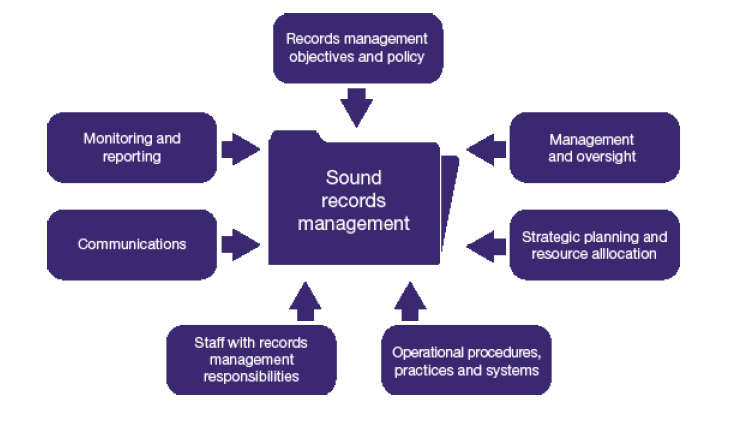
Modern records management is the systematic control of records from creation through active use, retention, and disposal within digital environments. It ensures records are reliable, authentic, accessible, and defensible over time.
The core problem it addresses is operational drift. In digital organisations, records are created across email, collaboration tools, business systems, and customer platforms. Without embedded controls, records become fragmented, incomplete, or unmanaged¹.
Modern records management shifts focus from post hoc archiving to proactive control at the point of creation. This enables compliance without slowing delivery.
Why do digital records management standards matter?
Digital records management standards provide consistency and legal defensibility. They define what constitutes a record, how it must be captured, and how integrity is preserved.
Without standards, organisations rely on individual judgement, creating variability and risk. Audits frequently identify gaps where records exist but cannot be trusted or retrieved efficiently².
Standards also enable interoperability. As services span systems and agencies, common approaches ensure records remain meaningful and compliant regardless of platform.
How does records management change in a digital first world?
From documents to data and transactions
Traditional records management focused on documents. Digital first operations generate records as data, transactions, and system events.
Modern approaches recognise records embedded within workflows. A transaction log, decision outcome, or automated notification may all be records with legal and evidentiary value³.
This requires close alignment between records management, information architecture, and system design.
Embedded controls rather than manual capture
Manual declaration of records does not scale. Modern records management embeds capture, classification, and retention into systems and processes.
Automation reduces reliance on user behaviour and improves consistency. It also supports high volume digital services where manual controls are impractical.
These approaches align with guidance and expectations led by the Australian Government for digital service delivery and information governance.
What is VERS compliance and why is it important?
VERS compliance refers to adherence to the Victorian Electronic Records Strategy, which defines requirements for creating, managing, and preserving electronic records.
Managed by the Public Record Office Victoria, VERS establishes a framework for long term preservation, authenticity, and accessibility of digital records.
VERS compliance matters because it provides assurance that records remain usable and trustworthy over time. It is particularly important for high value or permanent records, even as systems and formats change⁴.
While VERS originated in Victoria, its principles influence broader Australian records management practice and digital preservation strategies.
How do digital records management standards and VERS work together?
Digital records management standards govern everyday creation and control. VERS focuses on long term preservation and transfer.
Together, they form a lifecycle. Records are created and managed according to standards, then preserved or disposed of according to retention and archival requirements.
The risk arises when these disciplines are separated. If records are poorly managed upstream, VERS compliant preservation becomes difficult or impossible.
Where do organisations struggle with modern records management?

Records hidden inside systems
Many critical records exist inside line of business systems rather than document repositories. Without integration, these records are overlooked.
Information Management and Protection solutions address this by aligning system design, metadata, and retention controls.
Balancing compliance with usability
Overly rigid controls slow staff and encourage workarounds. Modern records management must support productivity while maintaining compliance.
Knowledge Quest supports this balance by embedding compliant information and records practices into everyday guidance and workflows.
What risks arise from outdated records management approaches?
The most visible risk is non compliance. Missing or unreliable records undermine audits, legal proceedings, and public accountability.
There is also a service risk. Inconsistent records lead to repeated requests, delays, and conflicting decisions.
In digital and AI enabled environments, poor records management increases risk of bias, lack of explainability, and inability to justify automated decisions⁵.
How should organisations measure records management effectiveness?
Measurement should focus on outcomes, not volume of records stored.
Indicators include retrieval success, audit findings, reduction in unmanaged content, and staff confidence in information reliability.
Customer Science Insights can link records availability and quality to CX and operational outcomes, demonstrating how compliance supports service performance.
What are the next steps for modernising records management?
Organisations should begin with a digital records maturity assessment. This examines how records are created, classified, retained, and disposed across systems.
CX Consulting and Professional Services can support design of records management models aligned to digital service delivery. Information Management and Protection solutions then implement governance, architecture, and controls.
CommScore AI should be applied only once records are well governed, ensuring insights and automation are defensible and compliant.
The objective is continuous compliance embedded into digital operations.
Evidentiary Layer
Research and audit evidence consistently show that proactive records management reduces compliance risk and operational cost. ISO standards emphasise lifecycle control and authenticity as prerequisites for digital records reliability⁶. Australian oversight bodies similarly highlight the need to embed records management into digital systems rather than treating it as an afterthought⁷.
FAQ
What is modern records management?
It is the proactive management of records across their digital lifecycle, from creation to disposal.
Why are digital records management standards important?
They ensure consistency, compliance, and legal defensibility in digital environments.
What is VERS compliance?
Compliance with the Victorian Electronic Records Strategy for managing and preserving electronic records.
Does VERS only apply in Victoria?
It is mandated in Victoria but its principles influence national practice.
How does records management support digital services?
It ensures decisions and transactions are reliable, traceable, and defensible.
What tools support modern records management?
Knowledge Quest, Customer Science Insights, and Information Management and Protection solutions support compliant digital records practices.
Sources
-
ISO 15489, Records Management, 2016.
-
Australian National Audit Office, Recordkeeping in Digital Environments, 2019.
-
ISO 16175, Principles and Functional Requirements for Records in Electronic Office Environments, 2020.
-
Public Record Office Victoria, VERS Standard, 2015.
-
ISO IEC 42001, Artificial Intelligence Management Systems, 2023.
-
ISO 30301, Management Systems for Records, 2019.
-
Australian Government, Digital Continuity 2020 Policy Review, 2020.