































Why predictive modeling now, and why your organisation?
Leaders want decisions that scale, learn, and pay back fast. Predictive modeling delivers those decisions by estimating the future from historical and real-time data. A predictive model is a statistical or machine learning system that outputs a probability or a value used to drive an action. In customer experience and service transformation, models score churn risk, forecast volume, and prioritise next best actions. Teams that ship models like products, with clear ownership and service level targets, see faster value capture and lower operational risk.¹
What counts as predictive modeling in CX and service?
Predictive modeling covers supervised learning methods that estimate an outcome, such as churn, conversion, handle time, or first contact resolution. It also includes time series forecasting for demand, staffing, and backlog. The work is not just algorithms. The work includes data foundations, identity resolution, model risk control, deployment automation, and change management. Frameworks such as CRISP-DM define a repeatable path from business understanding to deployment, which helps executives align goals and controls.²
How to frame the business problem so models matter?
Executives should frame a predictive use case as a decision with a target, a threshold, and a budget. The target defines the metric to move. The threshold defines when to act. The budget defines cost to intervene. For a churn model, the decision is who to contact, at what score cut-off, with what offer limit. Start with a single high-signal decision where data is available and action exists. Use a one-page charter that names the decision owner, the operational system that will use the score, and the expected financial impact at several adoption levels. Tie that charter to a quarterly outcome, not to model accuracy alone. This keeps the focus on business value and customer outcomes, not only on lift charts.
Which governance reduces risk without slowing delivery?
Good governance sets guardrails early. Adopt a risk framework that separates policies, standards, and controls. Use the NIST AI Risk Management Framework to structure risks across mapping, measuring, managing, and governing. Document intended use, known limitations, and monitoring plans before training the first model. Require model cards that record data lineage, performance on key subgroups, and retraining cadence. Align with ISO/IEC 23894 for AI risk management to keep terminology and controls consistent with external expectations.³ ⁴
What data foundations you actually need first?
Predictive modeling starts on solid identity and data foundations. Build a customer identity graph that links channels, devices, and profiles under clear consent and retention rules. Prioritise features that represent stable business concepts such as tenure, recency, frequency, monetary value, and prior interactions. Establish a feature store to standardise feature definitions and reuse. Version data, features, and labels the same way you version code. Log data quality checks as tests that must pass before training or scoring. This discipline shortens time to deploy and reduces silent failures in production.¹
How to run a modern delivery path from idea to live?
A robust delivery path turns models into services. Use a process like CRISP-DM or Microsoft’s Team Data Science Process to anchor stages and artefacts. Automate the path with MLOps practices. Store code and configurations in version control. Package models in reproducible containers. Orchestrate training and validation pipelines with automated tests and approval gates. Promote only models that meet predefined acceptance criteria on business and fairness metrics. Deploy behind an API or batch job integrated with contact centre platforms, CRM, or IVR. Google’s MLOps guidance provides templates for continuous delivery and monitoring that scale across teams.² ⁵ ⁶
How to choose the first three use cases?
Your first portfolio should include one revenue case, one cost case, and one experience case. In customer experience, typical starters are churn propensity, contact deflection propensity, and handle time prediction. For service operations, forecast daily contact volume and staffing by queue. For sales-led growth, score cross-sell or upgrade propensity. Select cases that share features to speed delivery. Prefer decisions where you control the intervention, can A/B test, and can switch off safely. This ensures learning compounds over the first 90 days rather than scattering effort.
How to measure impact with discipline executives trust?
Executives trust impact when measurement is simple and auditable. Define primary and guardrail metrics upfront. For a churn program, track retention rate, offer cost, and complaint rate as guardrails. Use incremental experiments where at-risk customers above a score threshold receive an offer and a control group does not. Report impact per 1,000 customers to normalise across segments. Monitor drift by comparing recent feature distributions and outcome rates to the training baseline. Trigger retraining when drift crosses set limits. Regulators and risk teams expect transparent monitoring aligned to model risk management guidance such as SR 11-7.⁷
How to operationalise fairness, privacy, and explainability?
Responsible AI is practical when you embed it in the workflow. Screen training data for imbalance and label bias. Evaluate performance across meaningful subgroups like tenure cohorts or regions. Use post-hoc explanations such as SHAP values to help agents and product owners understand drivers, but never present explanations as guarantees. Maintain a human oversight step for high-impact decisions. Respect privacy laws for automated decision making, including the right to meaningful information about logic and outcomes under GDPR Article 22. Create plain-language summaries for customers that describe purpose, data sources, and opt-out options.⁸ ³
How to design the operating model that keeps models healthy?
Treat each model as a product with an owner, a backlog, and a service level objective. Define who will fix broken pipelines, who will triage model drift, and who will talk to the business when the score moves unexpectedly. Establish a weekly model review that includes business owners, data scientists, and operations. Track a small set of health indicators such as time since last retrain, precision and recall, fairness deltas, and data quality pass rate. Publish a runbook for incident response that includes rollbacks and safe modes, such as default routing rules in the contact centre.
What technology stack fits large enterprises?
The stack should favour interoperability and governance. Use cloud data platforms for storage and processing with role-based access control. Standardise on a feature store for reuse. Choose a training environment that supports Python and SQL with lineage and experiment tracking. Adopt a model registry with versioning, approval workflows, and deployment hooks. Integrate with CI/CD tools your engineering teams already use. Prefer open interfaces for scoring so you can serve models in batch, streaming, and real time. This stack supports scale and auditability without locking you into a single vendor path.¹ ⁵
How to run the first 90 days?
Day 0 to 30, set governance, environments, and data access. Ship the one-page charter and approve guardrails. Day 31 to 60, build features, baseline models, and the first integration. Run an offline backtest on two years of data where possible. Day 61 to 90, run a live pilot with a small segment. Measure impact with a control group. Hold a go or no-go review with finance, risk, and CX leadership. If impact is positive, scale the segment and schedule retraining. If impact is neutral, adjust thresholds, features, or interventions before expanding. This cadence builds credibility and reduces change fatigue.
How to secure adoption across frontline and digital channels?
Adoption wins when people see value in their workflow. For agents, integrate scores into existing desktop tools and show top drivers and recommended actions. For digital channels, adapt content and offers based on the score in a controlled way. Train leaders to read model dashboards and to ask for confidence intervals, not just a single number. Create feedback loops where agents can flag surprising cases for review. Celebrate the first saved customers or reduced backlog to build momentum. Keep messaging focused on better service and smarter workload, not on replacing people.
Which pitfalls to avoid as you scale?
Common pitfalls slow many programs. Teams overfit to historical incentives and ignore how behavior changes when you start intervening. Leaders track AUC instead of business outcomes. Data access delays starve teams. Shadow deployments run forever without a real decision owner. Controls appear at the end instead of the start. You can avoid these by anchoring to decisions, investing early in identity and features, and running MLOps with clear ownership. The payoff is a set of predictive services that compound value and trust over time.¹ ⁵
What to do next?
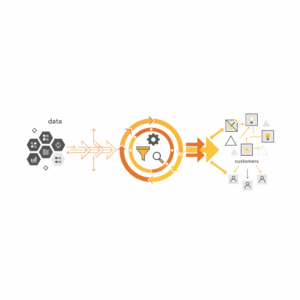
Pick one decision that matters, such as churn outreach or volume forecasting for a priority queue. Form a small cross-functional squad with a business owner, a data scientist, a data engineer, and an operations lead. Use the charter, the guardrails, and the 90-day plan to ship. Meet weekly, measure impact, and publish transparent updates. This starts a repeatable flywheel that turns data into decisions and decisions into outcomes.
FAQ
What is predictive modeling in customer experience and service transformation?
Predictive modeling uses supervised learning and forecasting to estimate outcomes such as churn, conversion, handle time, and demand. These predictions drive operational actions in contact centres, CRM, and digital channels to improve retention, efficiency, and satisfaction.
How do we select the first predictive use cases in our organisation?
Choose one revenue, one cost, and one experience case. Typical starters are churn propensity, contact deflection propensity, and handle time prediction, plus queue-level volume forecasting. Prefer cases with shared features, controllable interventions, and safe A/B testing.
Which governance frameworks should we adopt for model risk and compliance?
Adopt the NIST AI Risk Management Framework for risk structure, align with ISO/IEC 23894 for AI risk terminology and controls, and apply model risk guidance such as SR 11-7. Use model cards, monitoring plans, and clear intended-use documentation.
Why do identity and data foundations matter before modeling?
Accurate identity resolution, standardised features, and data quality testing reduce silent failures and speed deployment. A feature store and versioned data create reuse and reproducibility across teams.
How do we measure impact executives will trust?
Define primary and guardrail metrics upfront, use incremental experiments with control groups, and monitor drift against training baselines. Report impact per 1,000 customers to normalise and make audit simple.
Which technology stack supports enterprise-scale predictive modeling?
Use a governed cloud data platform, a feature store, experiment tracking, a model registry with approvals, and CI/CD integration. Serve models via APIs or batch jobs into contact centre platforms and CRM.
Who owns the model after deployment?
Treat each model as a product with a named owner responsible for health metrics, retraining, incident response, and stakeholder communication. Run weekly reviews with business, data science, and operations.
Sources
Breck, E., Cai, S., Nielsen, E., Salib, M., & Sculley, D. 2017. “The ML Test Score: A Rubric for ML Production Readiness.” Google Research. https://research.google/pubs/pub46555/
Shearer, C. 2000. “The CRISP-DM model.” SPSS, Journal of Data Warehousing. IBM CRISP-DM overview. https://www.ibm.com/docs/en/spss-modeler/SaaS?topic=dm-crisp-overview
National Institute of Standards and Technology. 2023. “AI Risk Management Framework 1.0.” https://www.nist.gov/itl/ai-risk-management-framework
ISO/IEC. 2023. “ISO/IEC 23894:2023 Information technology — Artificial intelligence — Risk management.” https://www.iso.org/standard/77304.html
Google Cloud. 2022. “MLOps: Continuous delivery and automation pipelines in machine learning.” https://services.google.com/fh/files/misc/mlops-whitepaper.pdf
Microsoft. 2023. “Team Data Science Process.” https://learn.microsoft.com/en-us/azure/architecture/data-science-process/overview
Board of Governors of the Federal Reserve System. 2011. “SR 11-7: Guidance on Model Risk Management.” https://www.federalreserve.gov/supervisionreg/srletters/sr1107.htm
European Union. 2016. “General Data Protection Regulation, Article 22.” https://eur-lex.europa.eu/eli/reg/2016/679/oj