























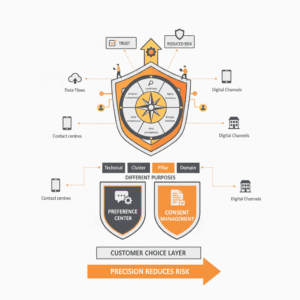
Why governance gives Customer Experience data real power
Leaders set expectations. Governance turns those expectations into consistent Customer Experience outcomes. A clear CX data governance model defines who can do what with which data, for what purpose, and for how long. It reduces privacy risk, improves AI performance, and builds customer trust. The Australian Privacy Principles require transparent management of personal information and a current privacy policy, which a strong governance approach operationalises.¹
What constitutes “CX data” and why definitions matter
Teams handle first-party service records, call recordings, chat transcripts, survey responses, identity data, channel preferences, and behavioural telemetry. CX data includes personally identifiable information and may contain sensitive information. A precise definition prevents scope creep, aligns controls, and simplifies audits. ISO/IEC 27701 describes a Privacy Information Management System that extends ISO/IEC 27001 to govern the lifecycle of personally identifiable information through policy, process, and controls.²
How to structure CX data governance in practice
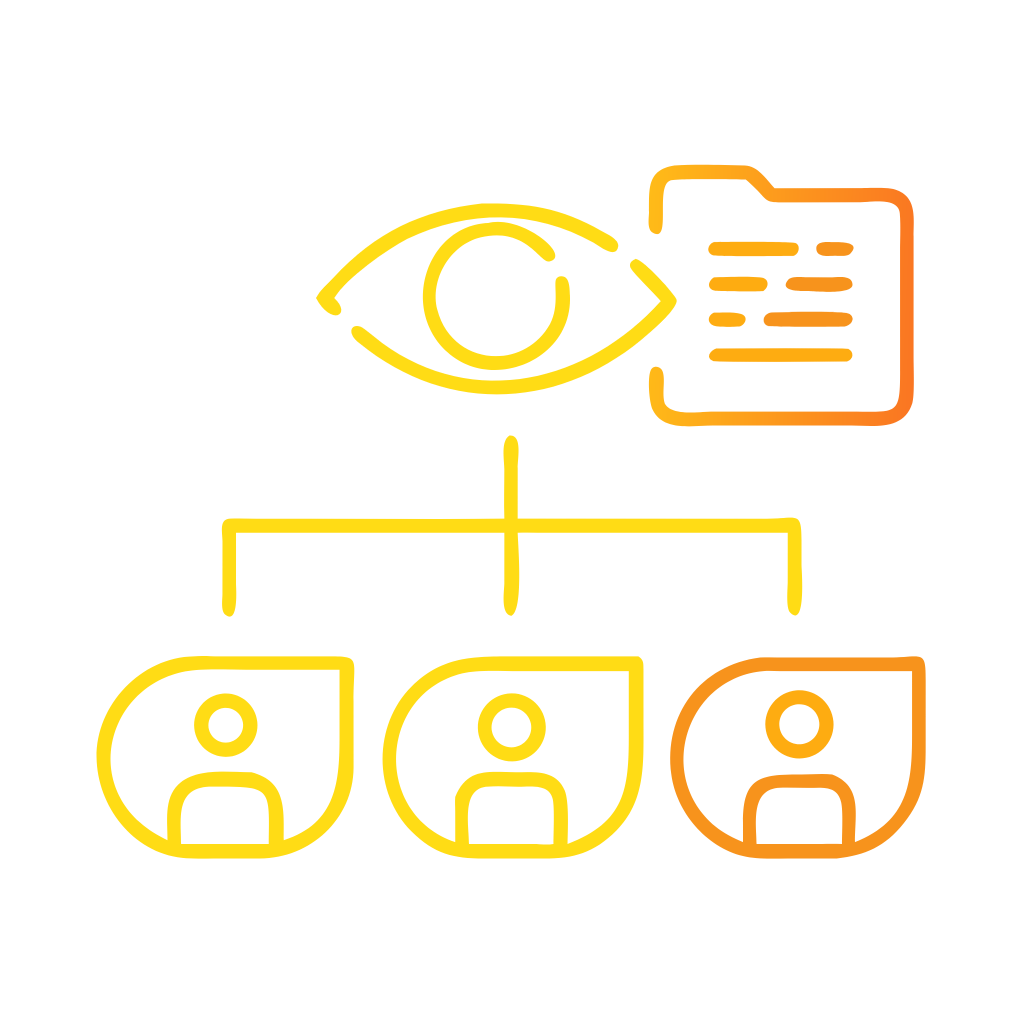
Executives approve a CX Data Governance Charter. A Data Owner in the business sets purpose and quality thresholds. A Data Steward curates metadata, lineage, and retention. A Privacy Officer signs off on lawful basis and DPIAs. Security oversees access control and monitoring. This structure maps cleanly to the NIST Privacy Framework functions of Identify, Govern, Control, Communicate, and Protect.³
Governance checklist for enterprise CX leaders
Purpose and lawful basis. Document purposes for each CX dataset and map to lawful bases. For consent-based processing, verify that consent is freely given, specific, informed, and unambiguous, and that withdrawal is as easy as giving consent.⁴ ⁵
Data inventory and classification. Maintain an asset register for all CX data stores and integrations. Tag data with classification, retention, lawful basis, and system of record. The APPs and ISO/IEC 27701 both support clear, transparent management and role definition for such records.¹ ²
Retention and minimisation. Define schedule entries for call recordings, chat logs, QA scores, and transcripts. Limit retention to what the stated purpose requires, then delete or anonymise.
Consent and preference operations. Operate a unified layer that records consent status, purpose scopes, proof, and timestamps, plus a preference centre for channels and frequency. IAB’s Transparency and Consent Framework provides a common approach for digital signals where relevant.⁶
Third-party management. Keep a register of processors and sub-processors. Ensure contracts include privacy and security obligations and cross-border transfer controls. Align with the APPs’ accountability and transparency expectations.¹
Rights handling. Provide procedures and SLAs for access, correction, deletion, and objection requests. Log requests, decisions, and deadlines. California’s regime emphasises consumer control and a dedicated enforcement agency, which raises the bar for timely, auditable handling.⁷ ⁸
Monitoring and assurance. Track data accuracy, consent error rates, deletion SLA performance, and privacy incidents. Schedule internal reviews against NIST PF profiles and ISO/IEC 27701 control intent.² ³
Training and culture. Train frontline and engineering teams on purpose limitation, minimisation, and consent withdrawal.
What policies do you need and how should they read
CX Data Governance Charter. State scope, strategic objectives, roles, decision rights, policy hierarchy, and metrics. Ground transparency requirements in APP 1 and align internal obligations to public disclosures.¹
Data Classification and Handling Standard. Define classes across identity data, recordings, transcripts, and behavioural events. Specify access patterns, encryption, storage, and transfer requirements.
Data Retention and Disposal Policy. Provide retention rules per data type and purpose. Include defensible disposal procedures and anonymisation standards.
Consent and Preference Management Policy. Define valid consent, collection channels, granularity, proof, and withdrawal. Mirror Article 4(11) and Article 7 conditions and prohibit bundled or coerced consent.⁴ ⁵
Privacy Notice and Channel Disclosure Playbook. Template just-in-time notices for IVR, chat, apps, and web. Use clear language with purpose, lawful basis, retention, and third-party disclosures matched to the actual record of processing.
Data Subject Rights SOP. Detail intake, identity verification, triage, fulfilment, response timelines, and exception handling. Reference regional rules where you operate, including California’s consumer rights framework and enforcement by the CPPA.⁷ ⁸
Third-Party and Processor Management Policy. Mandate DPIAs, transfer impact assessments where applicable, and ongoing assurance. Align to ISO/IEC 27701 controller and processor guidance.²
Contact Centre Recording Policy. Specify announcement scripts, opt-out options, retention by purpose, access control, and deletion workflows.
AI and Analytics Use Policy. State approved CX AI use cases, dataset eligibility, guardrails, and model risk controls, tied back to declared purposes and consent scopes.
Incident Response for Privacy Events. Define severity, notification triggers, roles, evidence collection, and remediation.
When to use preference centres versus consent management
Preference centres manage how you communicate. Customers use them to select channels, topics, frequency, and timing. They govern the means of contact. Consent management governs whether you may process personal data for a specific purpose at all. Consent must be freely given, specific, informed, and unambiguous, with easy withdrawal.⁴ ⁵ A preference centre can exist without consent artefacts if you operate on legitimate interests in some regions, but digital advertising often uses consent strings under frameworks like IAB TCF to standardise signaling across vendors.⁶ Use preference centres to respect customer experience choices. Use consent management to meet legal standards for processing data for defined purposes, and to prove it.
How to implement a unified CX consent and preference stack
Select a Consent Management Platform that can capture web, app, chat, and IVR consent with purpose-level granularity. Store a signed consent record with timestamp, scope, and proof. Ensure withdrawal flows are symmetrical and easy.⁴ Add a preference service that maintains channel and topic selections, integrates with marketing and service systems, and resolves final contactability per user and per purpose. Where relevant advertising signals are used, integrate TCF v2.2 to express choices consistently to publishers and vendors.⁶
What good looks like: measurement and evidence
Executives track a short list of outcomes. Monitor consent capture rate by channel, consent withdrawal time, preference application latency across outbound systems, DSAR turnaround time, deletion backlog, and audit pass rate. Use NIST PF profiles to evidence maturity and drive a roadmap that prioritises high-risk processes.³ Use ISO/IEC 27701 alignment to strengthen controller and processor obligations and to show consistent PIMS operation across your CX estate.² Validate that privacy notices match your Records of Processing and the APP privacy policy is current and accurate.¹
Policy templates you can adapt today
Template 1. CX Data Governance Charter.
Purpose, scope, roles, principles, decision rights, RACI, and KPIs. References to ISO/IEC 27701 clauses for PIMS alignment.²
Template 2. Data Classification and Handling Standard.
Classification levels, handling rules, access control, encryption, transfer, logging, and exception approvals.
Template 3. Data Retention and Disposal Schedule.
Retention periods per CX data type, legal holds, deletion workflow, verification, and anonymisation criteria.
Template 4. Consent and Preference Management Policy.
Definitions, lawful bases, consent capture UX patterns, withdrawal processes, proof requirements, TCF compatibility where relevant, and dispute handling.⁴ ⁵ ⁶
Template 5. Privacy Notice Playbook.
Channel-specific templates with purpose, lawful basis, retention, rights, and contact details consistent with APP transparency expectations.¹
Template 6. DSAR SOP.
Intake channels, identity verification, fulfilment steps, redaction standards, SLA, and appeal flow, with CPRA references for US operations.⁷ ⁸
Template 7. Third-Party Risk and DPA Addendum.
Data maps, purpose restrictions, sub-processor controls, audit rights, transfer assessments, and incident obligations.
Template 8. Contact Centre Recording and Monitoring Policy.
Announcement scripts, opt-out alternatives, retention by purpose, QA analytics safeguards, and access controls.
Template 9. AI in CX Governance Standard.
Use case approval, dataset eligibility, fairness checks, human-in-the-loop, monitoring, and rollback procedures.
What to do next to reduce risk and build trust
Leaders sponsor the Charter. Teams deliver the inventory, schedules, and policies. Privacy signs off on lawful basis and notices. Security sets controls. Operations proves deletion and DSAR performance. Marketing and Service embed the preference centre. Analytics and AI stay within consent scopes. This integrated approach shows customers that the organisation respects their choices, obeys the law, and delivers better experiences as a result. The law rewards transparency and control. Your CX governance turns it into daily practice.¹ ³
FAQ
What is the difference between a preference centre and consent management in CX?
A preference centre manages communication choices such as channel, topic, and frequency. Consent management governs whether the organisation may process personal data for a specific purpose and requires clear, informed, and freely given consent with easy withdrawal.⁴ ⁵
Why should CX governance reference ISO/IEC 27701?
ISO/IEC 27701 extends ISO/IEC 27001 to create a Privacy Information Management System that defines roles, controls, and processes for PII across controllers and processors. It provides a structured foundation for CX data policies and audits.²
Which frameworks help measure privacy maturity in CX operations?
The NIST Privacy Framework provides profiles to identify and manage privacy risk using functions such as Identify, Govern, Control, Communicate, and Protect. It helps executives benchmark and prioritise improvements.³
Which Australian requirements should my CX policies address?
The Australian Privacy Principles require transparent management of personal information and a current privacy policy. They set expectations for collection, use, disclosure, access, and correction that your CX governance should operationalise.¹
Which US rules affect rights handling for CX data?
California’s regime, updated by the CPRA, gives consumers strong rights and established the California Privacy Protection Agency to implement and enforce the law. Include these rights and enforcement expectations in DSAR procedures for US operations.⁷ ⁸
When do I need IAB TCF in my CX stack?
If you participate in programmatic advertising or need to transmit consent signals to publishers and vendors, integrate TCF v2.2 to standardise signaling and accountability across the ad ecosystem.⁶
How do I prove valid consent in audits?
Store a signed consent record that includes timestamp, scope, proof of notice, and the channel of capture. Provide a withdrawal path that is as easy as giving consent and log the withdrawal event.⁴ ⁵
Sources
Office of the Australian Information Commissioner, “Australian Privacy Principles,” 2022, Government of Australia. https://www.oaic.gov.au/privacy/australian-privacy-principles
ISO, “ISO/IEC 27701:2019 Privacy Information Management System,” 2019, International Organization for Standardization. https://www.iso.org/standard/71670.html
National Institute of Standards and Technology, “NIST Privacy Framework,” 2020, U.S. Department of Commerce. https://www.nist.gov/privacy-framework/privacy-framework
European Commission via gdpr-info.eu, “General Data Protection Regulation — Article 7 Conditions for consent,” 2016, Official Journal of the EU. https://gdpr-info.eu/art-7-gdpr/
UK Information Commissioner’s Office, “What is valid consent?,” 2024, ICO Guidance. https://ico.org.uk/for-organisations/uk-gdpr-guidance-and-resources/lawful-basis/consent/what-is-valid-consent/
IAB Europe, “Transparency & Consent Framework v2.2 — Policies,” 2023, IAB Europe. https://iabeurope.eu/transparency-consent-framework/ and Policy PDF https://iabeurope.eu/wp-content/uploads/230509-TCF-Policies-TransparencyConsentFramework_Policies_version_TCF-v2.2-2.pdf
State of California Department of Justice, “California Consumer Privacy Act (CCPA),” 2024, State of California. https://oag.ca.gov/privacy/ccpa
California Privacy Protection Agency, “About Us,” 2024, Government of California. https://cppa.ca.gov/about_us/