
Developing an Enterprise Information Strategy: A Roadmap for 2026
An enterprise information strategy is no longer a back office concern. By 2026, organisations must treat information as core infrastructure for service delivery, regulation, and AI. This article provides a clear roadmap for developing an enterprise information strategy that moves beyond compliance, aligns with business outcomes, and prepares organisations for data driven and AI enabled futures.
What is an enterprise information strategy?
An enterprise information strategy defines how information is governed, structured, protected, and used across an organisation to achieve strategic outcomes. It sets direction for data, content, records, analytics, and knowledge as a single system rather than isolated disciplines.
The core problem it addresses is fragmentation. Many organisations operate with separate data strategies, records policies, analytics programs, and AI initiatives that compete rather than reinforce each other¹.
A modern enterprise information strategy aligns these elements under a common vision. It clarifies priorities, assigns accountability, and ensures information investment supports service, policy, and operational goals.
Why does every organisation need a 2026 information roadmap?
The operating environment has changed. Digital services, remote work, regulatory scrutiny, and AI adoption have accelerated information complexity.
By 2026, organisations will face higher expectations for transparency, explainability, and data ethics. Information that is poorly governed or structured will block automation, increase risk, and undermine trust².
A forward looking roadmap allows organisations to move deliberately. It prevents reactive fixes and ensures capability is built ahead of demand rather than after failure.
How does an enterprise information strategy differ from a data strategy?
A data strategy typically focuses on analytics, reporting, and platforms. An enterprise information strategy is broader.
It includes structured and unstructured information, operational content, records, knowledge, and metadata. It addresses how information is created, used, shared, retained, and retired across the lifecycle³.
This distinction matters for AI. Generative and decision support AI rely as much on policies, procedures, and guidance as on datasets. Without an enterprise view, AI initiatives draw from inconsistent and untrusted sources.
What are the core components of a 2026 enterprise information strategy?
Clear information principles and outcomes
The strategy must define what good looks like. Principles such as authoritative sources, minimum duplication, privacy by design, and lifecycle accountability provide direction for all decisions.
Outcomes should be expressed in business terms. Faster service delivery, reduced risk, improved CX, and AI readiness are more effective anchors than technical targets.
Integrated governance and ownership
Governance defines who decides and who is accountable. By 2026, governance must span data, content, records, and AI use cases.
This includes clear ownership, escalation paths, and performance measures. Frameworks aligned with expectations led by the Australian Government and international standards increasingly expect demonstrable accountability, not just policy intent.
Information architecture and structure
Information architecture translates strategy into structure. Taxonomies, metadata, content models, and classification schemes allow information to be found, trusted, and reused.
This is foundational for AI and automation. Without structure, scale becomes risk.
How should organisations sequence their data strategy roadmap?

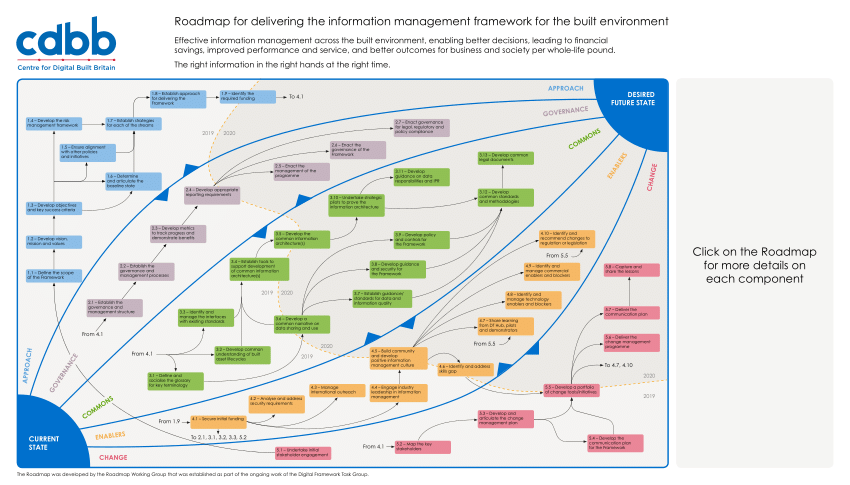
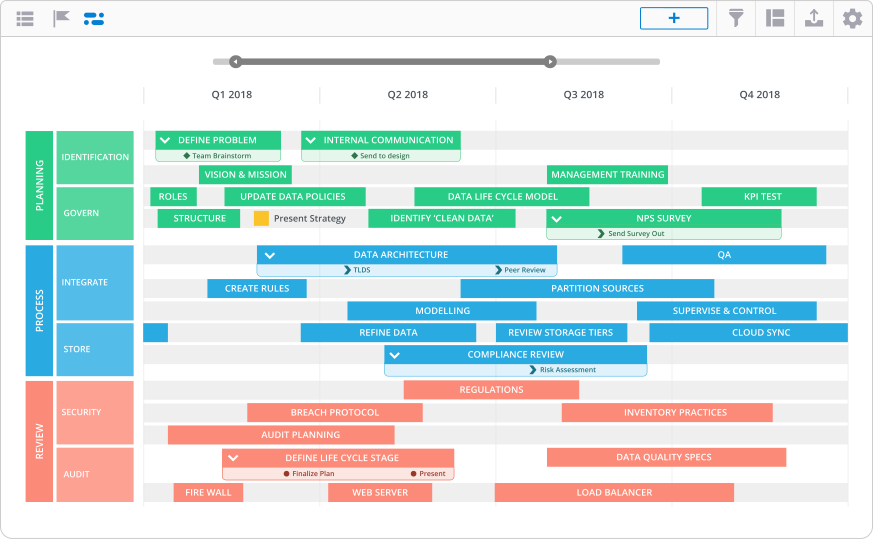
Phase 1: Baseline and risk focus
Start with understanding current state. Identify critical information assets, high risk areas, and pain points affecting services and compliance.
This phase often reveals that effort should focus on a small number of high impact domains rather than enterprise wide change.
Phase 2: Foundation uplift
Invest in governance, architecture, and lifecycle controls for priority information. This includes authoritative sources, metadata standards, and access controls.
Knowledge Quest supports this phase by enforcing structured, governed information and ensuring consistent guidance across channels.
Phase 3: Enable insight and AI
Only once foundations are stable should advanced analytics and AI be scaled. Customer Science Insights then connects information quality to CX and operational outcomes, ensuring value is realised rather than assumed.
CommScore AI can be introduced to analyse interaction data safely when structure and governance are in place.
What risks arise without an enterprise information strategy?
The most common risk is stalled transformation. Digital and AI initiatives fail not because of technology, but because information is unreliable.
There is also regulatory risk. Inconsistent information management undermines privacy, records, and explainability obligations.
Finally, there is a trust risk. Customers and staff lose confidence when information is contradictory or opaque⁴.
How should success be measured?
Success must be measured by outcomes, not artefacts.
Indicators include reduced duplication, improved findability, faster service resolution, fewer compliance findings, and stable AI behaviour over time.
Customer Science Insights supports this by linking information maturity to CX, cost to serve, and service performance metrics.
What are the next steps to develop your 2026 roadmap?
Organisations should begin with an enterprise information maturity assessment aligned to strategic priorities. This identifies where effort delivers the greatest return.
CX Consulting and Professional Services can support strategy development, operating model design, and roadmap sequencing. Information Management and Protection solutions then embed governance, architecture, and compliance into everyday operations.
The goal is not a static document, but a living strategy that evolves with services, regulation, and technology.
Evidentiary Layer
Research consistently links enterprise information strategy with improved organisational performance and reduced risk. ISO standards emphasise integrated governance and lifecycle management as prerequisites for reliable information use⁵. OECD analysis similarly highlights enterprise wide information strategies as essential for digital government and AI readiness⁶.
FAQ
What is an enterprise information strategy?
A strategy that defines how information is governed, structured, and used to achieve organisational outcomes.
How is this different from a data strategy?
It covers all information, not just data and analytics.
Why is 2026 a critical horizon?
Because AI, regulation, and digital service expectations are converging rapidly.
What capabilities matter most first?
Governance, information architecture, and lifecycle control.
What tools support enterprise information strategy delivery?
Knowledge Quest, Customer Science Insights, and CommScore AI when foundations are ready.
How often should the strategy be reviewed?
Continuously, with formal review aligned to major business or regulatory change.
Sources
-
ISO IEC 38505-1, Governance of Data, 2017.
-
OECD, Data Governance for the Public Sector, 2021. https://doi.org/10.1787/0d3a89f5-en
-
DAMA International, DAMA-DMBOK2, 2017.
-
Australian National Audit Office, Management of Data and Information, 2020.
-
ISO 8000-61, Data Quality Management, 2022.
-
OECD, Trustworthy Artificial Intelligence, 2019. https://doi.org/10.1787/5e5c1b8e-en