




















Data governance and information management are often treated as interchangeable. They are not. Organisations that separate them create gaps in accountability, quality, and compliance. Organisations that integrate both build trustworthy data foundations that support regulation, analytics, and AI. This article explains the difference, why both are essential, and how they work together in practice.
What is data governance?
Data governance is the framework that defines how data is owned, controlled, and used across an organisation. It establishes decision rights, policies, standards, and accountability for data assets.
The core problem data governance addresses is risk without ownership. When no one is accountable for data quality, access, or use, organisations face compliance failures, inconsistent reporting, and loss of trust¹.
A data governance framework typically covers roles such as data owners and stewards, policies for access and sharing, quality standards, and oversight mechanisms. In Australia, these frameworks are increasingly aligned to whole of government expectations led by the Australian Government and sector regulators.
What is information management?
Information management focuses on how information is structured, stored, maintained, and made usable over time. It includes records management, content management, information architecture, metadata, and lifecycle controls.
The problem information management solves is usability without structure. Even well governed data becomes ineffective if information cannot be found, trusted, or understood in context².
Information management ensures that information remains accurate, current, accessible, and defensible. It is critical for operational delivery, service consistency, and knowledge continuity, especially in regulated environments.
Information management vs data governance: what is the real difference?
Data governance defines the rules. Information management implements them.
Data governance answers questions such as who owns the data, who can access it, and how quality is measured. Information management answers how information is classified, stored, retrieved, and retained.
Without governance, information management becomes inconsistent. Without information management, governance becomes theoretical. The distinction matters because many organisations invest in one while assuming the other will follow automatically³.
Why do organisations need both?
Governance without management creates compliance theatre
Policies and frameworks alone do not improve outcomes. If information is poorly structured or inconsistently applied, governance controls fail in practice.
Audits often reveal that organisations have approved policies but cannot demonstrate how information is actually managed day to day. This creates false confidence and latent risk.
Management without governance creates uncontrolled growth
Well organised content without governance quickly becomes outdated, duplicated, or misused. Without clear ownership and standards, quality degrades and accountability disappears.
Both disciplines are required to balance control and usability.
How do data governance and information management work together?
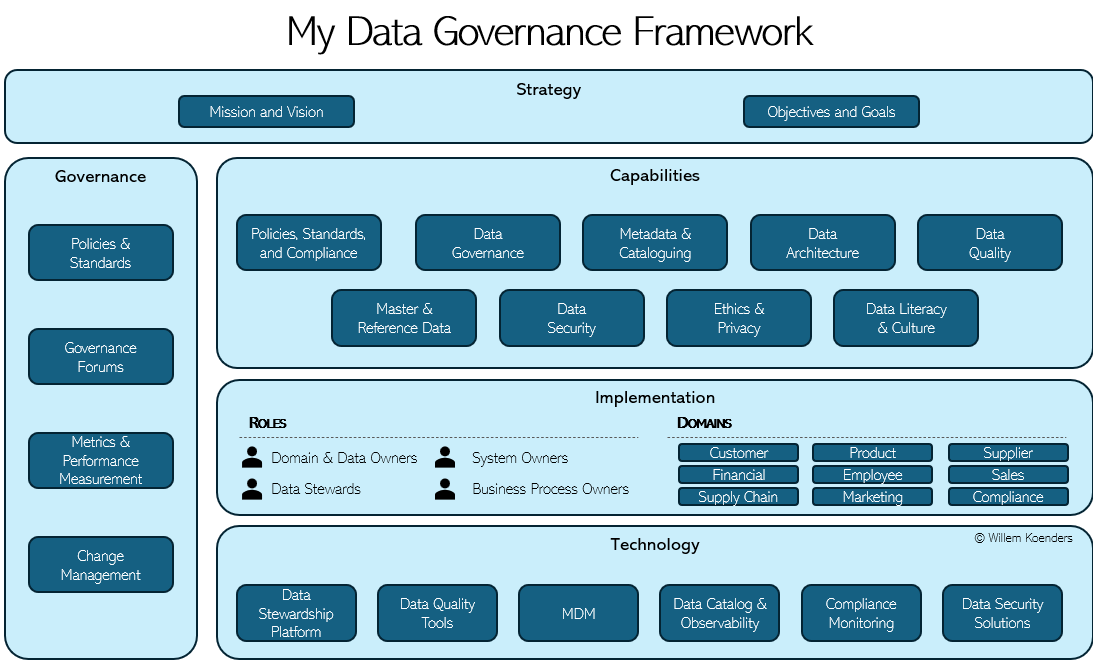

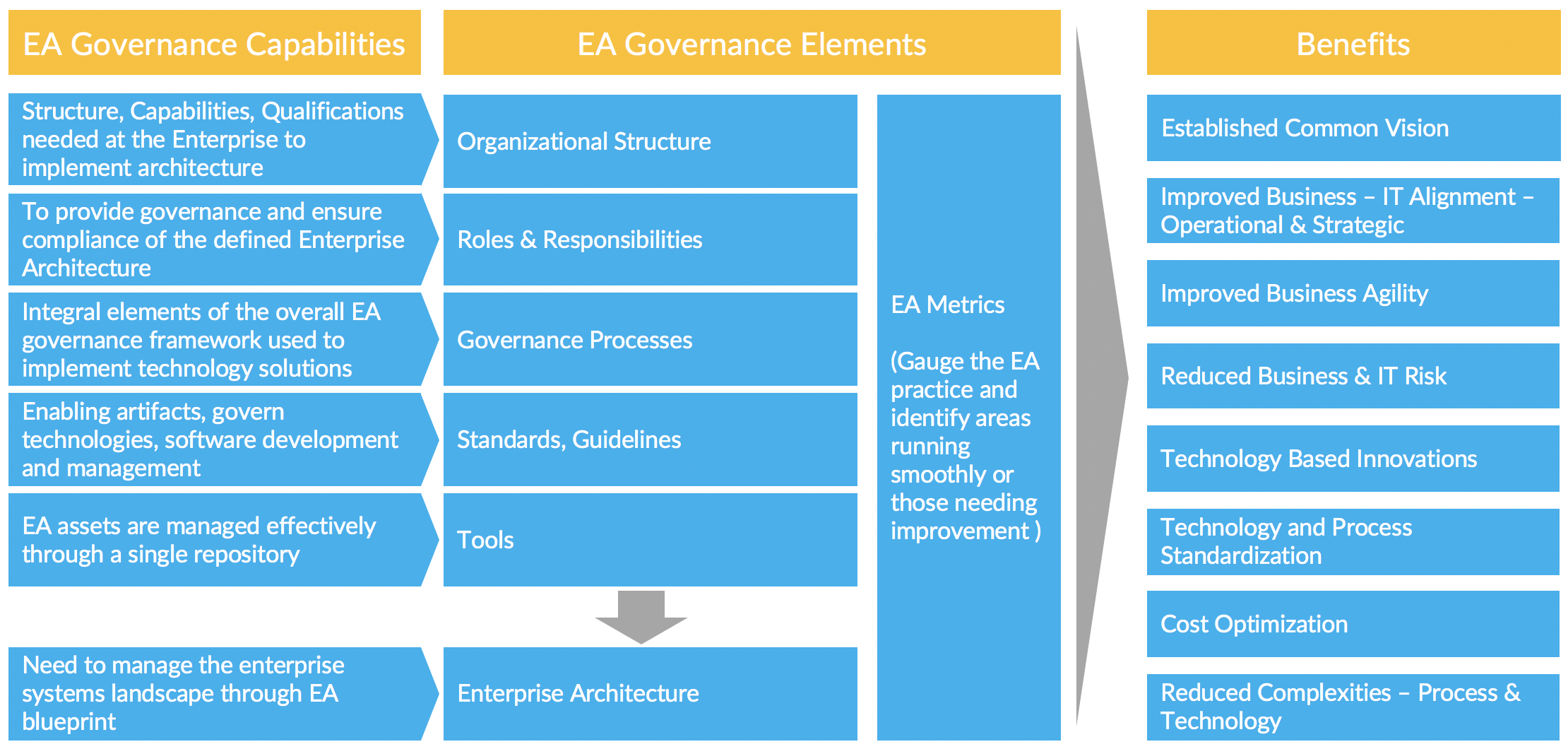
Data governance sets the authority. Information management operationalises it.
For example, governance defines what constitutes authoritative data and how it may be shared. Information management ensures that authoritative sources are identifiable, structured, and accessible to the right users at the right time.
Knowledge Quest supports this integration by applying governance rules through controlled content models, metadata, and lifecycle management. This ensures policy intent is reflected consistently in operational guidance.
Customer Science Insights then connects governed information to CX and operational outcomes, revealing where governance or management gaps undermine performance.
How does this apply to Australian data governance frameworks?
Australian data governance frameworks emphasise accountability, transparency, and ethical use. However, compliance expectations increasingly extend beyond policy to evidence of implementation.
Information management provides that evidence. Classification schemes, retention controls, and access logs demonstrate how governance is enacted in real systems⁴.
This alignment is critical for whole of government data sharing, AI readiness, and privacy by design obligations.
What risks arise when one is missing?
When data governance is weak, organisations face inconsistent data use, unauthorised access, and regulatory exposure.
When information management is weak, staff rely on informal knowledge, outdated documents, and duplicated sources. This increases operational risk and undermines service quality.
In AI enabled environments, these risks multiply. Poorly governed or structured information leads to biased outputs, hallucinations, and loss of trust⁵.
How should organisations assess maturity across both areas?
Assessment should examine both control and execution. Key questions include:
-
Are data ownership and decision rights clearly defined?
-
Are information structures and metadata consistently applied?
-
Can authoritative sources be identified easily?
-
Are lifecycle and retention controls enforced?
CX Research and Design services support this assessment by mapping how information flows across services and identifying where governance and management diverge.
What are the next steps to integrate governance and management?
Organisations should start by aligning data governance frameworks with information architecture and lifecycle practices. This creates a single operating model rather than parallel disciplines.
CX Consulting and Professional Services can support design of integrated governance and information management models. Information Management and Protection solutions then ensure compliance, security, and usability are addressed together.
CommScore AI should only be applied once these foundations exist, ensuring insights are generated from trusted, governed information.
Evidentiary Layer
Research consistently shows that effective data governance depends on strong information management. ISO standards link governance accountability with information quality and lifecycle control⁶. OECD analysis similarly highlights integrated governance and information management as prerequisites for trustworthy data use in the public sector⁷.
FAQ
What is the difference between data governance and information management?
Data governance defines rules and accountability. Information management implements structure and lifecycle control.
Can information management replace data governance?
No. Without governance, information management lacks authority and accountability.
Can data governance succeed without information management?
No. Governance fails if information cannot be consistently managed and evidenced.
Why is this important for AI and analytics?
AI and analytics amplify weaknesses in governance and structure, increasing risk.
What tools support both disciplines?
Knowledge Quest, Customer Science Insights, and CommScore AI support structured, governed information use.
How should organisations start?
By aligning governance frameworks with information architecture and operational practices.
Sources
-
ISO IEC 38505-1, Governance of Data, 2017.
-
ISO 15489, Records Management, 2016.
-
DAMA International, DAMA-DMBOK2, 2017.
-
Australian National Audit Office, Management of Data and Information, 2020.
-
ISO IEC 42001, Artificial Intelligence Management Systems, 2023.
-
ISO 8000-61, Data Quality Management, 2022.
-
OECD, Data Governance for the Public Sector, 2021. https://doi.org/10.1787/0d3a89f5-en