































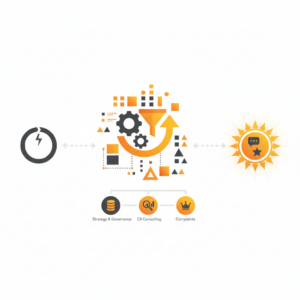
A complaints management framework turns complaints into a managed source of recovery, learning, and trust. It works when organisations make complaint handling easy to access, fair to investigate, fast to resolve, and disciplined enough to turn complaint data into service fixes. Done well, the process can reduce repeat failure, restore confidence, and in some cases move detractors back toward advocacy. (ISO)
What is a complaints management framework?
A complaints management framework is the set of policies, roles, workflows, standards, measures, and governance routines used to receive, assess, investigate, resolve, record, and learn from customer complaints. ISO 10002:2018 defines complaints handling as part of an overall quality management system, covering planning, design, development, operation, maintenance, and improvement.¹ In Australia, AS 10002:2022 is the current local standard aligned to that intent, and regulators such as ASIC expect firms in scope to maintain a publicly available complaints policy and an internal complaint management procedure.²˒³ (ISO)
That matters because a complaint is not just an unhappy interaction. It is evidence that the service, policy, communication, or expectation failed somewhere. Ombudsman guidance in Australia makes this point plainly. Good complaint handling supports fairness, transparency, accountability, accessibility, and service improvement.⁴˒⁵ So a sound framework is not a customer care script. It is a control system for service recovery and organisational learning. (ombudsman.gov.au)
Why do most handling customer complaints processes break down?
Most handling customer complaints processes fail in one of three places. Access is hard. Ownership is vague. Learning never happens. Customers cannot easily find the complaints path, frontline teams are unsure what they can resolve, or the business closes the case without fixing the cause. Then the same complaint returns through another channel, often louder than before. ASIC’s RG 271 is explicit on some of the basics for regulated firms: complaint processes must be readily accessible, explain available assistance, record and respond to complaints, and meet set timeframes.³ (ASIC)
There is also a softer but equally damaging failure. The organisation treats the complaint as a threat instead of a signal. That shifts the posture from listening to defending. Research on complaint handling and forgiveness shows perceived justice in the complaint process influences forgiveness and brand credibility.⁶ Another recent study shows service recovery can, under the right conditions, move dissatisfied customers toward loyalty.⁷ But that outcome is not automatic. It depends on whether the customer experiences the process as fair, respectful, and proportionate to the failure. (ScienceDirect)
What should a complaints management framework include?
A practical framework needs seven parts. Clear intake channels. Triage rules. Resolution pathways. Escalation and investigation standards. Customer communication rules. Measurement. Closed-loop improvement. That structure matches the logic in ISO, Australian standards, ombudsman guidance, and regulated dispute-resolution frameworks.¹˒²˒³˒⁴ (ISO)
It also needs role clarity. Frontline staff should know which complaints they can resolve on first contact, which ones need specialist review, and which ones trigger formal risk, legal, or regulatory treatment. Managers need a way to monitor timeliness, fairness, and repeat complaint drivers. Executives need themed reporting, not just volume counts. Because a rise in complaints can mean service quality is falling. Or it can mean access has improved. Without framework discipline, leaders cannot tell the difference. (ombudsman.gov.au)
How does the framework turn detractors into advocates?
It does it through recovery justice and visible effort. Customers are more likely to forgive when they feel the organisation listened, explained what happened, acted fairly, and made a proportionate attempt to repair the harm. Recent work in the Journal of Business Research links complaint handling and perceived justice to customer forgiveness and brand credibility.⁶ Research in service recovery also shows apologies, compensation, and feedback loops can improve forgiveness and post-trust after service failure.⁸ (ScienceDirect)
But not every complaint becomes advocacy. And it should not be sold that way. The smarter claim is narrower. A good framework increases the odds that a detractor becomes neutral, and that a neutral customer becomes willing to stay, forgive, or speak fairly about the brand. Empathy matters here too. Evidence from online service recovery research shows empathy can increase consumer forgiveness and repurchase intention.⁹ That is why tone, timing, and explanation quality belong inside the process design, not outside it. (Frontiers)
What is the right process for handling customer complaints?
The process should be simple for the customer and controlled for the business. Start with easy intake across phone, email, web, chat, and written channels. Acknowledge quickly. Classify by severity, risk, vulnerability, and complexity. Resolve immediately where possible. Investigate where needed. Communicate progress. Close only when the outcome, explanation, and next step are clear. Then code the cause and feed it into improvement. That sequence reflects both standards guidance and ombudsman good practice.¹˒⁴˒⁵ (ISO)
For many organisations, the practical gap is visibility. Complaint data sits in email, CRM notes, QA files, survey comments, and case systems, with no common view of themes or risk. Customer Science Insights is relevant here because it helps bring complaint-related signals together across channels and service operations, so leaders can see repeat failure, complaint drivers, and recovery performance in near real time.
Where should leaders apply the framework first?
Start where complaints create the biggest trust and cost consequences. Billing issues. delivery failures. onboarding mistakes. vulnerable-customer cases. written communications. repeated unresolved contacts. These areas expose weak ownership, inconsistent communication, and poor root-cause control quickly. Ombudsman guidance also stresses accessibility and proportionate handling, which matters most in exactly these high-friction situations.⁴˒⁵ (ombudsman.gov.au)
A strong first phase does not try to redesign every complaint path at once. Pick one or two complaint types with high volume or high harm. Standardise intake, classify causes properly, define escalation rules, and tighten the response wording. Then measure whether complaint age, repeat contact, and reopen rates improve. Small changes here often reveal bigger operating-model problems hiding underneath the complaint itself. (ISO)
What risks should executives watch?
The first risk is over-formalising low-risk complaints. If every issue becomes a full investigation, the process slows and frustrates both staff and customers. The second risk is under-governing serious complaints, especially where vulnerability, financial harm, privacy, or repeated failure is involved. ASIC’s regime shows why this matters. Regulated complaint handling is not only about courtesy. It is about fairness, timeliness, accessibility, and evidence.³ (ASIC)
Another risk is public complaint spillover. Social and public complaint environments change the stakes because observers learn from how the business responds. Research on social complaint handling found public responses can shape the reactions of other consumers, not just the original complainant.¹⁰ So the framework should define when complaints stay private, when they require public response, and who owns the message. (ScienceDirect)
How should you measure a complaints management framework?
Measure more than closure volume. Start with accessibility, timeliness, fairness, recovery quality, and learning. Useful measures include complaint rate by journey, first-contact complaint resolution, complaint age, reopen rate, escalation rate, time to final response, compensation accuracy, customer effort after complaint, and themed root causes. Then add learning measures such as repeat complaint drivers removed, policy fixes made, and communication defects corrected. Ombudsman guidance explicitly points to complaint data as a source of administrative and policy improvement.⁴ (ombudsman.gov.au)
This is usually where outside support becomes valuable, because the framework has to join process, governance, service design, communication, and reporting. CX Consulting and Professional Services fits that stage well when the goal is to redesign complaint handling as an operating system rather than only refresh scripts or templates.
What should happen next?
Begin with a complaints baseline. Map top complaint types, top channels, complaint age, repeat complaint reasons, and the points where customers most often drop into dispute or public escalation. Then design the minimum viable framework: intake rules, triage matrix, response standards, ownership, and closed-loop reporting. After that, pilot it in one business area before scaling.¹˒³˒⁴ (ISO)
Keep it grounded. Complaint frameworks work when the frontline can use them on a hard day, under real pressure, with awkward cases and incomplete information. That means plain language, realistic authority levels, and live coaching. Not a document that looks polished and changes nothing. (ombudsman.gov.au)
FAQ
What does a complaints management framework do?
It sets the rules, roles, measures, and governance for receiving, resolving, recording, and learning from complaints so the process is fair for customers and useful for the organisation.¹˒⁴ (ISO)
What is the best handling customer complaints process?
The best process is accessible, quick to acknowledge, proportionate to the issue, clear on ownership, and designed to feed root-cause learning back into service improvement.¹˒³˒⁵ (ISO)
Can complaints really turn detractors into advocates?
Sometimes, yes. Strong recovery can improve forgiveness, trust, and later loyalty signals, but only when the customer experiences the response as fair, respectful, and useful.⁶˒⁷˒⁸ (ScienceDirect)
What should leaders measure first?
Start with complaint age, first-contact resolution, reopen rate, escalation rate, root-cause themes, and customer effort after complaint. Those show whether the framework is resolving issues or just processing them.⁴ (ombudsman.gov.au)
When should a complaint be escalated?
Escalate when there is legal, regulatory, financial, vulnerability, safety, privacy, reputational, or repeated-failure risk, or when frontline authority is not enough to deliver a fair outcome.³˒⁴ (ASIC)
What helps complaint responses sound clearer and more trustworthy?
Clear written explanations matter more than many teams think, especially when complaints are emotional or regulated. CommScore.AI is relevant where teams need complaint responses that are clearer, more consistent, and better aligned to brand and policy requirements.
Evidentiary Layer
The evidence supports a simple conclusion. Complaint handling works best when it is treated as both a recovery process and a learning system. Standards bodies frame it as a managed quality process. Regulators emphasise accessibility, fairness, and timeliness. Ombudsman guidance stresses accountability and service improvement. And the service-recovery literature shows that justice, empathy, apology, compensation, and clear feedback loops all shape whether customers forgive, stay, or speak well of the brand after failure.¹˒³˒⁴˒⁶˒⁸˒⁹ (ISO)
Sources
-
ISO. ISO 10002:2018 Quality management, customer satisfaction, guidelines for complaints handling in organizations. Stable record: ISO standard page. (ISO)
-
Standards Australia. AS 10002:2022 Guidelines for complaint management in organizations (ISO 10002:2018, NEQ). Stable record: Standards Australia catalogue page. (Standards Australia)
-
ASIC. Regulatory Guide 271: Internal dispute resolution. Stable guide and PDF record. (ASIC)
-
Commonwealth Ombudsman. Better Practice Complaint Handling Guide. Stable guide record. (ombudsman.gov.au)
-
Victorian Ombudsman. Good practice guide: Complaint handling for public sector organisations, 7 April 2025. Stable guide page. (Victorian Ombudsman)
-
Ali, F., El-Manstrly, D., Abbasi, G. A. Would you forgive me? From perceived justice and complaint handling to customer forgiveness and brand credibility. Journal of Business Research, 2023. DOI: 10.1016/j.jbusres.2023.114138. (ScienceDirect)
-
Lim, W. M. From service failure to brand loyalty: evidence of the service recovery paradox. Journal of Brand Management, 2025. Stable article page. (Springer)
-
Gannon, M., Taheri, B., Thompson, J., Rahimi, R. Investigating the effects of service recovery strategies on customer forgiveness and recovery outcomes. Journal of Hospitality and Tourism Management, 2022. Stable article page. (ScienceDirect)
-
Wei, J., et al. The influence of empathy and consumer forgiveness on repurchase intention in online shopping service recovery. Frontiers in Psychology, 2022. Stable article page. (Frontiers)
-
Ku, H. H., et al. Social learning effects of complaint handling on social media. Journal of Retailing and Consumer Services, 2021. Stable article page. (ScienceDirect)