



















Agile procurement is becoming essential for successful digital government projects. Traditional contracting struggles to keep pace with changing user needs, technology, and policy priorities. Agile contracting in the public sector reduces risk, accelerates delivery, and improves outcomes when aligned with CX and service transformation objectives. This article explains how agile procurement works, where it delivers value, and how agencies can adopt it safely.
What is agile procurement in digital government?
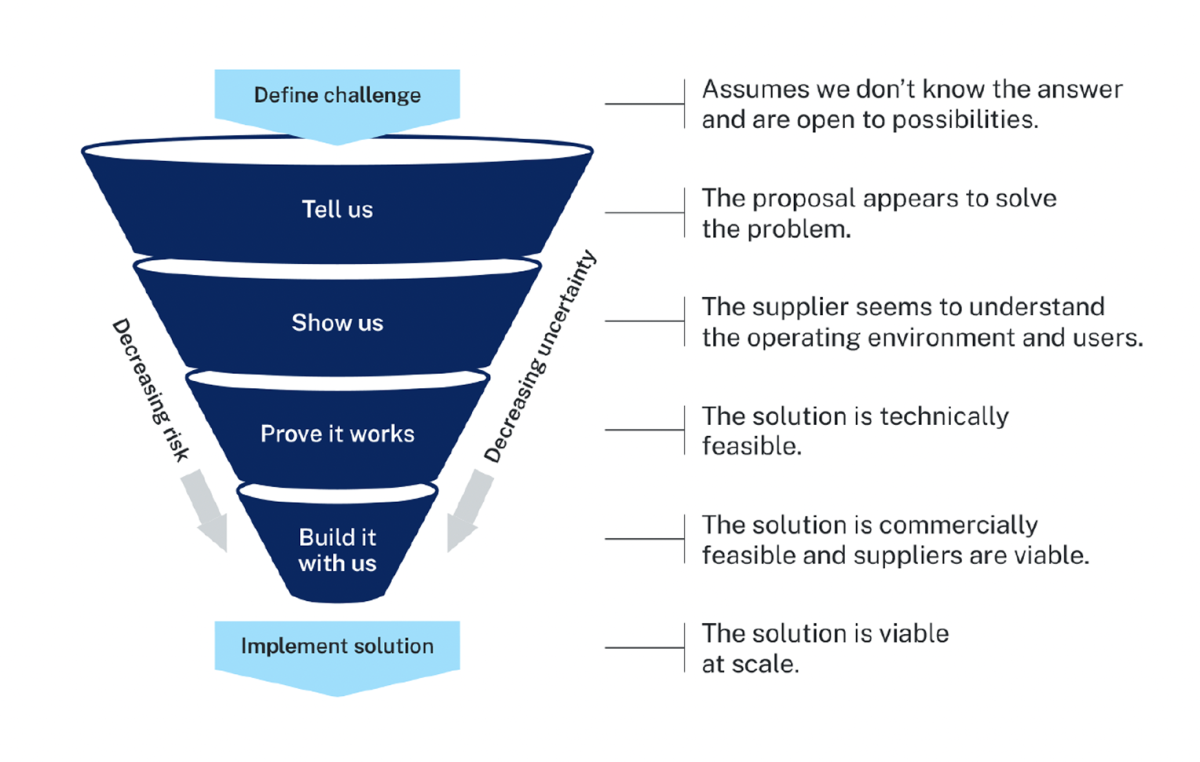
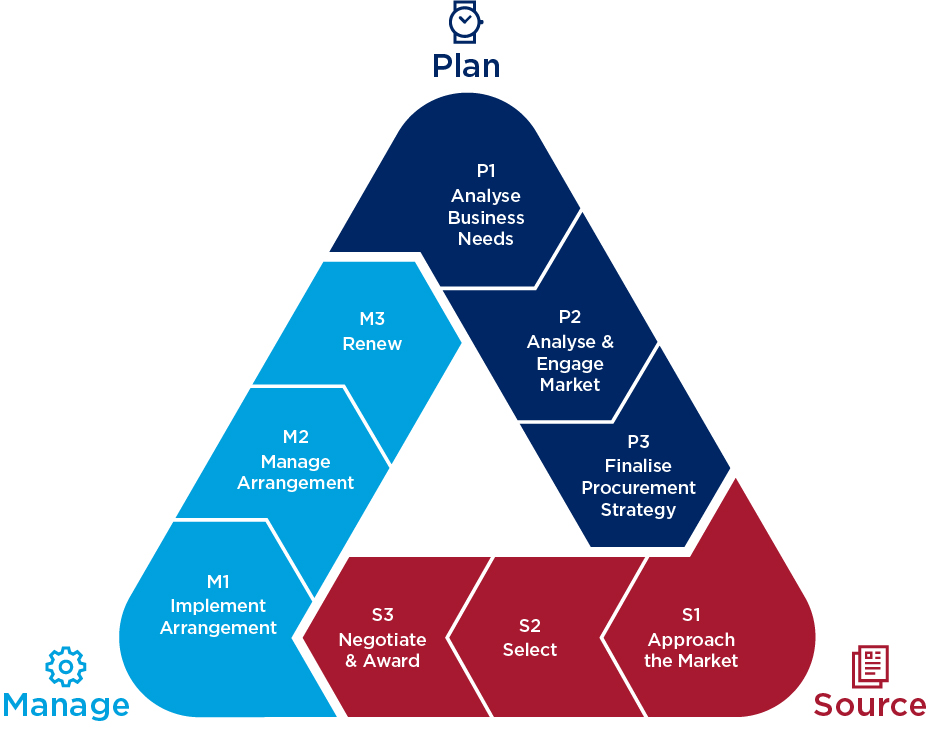
Agile procurement is an approach to sourcing digital services that supports iterative delivery, learning, and adaptation rather than fixed scope, long term contracts. Instead of defining every requirement upfront, agencies procure for capability, outcomes, and collaboration.
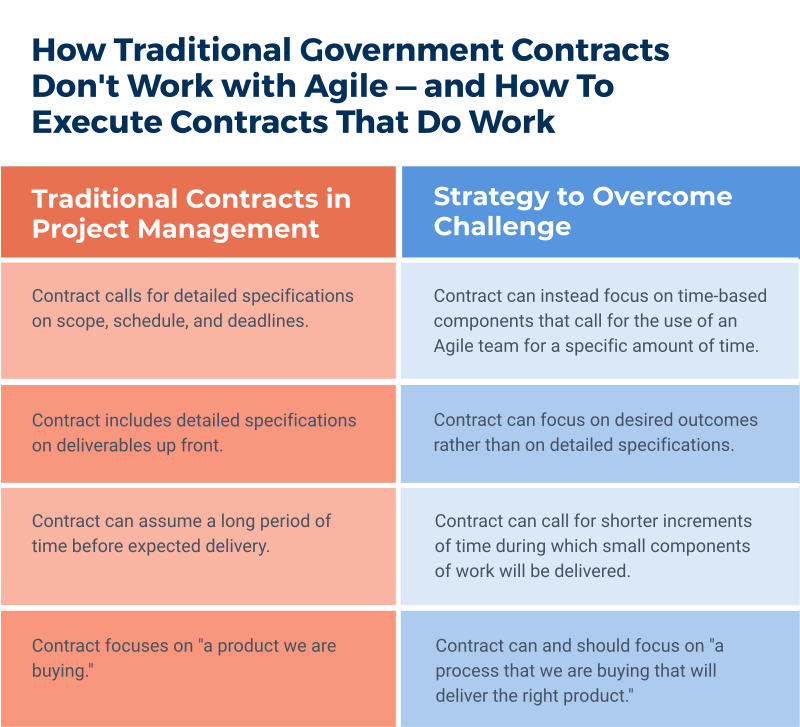
The core problem it addresses is rigidity. Traditional government digital procurement assumes stable requirements, but digital services evolve as user needs and policy settings become clearer. Fixed contracts lock agencies into early assumptions, increasing cost and failure risk¹.
Agile procurement reframes contracting as a partnership focused on delivering value over time rather than enforcing a static specification.
Why does government digital procurement need to change?
Public sector digital projects have a high failure rate when delivered through inflexible procurement models. Audit reviews consistently link large, fixed scope contracts with cost overruns and poor service outcomes².
Digital services are complex systems. User research, accessibility testing, and policy interpretation often reveal new requirements mid delivery. Procurement models that cannot adapt force agencies to choose between compliance and quality.
Agile contracting allows controlled change. It provides mechanisms to adjust scope while maintaining transparency, probity, and value for money.
How does agile contracting in the public sector work?
Outcome focused sourcing
Agile procurement starts by defining outcomes rather than detailed solutions. Agencies articulate the service problem, success measures, and constraints.
Suppliers are assessed on capability, approach, and collaboration rather than on their ability to price a fixed design. This aligns incentives toward solving the right problem³.
Outcome clarity is critical. Without it, flexibility becomes ambiguity.
Incremental delivery and funding
Contracts are structured around short delivery increments with clear review points. Funding is released progressively based on evidence of progress and value.
This reduces sunk cost risk. If a solution underperforms, agencies can pivot or exit with limited exposure.
These approaches are increasingly supported by policy guidance across the Australian Government digital and procurement frameworks.
How does agile procurement differ from traditional contracting?
Traditional procurement prioritises certainty of scope and price. Agile procurement prioritises certainty of outcomes and governance.
The difference lies in risk allocation. Traditional contracts transfer risk to suppliers but often fail when assumptions change. Agile contracts share risk, using transparency and frequent checkpoints to manage uncertainty⁴.
For CX and digital service delivery, this enables continuous user testing, accessibility improvement, and iteration without constant contract renegotiation.
Where does agile procurement deliver the most value?
Digital and CX transformation programs
Agile procurement is particularly effective for digital service and CX transformation initiatives where requirements evolve through user research.
Customer Science Insights supports these programs by providing continuous evidence of service performance and experience outcomes, informing procurement decisions and delivery priorities.
Legacy modernisation and integration
Modernising legacy systems involves uncertainty. Agile contracting allows agencies to decouple, prototype, and integrate incrementally rather than committing to high risk replacements.
Knowledge Quest supports continuity during transition by ensuring consistent, compliant guidance across channels even as systems change.
What risks must agencies manage with agile procurement?
Probity and transparency are common concerns. Agile procurement must still meet public accountability standards. Clear evaluation criteria, documented decisions, and audit trails are essential.
There is also a capability risk. Agencies need commercial, legal, and delivery skills aligned to agile methods. Without this, flexibility can degrade into poor control⁵.
Finally, suppliers must be managed carefully. Agile contracts require active engagement, not passive vendor management.
How should success be measured?
Measurement must extend beyond contract milestones. Agencies should track service outcomes, user satisfaction, accessibility compliance, and value delivered per increment.
Combining delivery metrics with CX data ensures procurement decisions remain aligned to citizen outcomes rather than internal process.
CommScore AI can analyse interaction data to surface emerging issues, helping agencies adjust priorities within agile delivery cycles.
What are the next steps for adopting agile procurement?
Agencies should start with a procurement maturity assessment focused on digital delivery. This identifies where policies, templates, and skills need adjustment.
CX Consulting and Professional Services can support redesign of procurement models, evaluation frameworks, and governance processes. Digital Service and Business Consulting solutions further help align procurement with delivery and policy objectives.
The goal is controlled flexibility that improves outcomes without compromising integrity.
Evidentiary Layer
International evidence supports agile procurement for digital government. OECD analysis links modular contracting with improved delivery confidence and reduced failure rates⁶. Australian audit findings similarly emphasise staged sourcing and outcome based contracts as controls against large scale ICT risk⁷.
FAQ
What is agile procurement in government?
It is a sourcing approach that supports iterative delivery and outcome focused contracting for digital services.
Does agile procurement comply with public sector rules?
Yes, when supported by clear governance, transparency, and documentation.
Is agile procurement suitable for all projects?
No. It is best suited to complex or uncertain digital initiatives.
How does agile procurement support CX transformation?
It enables continuous user research, testing, and improvement during delivery.
What tools support agile digital delivery?
Customer Science Insights, Knowledge Quest, and CommScore AI support evidence driven delivery and insight.
How can agencies reduce procurement risk?
By investing in capability, defining outcomes clearly, and using staged commitments.
Sources
-
OECD, Public Procurement for Innovation, 2017. https://doi.org/10.1787/9789264273953-en
-
Australian National Audit Office, ICT Procurement and Contract Management, 2020.
-
ISO 44001, Collaborative Business Relationship Management, 2017.
-
UK National Audit Office, Agile Delivery in Government, 2018.
-
Australian Government, Commonwealth Procurement Rules, 2023.
-
OECD, Digital Government and Procurement Reform, 2021. https://doi.org/10.1787/7c0f9f0a-en
-
Australian National Audit Office, Large ICT Programs, 2019.