





























Why do leaders confuse agility with ad hoc activity?
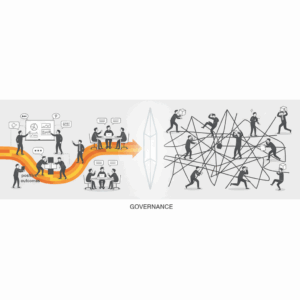
Leaders conflate agility with ad hoc activity when pace becomes the only visible metric. Teams move quickly, but without governance the work lacks a clear definition of value, agreed decision rights, or a traceable path from intent to outcome. This confusion drains trust, increases rework, and obscures risk. In practice, agile is a disciplined operating model that uses short cycles, customer feedback, and empowered teams within a robust governance frame. Ad hoc is improvisation without systematic learning or oversight. The distinction matters for Customer Experience and Service Transformation because services fail when delivery is fast but ungoverned. Agile Service Innovation thrives when governance sets purpose, standards, and constraints that enable teams to move with confidence and accountability. ISO 37000 calls this alignment of purpose, value generation, and oversight the core of effective governance.¹
What is agile governance in a service context?
Agile governance is the structure of principles, roles, rhythms, and evidence that directs empowered teams toward outcomes. In a service context, the governing body defines purpose, approves strategy, sets risk appetite, and ensures transparent performance measurement. Delivery teams operate iteratively, but within limits that protect customers, assets, and reputation. The Australian Government’s Digital Service Standard expects agencies to work in an agile way and to meet specific criteria that anchor delivery to user needs, evidence, and measurable service performance.² The Digital Transformation Agency’s assurance guidance reinforces this by assessing delivery confidence for digital projects and sharpening decisions on scope, funding, and release timing.³ These controls do not slow work. They reduce variance, surface risk early, and safeguard customer outcomes.
Where does ad hoc show up and why is it risky?
Ad hoc behavior appears when leaders skip intents and controls. Teams start building without a validated problem statement. Prioritization changes in corridor conversations. Decisions move outside a defined forum. Evidence devolves into anecdotes. The result is scope creep, inconsistent experience, and hidden risk. Independent reviews of major programs show that weak governance is a recurring cause of delay, cost growth, and rework. The UK National Audit Office has documented how shifting rationales, unclear decision rights, and inadequate assurance undermine delivery on mega projects.⁴⁵ These findings translate to enterprise services: when governance is thin, delivery becomes personality driven. Customers receive fragmented journeys and staff carry a heavy cognitive load to bridge gaps.
How do agile and ad hoc differ in mechanisms, not slogans?
Agile uses mechanisms that are observable and auditable. Backlogs tie to a strategy framed by outcomes. Funding follows value, not only projects. Decision rights are explicit. Cadences exist for planning, review, and risk. Metrics connect lead indicators to lag outcomes. External benchmarks support these patterns. PMI’s Pulse of the Profession found that organizations with higher organizational agility met more goals and completed more work on time and on budget during periods of disruption.⁶ McKinsey’s global research links enterprise agility with faster time to market, higher customer satisfaction, and efficiency gains when supported by clear leadership and enabling practices.⁷⁸ These are mechanisms that can be inspected, coached, and improved. Ad hoc lacks such structure. It substitutes energy for evidence and confuses heroics with capability.
How should governance steer Agile Service Innovation without smothering it?
Governing bodies should define purpose, value creation, and responsible conduct, then translate those principles into practical guardrails for teams. ISO 37000 offers a concise frame for purpose, value generation, and accountability.¹ In regulated markets, listed entities align operating practices with the ASX Corporate Governance Principles and Recommendations, which emphasize culture, risk management, and disclosure.⁹¹⁰ For public services, the Australian Government Architecture and Digital Service Standard provide scaffolds for service design, data stewardship, and portfolio alignment.²¹¹¹² Leaders should convene short, focused governance rituals that review outcomes, risks, and learning. These rituals keep authority close to the work while preserving independence for assurance. The goal is to enable speed with safety.
What operating model upgrades separate agile from ad hoc?
Executives can upgrade four elements to lock in agility and eliminate ad hoc drift.
First, define an outcomes hierarchy. Describe the customer, the journey, and the measurable change in behavior or satisfaction. Tie every epic to a single outcome and a timebound benefit hypothesis. This clears the path from intent to backlog and allows executives to fund slices of value rather than monolithic projects. PMI calls this connection between strategy and delivery a differentiator during disruption.⁶
Second, professionalize decision rights. Publish a one-page RACI for strategy, funding, architecture, risk, and release go/no go decisions. In government delivery, the DTA’s delivery confidence guidance provides a model for how independent assurance strengthens decisions without blocking flow.³
Third, standardize evidence. Adopt a limited set of metrics that blend customer measures, flow efficiency, quality, and value realization. McKinsey’s research shows that comprehensive transformations outperform partial efforts, which supports the case for a balanced metrics set.¹³
Fourth, codify cadence. Set non negotiable calendars for quarterly outcomes planning, monthly portfolio reviews, and fortnightly delivery reviews. Use the Australian Digital Service Standard as a checklist to keep delivery anchored to user needs and measurable service performance.²
How do you measure the difference between agile and ad hoc?
Measurement settles the debate. Agile environments show a stable rhythm of commitments met, defects trending down, decision turnarounds improving, and customer outcomes moving in the expected direction. Portfolios show fewer priority collisions and clearer kill decisions. Independent observers can trace a line from board intent to team increment. The OECD’s guidance on digital investment underscores the need for governance that manages risk and pursues results-driven investment through structured oversight, not episodic interventions.¹⁴ In contrast, ad hoc environments show brittle schedules, backlog churn, quality escapes, and performance stories that change with the narrator. The absence of repeatable mechanisms becomes visible in variance and sentiment.
How do trust, assurance, and transparency support speed?
Trust expands when governance is transparent and assurance is constructive. The DTA’s articles and guidance emphasize fit for purpose assurance, not ceremonial gatekeeping.³¹⁵ Good assurance speaks with evidence and suggests options. Boards can then sponsor calculated risk taking with confidence. Financial press coverage of Australian corporate governance debates makes one point clear. Governance must remain current and credible to sustain trust among investors and customers.¹⁶ When executives publicize decision criteria, publish outcome dashboards, and welcome independent challenge, teams experience autonomy within a safe envelope. Speed increases because fewer decisions stall and less work is reworked.
What are practical next steps for CX and service leaders this quarter?
CX executives can start with a targeted uplift that proves value quickly.
Start by selecting one cross functional service journey with material volume or risk. Define the outcome, the baseline, and three lead indicators. Align a single funding envelope to increments tied to that outcome. Use the Digital Service Standard to test the service against user needs, accessibility, and measurement expectations.² Run a 90 day cadence with public reviews. Invite independent assurance to calibrate risk and delivery confidence.³ At the same time, update your corporate governance alignment. For listed entities, check your disclosures against ASX’s fourth edition expectations and confirm your board’s oversight of culture and risk management.⁹¹⁰ For public agencies, align architectural decisions with the Australian Government Architecture so cross program dependencies do not derail flow.¹¹ The point is to show how governance accelerates delivery rather than constraining it.
How should executives talk about risk without slowing the work?
Executives should treat risk as a design variable, not a compliance chore. The National Audit Office’s lessons on major programmes show that unclear rationales and fragmented governance increase risk while masking it.⁴⁵ Productive language treats risk appetite as a set of numeric boundaries that teams can use to design experiments, not as a generic caution. Delivery confidence assessments create a shared picture of risk in time, scope, quality, and benefits that informs go or no go decisions at each increment.³ This transparency reduces fear, speeds escalation, and helps leaders stop work that no longer fits the purpose. It also clarifies where automation and AI can speed checks without introducing blind spots, a theme echoed in recent oversight discussions.¹⁶
What impact should leaders expect from disciplined agile governance?
Disciplined agile governance improves customer outcomes, reduces delivery variance, and increases organizational resilience. PMI reports that organizations with strong agility met more goals and stayed on budget and schedule during disruption.⁶ McKinsey highlights that enterprise agility, when anchored by leadership and enabling practices, correlates with faster decision making and higher productivity.⁷¹³ Public sector guidance in Australia ties agile delivery to service standards and investment oversight that keep value and risk visible.²³¹¹¹⁴ When leaders adopt these practices, teams replace improvisation with informed experimentation. Customers feel the difference because services become more coherent, reliable, and responsive to feedback. The enterprise feels the difference because governance gives permission to move fast with purpose.
FAQ
What is the primary difference between agile delivery and ad hoc activity in service transformation?
Agile delivery uses explicit mechanisms such as outcome based planning, clear decision rights, iterative cadences, and evidence based assurance. Ad hoc activity lacks these structures and relies on improvisation, which increases risk and rework.¹²
How does ISO 37000 help executives govern Agile Service Innovation?
ISO 37000 provides guidance on purpose, value generation, and accountable oversight. These principles translate into clear roles, risk appetite, and performance expectations that enable empowered teams to move quickly without losing control.¹
Which Australian frameworks should CX leaders use to anchor agile service delivery?
Leaders should use the Digital Service Standard for user centred delivery expectations, the Australian Government Architecture for alignment and reuse, and the DTA’s delivery confidence guidance for independent assurance on digital projects.²¹¹³
Why do audits cite governance as a root cause of large program failure?
Audits often find shifting rationales, unclear decision rights, and weak assurance. The UK National Audit Office’s reports show that poor governance drives delay, cost growth, and reduced value, lessons that apply to enterprise services as well.⁴⁵
How can an executive measure whether governance is enabling agility?
Executives should look for stable cadences, consistent delivery against commitments, traceability from board intent to team increments, and customer outcomes that move in the expected direction. OECD guidance reinforces results driven investment and structured oversight.¹⁴
Which corporate governance expectations matter for listed entities pursuing agile ways of working?
The ASX Corporate Governance Principles and Recommendations emphasize culture, risk management, and disclosure. These expectations should be reflected in how agile delivery is funded, governed, and reported.⁹¹⁰
How does assurance accelerate rather than slow digital delivery in Australia?
The DTA’s assurance approach focuses on delivery confidence and fit for purpose checks. By clarifying risk early and suggesting options, assurance prevents rework and supports faster, safer releases.³¹⁵
Sources
ISO 37000:2021 Governance of Organizations — Guidance. ISO/TC 309. 2021. PDF. (ISO)
Digital Service Standard Version 2.0. Digital Transformation Agency. 2024. PDF. (Digital.gov.au)
Assessing Delivery Confidence of Digital Projects v1.1. Digital Transformation Agency and John Grill Institute for Project Leadership. 2024. PDF. (Digital.gov.au)
Lessons learned from Major Programmes. National Audit Office. 2020. Web + PDF. (National Audit Office (NAO))
Lessons learned: Governance and decision making on mega projects. National Audit Office. 2025. PDF. (National Audit Office (NAO))
Pulse of the Profession 2021: Beyond Agility. Project Management Institute. 2021. PDF. (Project Management Institute)
The impact of agility: How to shape your organization to compete. Aghina, Handscomb, Salo, Thaker. McKinsey. 2021. Article. (McKinsey & Company)
Agile Organizations. McKinsey. 2025. Topic hub. (McKinsey & Company)
Corporate Governance Principles and Recommendations, Fourth Edition. ASX Corporate Governance Council. 2019. PDF. (Australian Securities Exchange)
Transitioning to the Fourth Edition of the Corporate Governance Principles and Recommendations. ASX. 2019. PDF. (Australian Securities Exchange)
Australian Government Architecture. Digital Transformation Agency. 2025. Web. (Digital Transformation Agency)
Our Initiatives overview. Digital Transformation Agency. 2025. Web. (Digital Transformation Agency)
The science behind successful organizational transformations. McKinsey. 2015. Article. (McKinsey & Company)
Digital Government in Australia: Full Report. OECD. 2023. Web. (OECD)
New guidance on assessing the delivery confidence of digital projects. DTA. 2024. Web. (Digital Transformation Agency)
ASX takes control of corporate governance rules after council disbanded. The Australian. 2025. News. (theaustralian.com.au)