





















CX SHOWCASE 2026
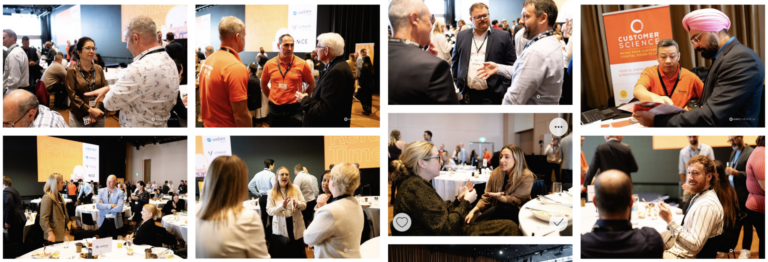
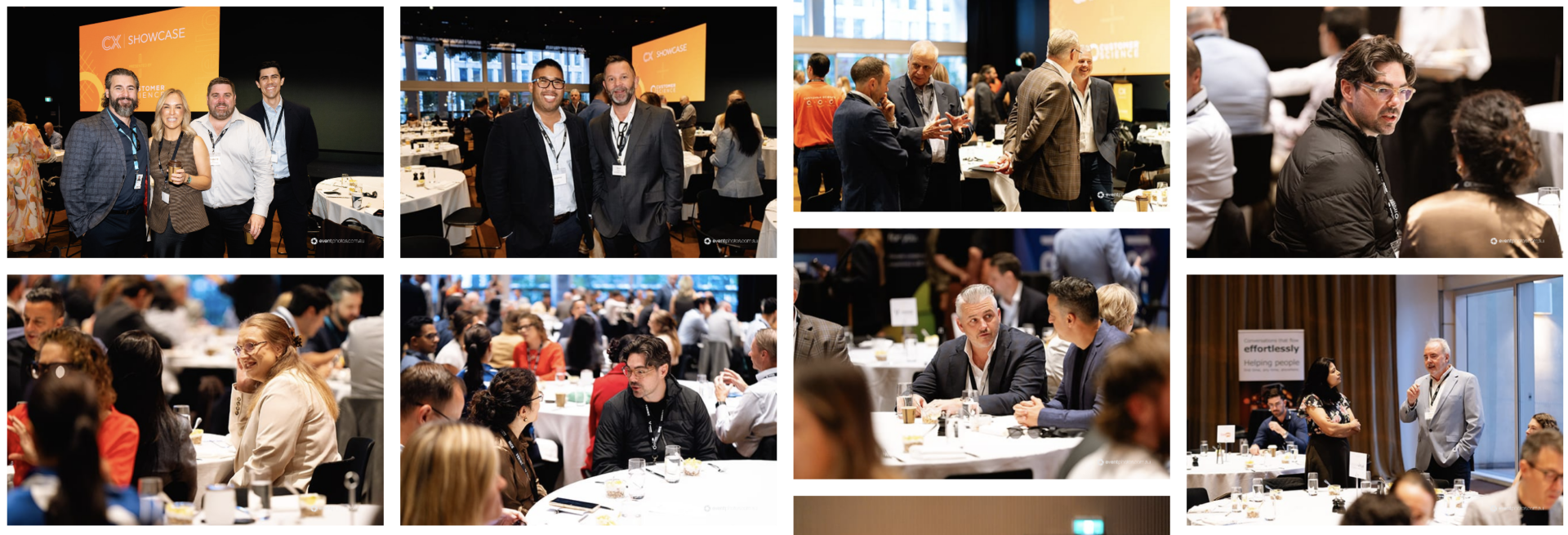
Customer Science is delighted to have hosted another great CX Showcase for 2026, our biggest one yet!
The CX Showcase is an inspiring platform where the movers and shakers of the customer experience and service industry explore how award winners and industry innovators break conventional wisdom to improve services, organisations and Australian lives. It is also an event that celebrates connection, collaboration and the opportunity to meet like-minded people and companies who are shaping the future of service.
Australia is entering another year of operational pressure. Businesses are navigating rising cost-of-living pressures, productivity stagnation, workforce fatigue, geopolitical uncertainty, housing affordability challenges, AI disruption and increasing customer expectations.
At the same time, organisations are being asked to reduce operating costs, improve service quality, increase productivity, support employees and deliver measurable transformation outcomes.
The challenge is significant because many organisations are still struggling to convert transformation investment, particularly AI investment, into measurable operational value. McKinsey’s 2025 State of AI research found that while AI adoption is now widespread, most organisations still struggle to scale AI into enterprise-level impact because workflows and operating models have not fundamentally changed. Gartner similarly predicts that at least 30% of generative AI projects will be abandoned after proof of concept because of poor data quality, inadequate governance, escalating costs or unclear business value. At the same time, Forrester’s 2025 Global Customer Experience Index found that customer experience continues to decline in many markets because of weaker employee experience, disappointing technology implementations and economic volatility.
This creates a defining leadership question for Australian organisations:
How do you reduce costs while simultaneously improving customer experience, employee experience and operational performance?
The showcase brought together award-winning customer experience leaders and innovators from transport, financial services, healthcare, local government, accessibility services, insurance, software and enterprise technology to share practical examples of how they are transforming services across Australia.
Congratulations to our incredible award winners, speakers, sponsors and partners.
Presentation Highlights
by Todd Gorsuch, CEO, Customer Science
Katarina Oliveri
Metro Trains Sydney: Authenticity Beats Over-Scripted Service
The Conventional Wisdom This Challenged
Conventional wisdom often suggests that customer service consistency comes from scripts, tighter process control, standardised wording, compliance and centrally managed interactions.
The assumption is that if employees say the “right thing” consistently, the customer experience will improve.
In reality, over-scripted environments can reduce human connection, approachability, emotional trust and employee authenticity. Customers can feel when an interaction sounds processed rather than genuine.
The Better Way This Speaker Proved
Katarina Oliveri from Metro Trains Sydney showed that stronger service outcomes can come from helping employees bring their authentic selves to work.
Metro Trains Sydney redesigned its service culture around trust, authenticity, purpose, leadership connection, team engagement, psychological safety and a focus on “moments over metrics”.
The organisation recognised that frontline employees did not lack capability. They lacked permission.
One of the defining moments in the presentation came from the statement: “Because I don’t think I’m allowed to.”
Metro Trains Sydney changed that by supporting employees to connect more genuinely with customers, while still operating within a disciplined service environment.
The results were extraordinary, with Metro Trains Sydney achieving 98–99% customer satisfaction across November 2024 to February 2026.
For transport in New South Wales, already one of Australia’s strongest customer experience sectors, this represents a major achievement.
Nugget of Gold for Leaders
Do not design the humanity out of service.
Processes, standards and scripts matter, but they should support human connection, not replace it.
The organisations creating the best customer experiences are increasingly those that train people well, build trust, empower frontline teams and create environments where employees feel safe to connect authentically with customers.
Gary Anderson
AMP: AI Value Comes from Operating Model, Not Technology Alone
The Conventional Wisdom This Challenged
Conventional wisdom suggests organisations should start AI transformation with small, isolated pilots, limited access, innovation teams disconnected from operations, and tightly controlled experimentation.
While this approach can feel safe, it often creates a major problem: AI remains trapped in pilot mode. The organisation experiments with AI, but fails to embed it into everyday operational workflows.
The Better Way This Speaker Proved
Gary Anderson from AMP showed that enterprise AI value comes from creating an operational model around AI, not just deploying technology. AMP’s approach focused on three key pillars.
- Democratising AI
AMP deployed Microsoft Copilot broadly across the organisation, giving employees the opportunity to learn AI, experiment safely, improve workflows and integrate AI into their everyday work.
This approach helped create more than 70% daily AI usage across the organisation.
- Building an AI Centre of Excellence
AMP created a dedicated operational capability responsible for AI implementation, governance, business engagement, use-case development, leadership support and measurable value creation.
This gave AI clear ownership and helped ensure it was connected to business outcomes rather than treated as a disconnected innovation activity.
- Embedding AI Into Existing Platforms
Rather than creating disconnected AI tools, AMP integrated AI into existing operational systems and workflows, including Salesforce and agentic workforce solutions.
The results included a 3–8% uplift in ESAT, CSAT and First Call Resolution, as well as more than 70 hours per month of projected business development manager capacity gains.
This aligns strongly with McKinsey’s 2025 findings that organisations creating the strongest AI value redesign workflows and operating models, rather than simply adding AI tools to existing processes.
Nugget of Gold for Leaders
AI needs ownership, workflow integration and operational accountability.
It should not be treated as a side project.
The organisations creating measurable AI value are democratising safe AI access, embedding AI into workflows, building operational governance, creating dedicated accountability and redesigning the work itself.
Debbie Celenza
Expression Australia: Designing for Vulnerable Customers Creates Better Services for Everyone
The Conventional Wisdom This Challenged
Conventional wisdom often suggests that accessibility challenges are primarily solved through government reform, compliance programs, policy changes or long-term institutional transformation.
The problem with this approach is that vulnerable communities can remain underserved while systems evolve slowly. Accessibility is also frequently treated as an “edge case” rather than a core service design principle.
The Better Way This Speaker Proved
Debbie Celenza from Expression Australia showed that accessibility can become a source of innovation rather than limitation.
Expression Australia deeply understood the lived experience of Deaf and hard-of-hearing Australians, particularly during emergency situations, healthcare interactions, sensitive conversations and access to community services.
Rather than waiting for the broader system to solve the issue, the organisation built AEI and BODI as secure communication solutions designed specifically around visual communication and accessibility needs.
The outcomes were significant, with 3,122 app downloads, 1,755 calls handled and 297 critical Triple Zero emergencies supported.
These are not simply service interactions. They are potentially life-saving moments.
The importance of this work is amplified by the broader Australian context. The ABS Survey of Disability, Ageing and Carers reported Australia’s disability rate at 19.2% in 2022, highlighting the scale of accessibility need nationally.
Nugget of Gold for Leaders
Design around the people most at risk of exclusion.
When organisations build services around vulnerable customers, simplicity improves, trust improves, accessibility improves and customer experience improves for everyone.
Accessibility is not just compliance. It is one of the strongest sources of innovation in modern service design.
Reshma Joseph
Teachers Health: Small Improvements Can Outperform Big Transformation Programs
The Conventional Wisdom This Challenged
Conventional wisdom often suggests that meaningful transformation requires major programs, significant budgets, large transformation teams, enterprise-wide redesigns and long implementation timelines.
This mindset can delay improvement because organisations often wait for the “perfect” transformation strategy before taking action.
The Better Way This Speaker Proved
Reshma Joseph from Teachers Health showed that transformation can come from disciplined, incremental operational improvement.
Her “Small But Mighty” philosophy focused on workforce planning, coaching, KPI redesign, training, team engagement, failure demand reduction and continuous frontline listening.
Rather than relying on one major transformation initiative, Teachers Health improved many smaller operational elements at the same time. This approach created meaningful momentum across the contact centre and demonstrated the power of consistent, practical change.
The results were dramatic. Product Review scores improved from 1.8 out of 5 to 4.8 out of 5, while average speed to answer reduced from approximately 15 minutes to under 60 seconds.
Nugget of Gold for Leaders
Do not wait for the perfect transformation program. Start by finding friction, listening to frontline teams and improving small operational elements quickly.
Measure the benefits, then repeat the process consistently.
Many small improvements, when executed well, can outperform large, slow-moving transformation programs.
Aneta Field
Canstar: High Performance Comes from Human Connection Plus Execution Discipline
The Conventional Wisdom This Challenged
Conventional wisdom says performance comes primarily from KPIs, governance, process design and operational discipline. Those things matter, yet they are not enough on their own.
The Better Way This Speaker Proved
Aneta Field from Canstar demonstrated that sustainable high performance comes from combining human connection, psychological safety, transparency, vulnerability and execution discipline.
Her leadership approach focuses heavily on authentic relationships, understanding people individually, honest communication and employee trust. This created a highly effective operational innovation culture.
The results included 76 employee-generated ideas, 39% of those ideas implemented within 12 months, 100% feedback loops and engagement scores of 4.8 out of 5.
Qualtrics’ 2025 consumer research similarly highlights that poor employee interactions remain one of the strongest drivers of negative customer experiences.
Nugget of Gold for Leaders
Do not collect employee ideas unless you are prepared to act on them.
Culture becomes commercially valuable when ideas are heard, feedback loops are closed, commitments are delivered and employees trust leadership to follow through.
EVENT PARTNERS
Proudly presented by