




























Summary
Organizational transformation fails when culture is assumed rather than understood. An organizational culture assessment provides evidence of how work actually gets done, how decisions are made, and what behaviours are rewarded. This insight is the foundation for any credible cultural transformation strategy. Without it, change efforts address symptoms, not causes.
What is an organizational culture assessment?
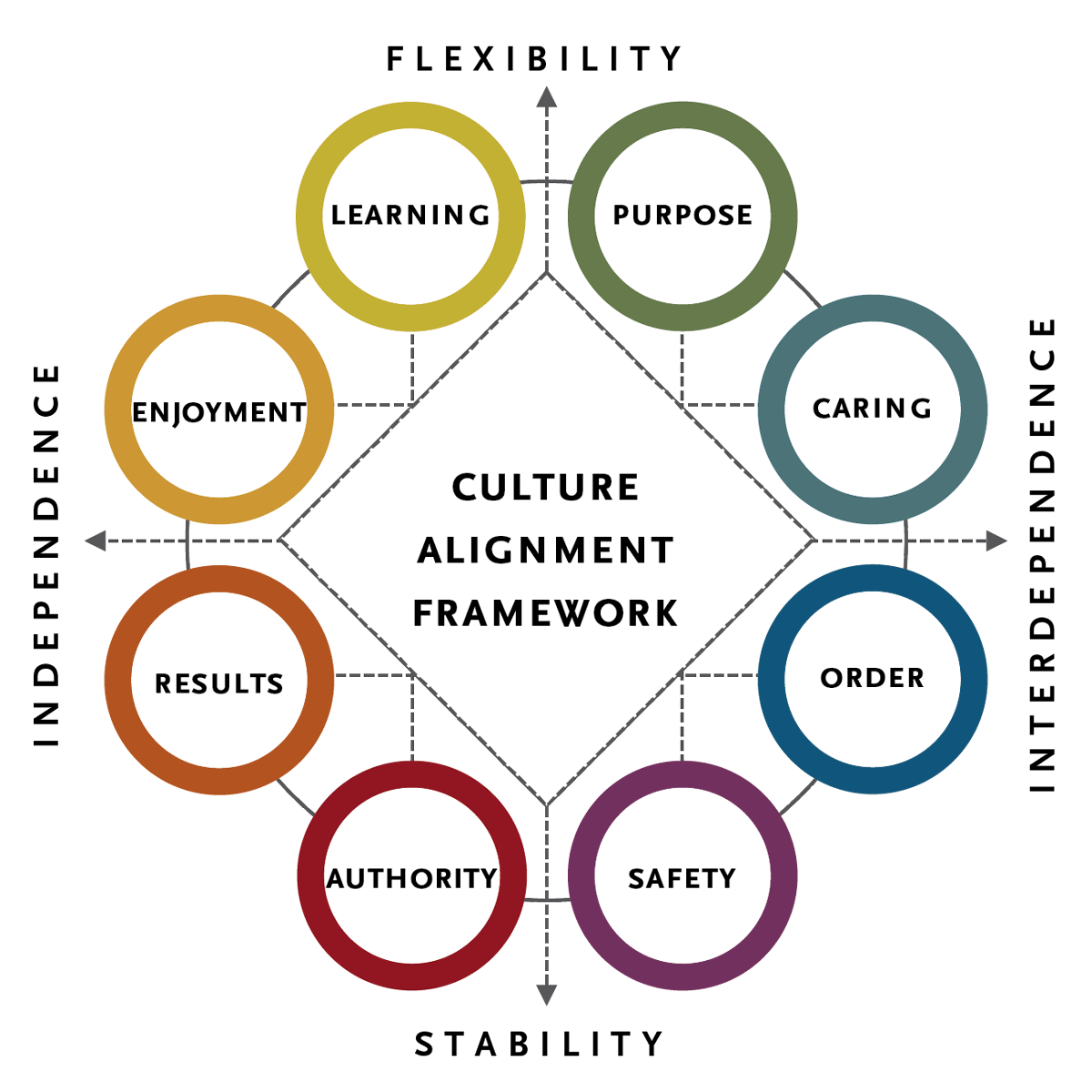
An organizational culture assessment is a structured evaluation of shared behaviours, norms, and decision patterns within an organisation. It reveals the gap between stated values and lived experience.
Culture is not what leaders intend. It is what people do when under pressure. Assessment captures this reality through qualitative and quantitative methods, including surveys, interviews, behavioural data, and decision analysis. Research shows that organisations that explicitly assess culture before transformation achieve higher adoption and lower resistance¹.


Why is culture the first step in transformation?
Transformation changes how an organisation operates. Culture determines whether those changes stick. If culture is misaligned, new structures and processes are absorbed or resisted in predictable ways.
Many transformations fail because leaders attempt to impose new behaviours without understanding existing ones. According to Harvard Business Review, culture consistently overrides strategy and operating model changes when the two are misaligned². Assessment makes culture visible so it can be addressed deliberately.
How does culture influence execution and outcomes?
Culture shapes decision speed, risk appetite, collaboration, and accountability. These factors directly affect execution quality.
For example, a risk-averse culture slows innovation regardless of formal approval pathways. A siloed culture undermines cross-functional delivery even when structures change. Understanding these dynamics allows leaders to design interventions that work with, rather than against, organisational reality.
What does an effective culture assessment examine?
Effective assessments go beyond engagement scores. They examine:
-
Decision rights and escalation patterns
-
Informal power and influence
-
Tolerance for risk and failure
-
Alignment between incentives and stated values
-
Trust and psychological safety
Frameworks from OECD emphasise that behavioural norms and incentives are stronger predictors of performance than formal policies³. Assessments must therefore focus on behaviour, not slogans.
How should culture assessment be conducted?
Assessment should be multi-method and evidence-based. Surveys provide breadth. Interviews provide depth. Data analysis provides objectivity.
Importantly, assessment must be positioned as diagnostic, not judgmental. Psychological safety is essential. When employees trust the process, insight quality improves. Skilled facilitation ensures findings are interpreted constructively rather than defensively.
How does culture assessment inform a cultural transformation strategy?
Assessment identifies which behaviours must change and which should be preserved. This enables targeted intervention rather than broad, generic programs.
A credible cultural transformation strategy defines:
-
Desired behaviours linked to strategy
-
Barriers rooted in current culture
-
Specific levers such as leadership behaviour, incentives, and governance
This precision increases the likelihood of sustained change. Broad culture statements without assessment lack traction.
What role does leadership play in cultural diagnosis?
Leadership behaviour both reveals and reinforces culture. Assessments often uncover gaps between executive intent and frontline experience.
Effective leaders engage openly with findings. They acknowledge trade-offs and model desired behaviours. This response matters more than the assessment itself. Studies show that visible leadership alignment following culture diagnostics significantly improves transformation outcomes⁴.
How does governance support culture change?
Governance translates cultural intent into consistent practice. It aligns decision rights, performance management, and escalation with desired behaviours.
Without governance, culture initiatives remain symbolic. With it, behavioural expectations are reinforced daily. Governance that incorporates cultural measures ensures transformation is embedded rather than episodic.
How should progress in cultural transformation be measured?
Progress is measured through behavioural indicators, not sentiment alone. These include:
-
Changes in decision speed and quality
-
Reduced escalation and rework
-
Improved cross-functional collaboration
-
Consistency between stated values and observed actions
Repeated assessment over time tracks whether change is occurring or stalling.
What are the next steps after a culture assessment?
After assessment, leaders must prioritise. Not all cultural issues can be addressed at once. Focus should align with strategic objectives and capacity.
Customer Science Business Consulting and Value Management Consulting services support organisational culture assessment and cultural transformation strategy by linking behavioural insight to operating model design, governance, and measurable outcomes.
Evidentiary Layer
Customer Science product and service capabilities referenced in this article are based on official Customer Science documentation and solution descriptions.
FAQ
What is the purpose of an organizational culture assessment?
To understand how behaviours, norms, and decision-making actually operate within the organisation.
Is culture assessment only relevant during transformation?
No. It is valuable during growth, restructuring, or performance challenges.
How long does a culture assessment take?
Initial assessments typically take weeks, depending on organisation size and depth.
Can culture really be changed?
Yes, but only through consistent leadership behaviour, aligned systems, and time.
What is the risk of skipping culture assessment?
Transformations address surface issues and fail to achieve sustained change.
Who should be involved in a culture assessment?
Executives, managers, and frontline staff to ensure a complete and accurate view.
Sources
-
Kotter J, Heskett J. Corporate Culture and Performance. Free Press.
-
Harvard Business Review. Culture eats strategy for breakfast. 2019.
-
OECD. Public sector governance and culture. 2020.
-
McKinsey & Company. The role of culture in transformation. 2021.