




























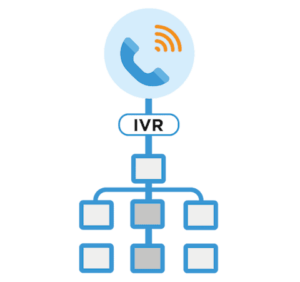
IVR optimization improves self-service rates when it removes friction from call flows, captures intent early, and routes customers to the fastest successful outcome. The highest returns come from measuring where callers drop out, simplifying menus, adding smarter recognition and error recovery, and designing consistent handoff rules to agents. Done well, this reduces transfers, lowers cost to serve, and improves customer experience at scale.¹˒⁶
What is IVR optimization?
IVR optimization is the disciplined improvement of an Interactive Voice Response (IVR) system so more callers complete their task in self-service, with fewer errors, fewer transfers, and less effort. In this article, “IVR” means contact centre telephony self-service, not “immersive virtual reality.” The goal is not to deflect callers at any cost. The goal is to resolve intent safely, quickly, and consistently, while protecting vulnerable customers and meeting service quality expectations.¹
A practical definition of success is higher containment with stable or improving customer outcomes. Containment means the caller completes the required task without a live agent. Transfer rate means the caller ends up needing an agent after attempting self-service. Transfer reduction is a core lever because it directly affects queue demand and workforce cost.⁶
Why do IVRs fail in modern customer experience?
Most IVR underperformance is not caused by “bad technology.” It is caused by flow design that does not match real caller intent, outdated information architecture, and weak error recovery. Human factors research shows that deeper menu structures can increase cognitive load and reduce satisfaction, even when each menu is “short.”⁹ That is why many “five options max” rules fail in practice. The right design depends on working memory demands, how predictable intents are, and how easily callers can backtrack.⁹˒¹⁰
Another common failure is inconsistency across channels. Customers often start on web or app, then call. If policy, wording, or steps differ, callers repeat work and abandon self-service. Human-centred design standards emphasise understanding user context and designing end-to-end tasks, not isolated screens or prompts.² Government service standards make the same point: services must be inclusive, measurable, and designed around user needs.⁴
How does IVR optimization increase self-service rates?
IVR optimization works by tightening four mechanisms: intent capture, task completion design, recovery, and handoff.
First, intent capture. High-performing IVRs identify “what the caller is trying to do” early, using clear language and a small set of high-value intents. Predictive and analytical approaches can identify which intents are most likely to transfer, and which caller attributes correlate with transfer risk.⁶ This supports targeted redesign rather than broad, unfocused changes.
Second, task completion design. Once intent is known, the IVR must remove steps, reduce ambiguity, and surface the minimum information needed to complete the task. Menu breadth and depth should be treated as an optimisation problem, not a stylistic preference. Evidence shows that broader, shallower structures can improve performance for many auditory tasks, particularly for users with lower working memory capacity.⁹
Third, recovery. Real-world callers make mistakes, speak unclearly, and face noise. IVRs must detect failures and offer a fast escape route without punishing the caller. Voice interface guideline research repeatedly highlights the importance of feedback, error handling, and learnability for adoption.¹⁰ International telecommunications recommendations also stress measuring recognition performance using metrics such as word error rate, particularly in noisy or multilingual conditions.¹¹
Fourth, handoff. If self-service will not succeed, the best experience is a fast, informed transfer. The IVR should pass context to the agent and avoid repeating authentication or intent capture where possible. This aligns with contact centre service requirements focused on consistent handling, quality management, and outcomes across channels.¹
Menu-based IVR vs conversational IVR: what is the right choice?
Menu-based IVR remains effective for stable, high-frequency intents where callers expect structured steps. It is also simpler to govern and can be easier to keep compliant. Conversational IVR can reduce friction for “messy” intents, but it must be designed with careful guardrails to avoid recognition errors and misrouting. Research on IVR use in call centre management shows that flow optimisation and automatic speech recognition are major research clusters, reflecting the ongoing challenge of balancing automation with reliability.⁷
A practical approach is hybrid design. Use menus to confirm high-risk decisions, authenticate, and route. Use conversational capture for intent discovery and flexible phrasing. This reduces cognitive load while still controlling error rates and compliance exposure.²˒¹⁰
Where should you apply IVR optimization first?
Start where volume and pain intersect: the top 5 to 10 call drivers that create the most transfers, repeats, or complaints. A strong triage sequence is: billing and payments, account access, simple status checks, appointment changes, and common policy questions. Transfer prediction analysis shows that caller type, intent, and attempts across channels can help identify where transfer risk concentrates.⁶
Operationally, you improve IVR by combining call reason taxonomy, containment data, and qualitative evidence from call recordings and agent notes. For contact centre leaders, this is where real-time performance visibility becomes decisive. Real-time contact centre analytics with Customer Science Insights helps teams connect IVR outcomes to queue demand, agent workload, and customer experience signals so optimisation can be managed as a continuous discipline, not a one-off project.
What are the main risks of IVR optimization?
The first risk is “containment at the expense of resolution.” If the IVR blocks access to agents, callers will abandon, recontact, or escalate. Complaints handling guidance expects fair, accessible pathways to resolution and clear escalation routes.³ Australian financial regulators reinforce complaint handling expectations aligned to complaint management standards, including timeliness and clear processes.⁵
The second risk is inequity. Voice interfaces can disadvantage people with accents, speech impairments, hearing loss, low literacy, or high stress. Human-centred design standards require designing for diverse users and testing with real segments, not idealised personas.² Government standards also reinforce inclusivity as a core requirement.⁴
The third risk is weak change control. IVRs degrade when product rules, policies, or contact reasons change but the IVR content and prompts do not. This creates “information debt” that increases transfers and dissatisfaction. Optimisation therefore needs governance, ownership, and a release process that matches business change cadence.¹
How do you measure IVR optimization success?
Use a balanced scorecard that ties self-service rates to customer outcomes and operational impact.
Containment and transfer rate are the primary indicators of self-service effectiveness.⁶ However, they must be paired with repeat contact, abandonment, and time-to-resolution to ensure resolution quality, not just deflection. Contact centre service standards stress the importance of consistent service delivery, monitoring, and improvement.¹
For voice recognition, measure recognition errors and recovery outcomes. Telecommunications recommendations highlight the use of word error rate and related indicators to evaluate speech recognition performance, especially across noise conditions and languages.¹¹ For experience, capture post-call feedback carefully. Evidence from IVR-based survey work shows that small prompt clarifications can materially change response accuracy, which matters when leaders use survey results to judge success.⁸
What are the next steps to improve IVR?
Treat IVR optimization as a product with a roadmap. First, establish a single owner for IVR intent taxonomy and flow governance. Second, instrument the IVR journey so every caller has a measurable path, including where they fail and why. Third, run fortnightly or monthly optimisation cycles focused on a small set of intents, with A/B testing where feasible.²˒⁶
Finally, align IVR changes to the broader contact centre platform strategy so routing, CRM, knowledge, and workforce planning reinforce the same target experience. A structured engagement for contact centre technology strategy and implementation helps organisations prioritise the right automation, integrate platforms cleanly, and avoid fragmented channel behaviour that drives repeat calls.
Evidentiary layer: what the evidence says about improving IVR
The evidence base consistently supports three themes. First, flow structure matters. Broader versus deeper auditory menu research demonstrates that making menus deeper can increase working memory demands and reduce performance and satisfaction, contradicting simplistic “short menu” rules.⁹ Second, analytics improves targeting. Large-scale operational data can identify which intents and caller attributes drive transfers, supporting more precise redesign and routing policies.⁶ Third, voice systems need robust feedback and recovery. Voice user interface meta-analysis work emphasises validated guidelines around feedback, recognition errors, and learnability, which directly affect abandonment and self-service uptake.¹⁰
Across standards and public sector practice, the consistent message is that service design must be user-centred, inclusive, and measurable, with continuous improvement built into operations.¹˒²˒⁴ This is the foundation that makes IVR optimization sustainable rather than cyclical.
FAQ
What is the fastest way to improve IVR self-service rates?
Start with the top call drivers and remove the most common failure points: unclear intent prompts, deep menus, and poor error recovery. Then add informed transfer rules so callers who will not succeed move quickly to an agent with context.⁶˒⁹
Should we replace our IVR with conversational AI?
Not by default. Many organisations perform best with a hybrid approach: menus for control and compliance, conversational capture for flexible intent discovery. Success depends on measured recognition performance and strong recovery design.⁷˒¹¹
How do we know if our IVR is creating complaints?
Track complaint themes and escalations linked to IVR journeys, including “unable to reach an agent” and “repeat information.” Align pathways to complaint management guidance and regulator expectations so escalation is clear and timely.³˒⁵
What metrics matter most for IVR optimization?
Containment, transfer rate, abandonment, repeat contact, and time-to-resolution are the operational core. Add recognition error metrics for speech, and design feedback instruments carefully so experience results remain reliable.⁶˒⁸˒¹¹
How do we keep IVR content and answers up to date?
Treat knowledge as a managed asset with ownership, approval workflows, and monitoring for gaps. AI-assisted knowledge management can reduce knowledge decay and improve consistency across IVR and agents. For example, AI-powered knowledge management with Knowledge Quest can help teams identify missing answers and publish updates faster.
What governance model sustains “improve IVR” programs?
Use a product operating model: a single accountable owner, a measured backlog, and frequent releases with quality checks. This aligns to service standards focused on consistent delivery, monitoring, and continual improvement.¹˒²
Sources
ISO. ISO 18295-1:2017 Customer contact centres — Part 1: Requirements for service provision. https://www.iso.org/obp/ui/en/
ISO. ISO 9241-210:2019 Ergonomics of human-system interaction — Human-centred design for interactive systems. https://www.iso.org/standard/77520.html
ISO. ISO 10002:2018 Quality management — Customer satisfaction — Guidelines for complaints handling in organizations. https://www.iso.org/standard/71580.html
Australian Government. Digital Service Standard. https://www.digital.gov.au/policy/digital-experience/digital-service-standard
APRA. APRA’s complaints handling standards (aligned to AS/NZS 10002). https://www.apra.gov.au/apras-complaints-handling-standards
Andrade R, Moazeni S. Transfer rate prediction at self-service customer support platforms in insurance contact centers. Expert Systems with Applications. 2023;212:118701. DOI: 10.1016/j.eswa.2022.118701
Coman E. IVR systems used in call center management: a scientometric analysis of the literature. Frontiers in Computer Science. 2025;7:1459787. DOI: 10.3389/fcomp.2025.1459787
Spaargaren E, Kozak A, Herbener C, Lawlor Burke B. Improving the accuracy of Interactive Voice Response (IVR) Technology for pediatric experience scores. Patient Experience Journal. 2022;9(3):76–82. DOI: 10.35680/2372-0247.1612
Commarford PM, Rhoten D, Mirman JH, Coppola BM. A comparison of broad versus deep auditory menu structures. Human Factors. 2008;50(1):151–160. PubMed: https://pubmed.ncbi.nlm.nih.gov/18354973/
Murad C, et al. What’s The Talk on VUI Guidelines? A Meta-Analysis of Guidelines for Voice User Interface Design. CUI 2023. PDF: https://www.cs.toronto.edu/~cmurad/docs/CUI_2023_Author_Version.pdf
ITU-T. Recommendation ITU-T F.748.46 (03/2025): Requirements and evaluation indicators for AI agents, including speech recognition performance (e.g., WER). https://www.itu.int/rec/dologin_pub.asp?id=T-REC-F.748.46-202503-I%21%21PDF-E&lang=e&type=items
DMG Consulting. IVR Optimization Improves Service and Reduces Costs. https://www.dmgconsult.com/ivr-optimization-improves-service-reduces-costs-2/