































Summary
Most mergers and acquisitions fail to realise expected value due to cultural misalignment, not financial miscalculation. Cultural integration determines how quickly decisions stabilise, talent is retained, and synergies materialise. Treating culture as a first-order integration priority, supported by disciplined change management, is essential to protect and realise deal value.
What is cultural integration in M&A?
Cultural integration in M&A is the deliberate alignment of behaviours, decision norms, and ways of working between merging organisations. It defines how the combined entity operates once legal integration is complete.
Culture influences how people interpret strategy, respond to uncertainty, and collaborate across boundaries. In post-merger environments, ambiguity is high and trust is fragile. Research consistently shows that cultural incompatibility is one of the most common reasons M&A value erodes after close¹. Integration is not about choosing one culture over another. It is about creating a workable operating reality.

Why does culture determine value realisation after a merger?
Value realisation depends on execution. Execution depends on people making aligned decisions under pressure.
When cultures clash, decision-making slows. Escalations increase. High performers disengage or leave. Synergies assumed in the deal model fail to materialise because behaviours do not support integration. According to Harvard Business Review, cultural issues account for a significant share of underperforming mergers despite strong strategic fit². Financial logic alone does not deliver outcomes.
How does culture risk differ across M&A types?
Culture risk varies by deal type. In scale mergers, subtle differences in governance and incentives create friction. In capability acquisitions, entrepreneurial cultures often collide with corporate controls. In cross-border deals, national culture compounds organisational differences.
Each scenario requires a tailored approach. Assuming a one-size-fits-all integration playbook increases risk. Early cultural diagnosis enables leaders to anticipate where friction will arise and plan accordingly.
What should be assessed before close?
Cultural assessment should occur during due diligence, not after integration issues emerge. This assessment focuses on how decisions are made, how risk is managed, and how success is rewarded.
Key areas include leadership behaviour, accountability norms, customer orientation, and tolerance for ambiguity. Guidance from the OECD emphasises that early identification of behavioural misalignment improves post-merger performance³. Culture risk is predictable when assessed systematically.
How should post-merger integration culture be designed?
Post-merger integration culture should be intentionally designed, not assumed. Leaders must define the behaviours required to deliver the deal rationale.
This involves making explicit choices. Which practices are non-negotiable. Which can vary. Which must change. Clarity reduces anxiety and accelerates alignment. Culture design should link directly to operating model, governance, and performance management rather than remaining abstract.
What role does M&A change management play?
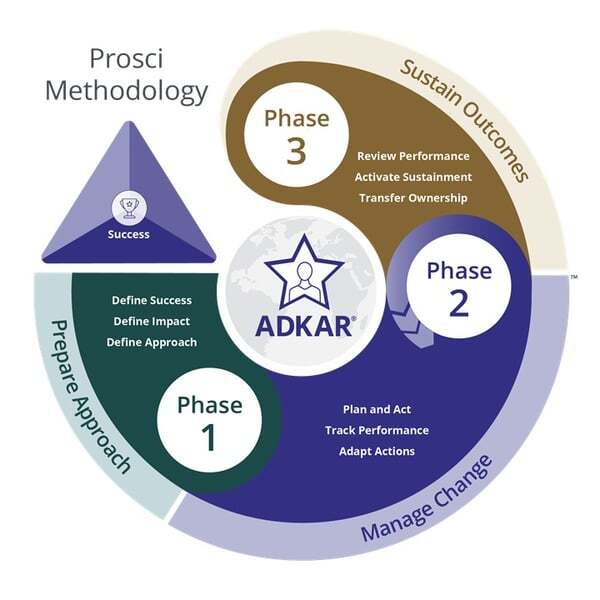
M&A change management translates cultural intent into lived behaviour. It structures communication, engagement, and reinforcement over time.
Effective change management addresses uncertainty early, explains trade-offs honestly, and supports leaders to model desired behaviours. According to McKinsey & Company, organisations that invest in structured change management during integration are significantly more likely to meet synergy targets⁴. Change is not a side activity. It is the integration engine.
How should leadership behaviour be managed during integration?
Leadership behaviour is the strongest signal of the new culture. Inconsistent behaviour creates confusion and cynicism.
Leaders must align on decision rights, escalation norms, and priorities quickly. Visible alignment matters more than formal statements. When leaders revert to legacy behaviours under pressure, integration stalls. Coaching and facilitated alignment sessions reduce this risk.
How can talent loss be prevented during cultural integration?
Talent loss is often driven by uncertainty and perceived misalignment rather than role changes alone. High performers leave when they cannot see how they fit into the future organisation.
Clear communication, fair decision processes, and early involvement in shaping the new way of working reduce attrition. Cultural integration that values contribution from both legacy organisations retains capability and institutional knowledge critical to value realisation.
How should progress be measured?
Cultural integration progress should be measured through behavioural and operational indicators, not sentiment alone.
Indicators include decision cycle time, escalation frequency, retention of critical talent, and consistency of customer outcomes. These measures reveal whether integration is stabilising or fragmenting execution. Repeated assessment allows course correction before value erosion becomes irreversible.
What are the risks of delaying cultural integration?
Delaying cultural integration allows informal norms to harden. Workarounds emerge. Legacy silos persist.
Once behaviours entrench, correction becomes more difficult and costly. Early action is less disruptive than late remediation. Cultural integration is most effective when treated as an immediate priority alongside systems and process integration⁵.
What are the next steps for executives?
Executives should treat culture as a material integration risk. This includes formal assessment during due diligence, clear post-close cultural intent, and investment in structured change management.
Customer Science Business Consulting and Value Management Consulting services support cultural integration in M&A by aligning culture assessment, operating model design, and change management to deal value drivers.
Evidentiary Layer
Customer Science service capabilities and integration approaches referenced in this article are based on official Customer Science documentation and solution descriptions.
FAQ
Why do so many mergers fail to realise value?
Because cultural misalignment undermines execution, talent retention, and decision-making.
Is cultural integration more important than systems integration?
Both matter, but culture determines how effectively systems and processes are adopted.
When should culture be assessed in M&A?
During due diligence, before deal close, to identify integration risk early.
Can one organisation’s culture simply dominate?
Imposed cultures often trigger resistance. Deliberate integration delivers better outcomes.
How long does cultural integration take?
Initial alignment occurs within months. Full integration takes sustained leadership attention over time.
Who owns cultural integration?
Executive leadership owns cultural integration, supported by change and integration specialists.
Sources
-
Cartwright S, Schoenberg R. Thirty years of mergers and acquisitions research. British Journal of Management.
-
Harvard Business Review. The hard side of culture change. 2018.
-
OECD. Corporate governance and mergers. 2020.
-
McKinsey & Company. Why deals fail and how to make them work. 2019.
-
Bauer F, Matzler K. Antecedents of M&A success. Journal of Management Studies.