





















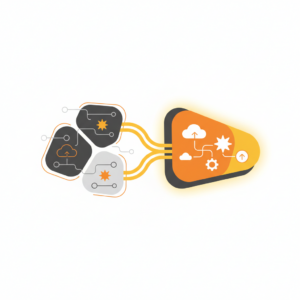
Contact centre technology consolidation works when it removes duplicate tools, simplifies workflows, and protects service continuity during migration. In 2026, the strongest strategies do not chase platform reduction for its own sake. They focus on lowering cost and technical debt while preserving customer context, operational visibility, knowledge quality, and risk control. (OECD)
What is contact centre technology consolidation?
Contact centre technology consolidation is the structured reduction and redesign of the service stack so fewer systems handle more of the customer journey coherently. It usually involves rationalising telephony, CCaaS, CRM, case management, reporting, workforce tools, knowledge systems, bots, and integration layers. The aim is not just fewer licences. It is a cleaner operating model with fewer handoffs, less duplicated data, and better control over service delivery. (ACM Digital Library)
This matters because customers do not experience the stack as separate products. They experience one service. The Digital Service Standard says services should be user-friendly, inclusive, adaptable, and measurable, which is a useful test for consolidation decisions as well. If a tool does not improve those outcomes, it should not stay in the core service estate. (Digital Australia)
Why is consolidation harder in 2026?
The stack now carries more than calls and tickets. It also carries customer identity, AI-generated guidance, workflow routing, knowledge, privacy controls, and journey measurement. OECD guidance on digital government in Australia says digital and ICT investment is growing and must deliver value while avoiding inefficiency, which is exactly the pressure enterprise service leaders now face. (OECD)
At the same time, consolidation is no longer just a procurement exercise. Legacy modernization research shows that organizations face multiple modernization strategies, including architecture redesign, cloudification, and modular replacement, each with different risks and sequencing needs. Legacy systems also trap value through technical debt and dependency complexity, which is why poorly planned migrations can cost more than maintaining the old estate for longer. (ACM Digital Library)
How should a legacy CX migration strategy work?
A practical legacy CX migration strategy has four stages. First, map the current stack by capability, dependency, cost, and operational criticality. Second, decide what to retain, replace, integrate, or retire. Third, migrate in controlled phases around live journeys, not around vendor contract anniversaries alone. Fourth, stabilise and measure the new operating model before claiming savings.
That phased logic is supported by modernization research. Experience reports on legacy migration describe the need to move toward contemporary patterns while still meeting live business demands, and broader modernization reviews show that gradual redesign and modular modernization are now common because full replacement is often too risky. (ACM Digital Library)
In CX terms, that usually means consolidating the operating layers in this order: reporting and insight, knowledge, orchestration, workflow, then channel platforms. That order reduces risk because it improves visibility and consistency before changing the interaction layer customers feel directly. This is an inference from the modernization and service-design sources, not a published single-model standard. (Customer Science)
What should be consolidated first?
Start with duplicate capabilities, not the most expensive logo. Reporting is often first because many contact centres run overlapping dashboards, BI extracts, vendor analytics, and manual spreadsheet packs. A centralised service data layer is easier to rationalise than a whole channel platform, and it quickly reveals where the real duplication sits. Customer Science describes Customer Science Insights as a centralised real-time dashboard, database, and analytics layer for contact centres and service data, which fits this early-stage consolidation role well. (Customer Science)
Knowledge is often second. Most service environments still have a separation between the platform handling interactions and the knowledge base meant to support them. Customer Science positions Knowledge Quest around closing that gap by connecting live service interactions to governed knowledge and surfacing missing content and maintenance issues. Consolidating the answer layer before the channel layer can reduce handling time, inconsistency, and migration risk. (Customer Science)
What is the difference between consolidation and simple platform replacement?
Platform replacement swaps one main system for another. Consolidation redesigns the wider service architecture so multiple overlapping tools and processes are simplified or removed together. That distinction matters because organizations often replace telephony or CCaaS platforms while keeping old reporting, fragmented knowledge, parallel workflow logic, and manual exception handling. The result is a new front end on top of an old operating model.
Modernization research points to this directly. Legacy modernization is no longer treated as a single technical event. It is a portfolio of architectural, service, and process choices, and technical debt often persists when organizations modernize locally rather than systemically. (ACM Digital Library)
Which design principles matter most?
Use five principles.
First, preserve customer context across every phase. Better cross-channel integration improves performance and retention, which means consolidation should never reset customer history or journey visibility. (ScienceDirect)
Second, separate systems of record from systems of engagement. This reduces migration risk because channel tools can change faster than customer records or policy controls. That principle aligns with OECD thinking on shared digital foundations and interoperable service components. (OECD)
Third, reduce technical debt, do not relocate it. Research on technical debt warns that poorly designed modernization can preserve the same complexity inside new environments. (Springer Nature)
Fourth, build privacy and AI controls into the target architecture. OAIC says privacy by design means building privacy into the design specifications and architecture of new systems and processes, and NIST says the GenAI Profile helps organizations identify unique risks and align risk management with their goals and priorities. (OAIC)
Fifth, measure service outcomes holistically. The Digital Performance Standard explicitly pushes teams to monitor services with meaningful customer-focused measures, not just platform uptime. (Digital Australia)
Applications
The best use cases for contact centre technology consolidation are high-volume environments with multiple legacy layers, duplicate reporting tools, fragmented knowledge, or separate digital and assisted-service stacks. Government, utilities, health, insurance, banking, and multi-brand service operations usually see the clearest gains because they often carry years of overlapping acquisitions and project-led tooling.
The first operational application is to create one source of truth for service data. Customer Science positions Customer Science Insights as a platform that connects and collects real-time contact centre and service data and can surface it in dashboards, reports, BI, AI, and workforce tools. That kind of layer helps leaders compare old and new states during migration without relying on disconnected vendor reports. (Customer Science)
What are the biggest risks?
The first risk is false simplification. A program can reduce visible applications while increasing integration fragility underneath. The second is migration by contract deadline rather than service logic. The third is knowledge breakage. If answers, policy steps, or scripts are not governed during migration, customers experience inconsistency before the new platform settles.
The fourth risk is unmanaged AI. NIST’s July 2024 release says organizations should identify and manage generative AI risks across use cases and lifecycle stages. If summarisation, agent assist, or automated knowledge generation are moving with the stack, they need explicit review and fallback controls. (NIST)
The fifth risk is privacy debt. OAIC guidance says adopting privacy by design is more efficient and effective than fixing privacy issues later. That matters in consolidation because customer recordings, transcripts, metadata, and behavioural signals are often replicated across old and new environments during transition. (OAIC)
How should success be measured?
Measure consolidation in four layers.
First, architecture outcomes: number of duplicate tools retired, integration points removed, and manual data-handling steps eliminated.
Second, operational outcomes: recontact, time to resolution, transfer rate, backlog movement, and knowledge reuse.
Third, financial outcomes: licence reduction, vendor reduction, support cost, and cost to serve.
Fourth, control outcomes: privacy exceptions, AI overrides, defect rate, and migration incident rate.
This approach aligns with the Digital Performance Standard’s holistic measurement logic and the OECD view that digital investment must show value, not just activity. It also matches how Customer Science presents its consulting and professional services offer: strategy, service transformation, vendor selection, technology, and quality assurance support around long-term service change. (Digital Australia)
What should leaders do next?
Start with a stack audit tied to one priority journey. Do not begin with a vendor bake-off. List every platform touching that journey, the data it holds, the workflow it controls, and the reports it produces. Then classify each item into keep, simplify, integrate, replace, or retire.
After that, build a migration roadmap with clear gates: data readiness, knowledge readiness, operational readiness, and rollback readiness. This phased model is consistent with current modernization literature and with government guidance that digital services should be adaptable, measurable, and improved over time. (ACM Digital Library)
Evidentiary layer
The evidence base supports a clear pattern. Digital service guidance emphasizes coherent, measurable services. (Digital Australia) OECD guidance emphasizes value from digital investment and stronger strategic management of digital estates. (OECD) NIST and OAIC make clear that AI and privacy controls must be designed into new systems early. (NIST) Modernization research shows legacy replacement is best handled as staged modernization rather than simplistic rip-and-replace. (ACM Digital Library) And cross-channel integration research shows that customer outcomes improve when continuity survives the architectural change. (ScienceDirect)
FAQ
What is the first sign that contact centre technology consolidation is needed?
The clearest sign is duplicate capability. Multiple dashboards, knowledge stores, workflow tools, or reporting processes usually indicate that the estate has grown by project rather than by design. (Customer Science)
Should consolidation start with the telephony platform?
Not always. Many organisations reduce risk by consolidating reporting and knowledge first, then moving workflow and channel platforms later. That sequencing is an inference from the modernization and service-control sources rather than a universal rule. (Customer Science)
How is legacy CX migration different from normal platform migration?
Legacy CX migration has to protect live service continuity, customer history, knowledge, and exception handling while reducing technical debt. That is broader than moving one application. (ACM Digital Library)
What should stay in place during migration?
Customer records, policy controls, knowledge governance, and core measurement should remain stable enough to give the new environment a controlled landing. OECD and OAIC guidance both support the value of stable shared foundations and proactive controls. (OECD)
Where does knowledge management fit?
It sits near the centre of the consolidation strategy because inconsistent answers multiply migration risk and repeat contact. Customer Science positions Knowledge Quest as an AI-powered knowledge management layer for contact centres, which makes it relevant when the main consolidation issue is fragmented content, poor answer quality, or weak maintenance discipline. (Customer Science)
When should leaders use external support?
External support is most useful when the challenge is target-state design, vendor rationalisation, governance, or phased service transformation rather than a simple product swap. Customer Science’s consulting and professional services positioning fits that stage. (Customer Science)
Sources
-
Australian Government Digital Transformation Agency. Digital Service Standard, updated 24 July 2024. (Digital Australia)
-
Australian Government Digital Transformation Agency. Digital Performance Standard, including measurement guidance. (Digital Australia)
-
OECD. Digital Government in Australia. 6 August 2025. (OECD)
-
NIST. Artificial Intelligence Risk Management Framework: Generative Artificial Intelligence Profile, NIST AI 600-1, released 26 July 2024. (NIST)
-
Office of the Australian Information Commissioner. Privacy by design guidance. (OAIC)
-
Assunção, W. K. G., et al. Contemporary Software Modernization: Strategies, Driving Forces, and Research Opportunities. ACM Computing Surveys, 2025. (ACM Digital Library)
-
Fonseca, S. C., et al. Migrating Legacy Systems: An experience report on the modernization of a large production system. ACM, 2024. (ACM Digital Library)
-
Li, Y., et al. Customer’s reaction to cross-channel integration in omnichannel retailing. Internet Research, 2018. (ScienceDirect)
-
Timoumi, A., et al. Cross-channel effects of omnichannel retail marketing and the role of integration. Journal of Marketing, 2022. (ScienceDirect)