


























Why did a national grocer bet on occasion analytics in 2025?
Executives faced soft same-store growth, shrinking trip size, and fragmented digital journeys. Leadership set a clear goal. The grocer would grow average basket size without blunt discounts, and it would do so by understanding the mission behind each shop. Shopper missions, also called shopping occasions, describe the intended context of use, such as a weekday family dinner, a quick top-up, or a weekend entertaining spread. Occasion analytics groups baskets and customers by these missions, then activates targeted experiences across channels. Retailers that empower associates and digital surfaces with mission context have recorded meaningful basket uplifts, including a 5 percent increase in test stores from guided selling and targeted training.¹ The grocer committed to make occasion a first-class data entity, not a campaign tag.
What is occasion analytics and how does it differ from classic basket analysis?
Teams often use market basket analysis to find item affinities. Association rules quantify how often products co-occur with support, confidence, and lift, which are standard measures in retail data science.⁴ Occasion analytics adds the missing context. The unit of analysis becomes mission plus identity, not only item pairs. A dinner-for-four mission implies different affinities, price sensitivities, and channel preferences than a commuter top-up. Academic and industry work shows that basket composition, frequency, and cross-category behavior vary significantly by retailer type and shopping pattern, which underscores the need for context variables.⁵ ⁹ Occasion analytics, therefore, blends association rules with trip purpose, time, household profile, and channel to predict what the customer is trying to accomplish.
Where did the grocer start, and why did identity and data foundations matter?
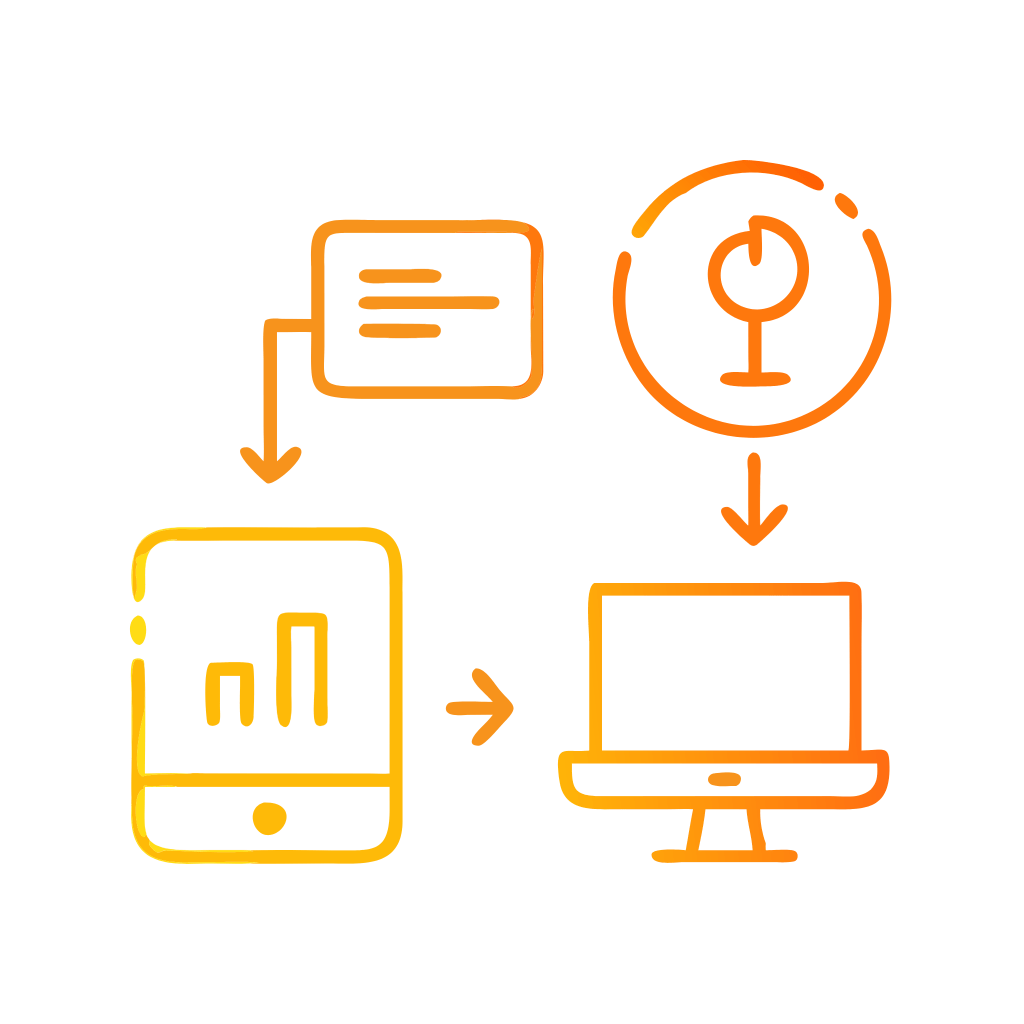
Data leaders started with identity resolution, consent, and governed schemas. The team unified loyalty IDs, e-commerce accounts, and in-store tender data under a customer graph with stable household keys. The foundation handled online and store trips because more than 90 percent of shoppers now mix both channels, which makes occasion signals observable in multiple touchpoints.³ The model mapped orders, store visits, search queries, and list activity to a standard trip entity. That entity carried first-party signals like time of day, day of week, store location, delivery window, basket value, category breadth, and item cadence. The foundation also ingested seasonal patterns because occasion intensity shifts with calendar cycles, such as holidays, school terms, and weather-driven events.⁸ The team treated occasion as a derived attribute that updates with each interaction, then stored it in a feature store for activation.
How did the team infer shopping occasions at scale?
Data scientists trained semi-supervised models that combined clustering and association rules. They first created weekly panels of customer baskets and applied k-means variants to separate missions by size, category diversity, and time features. They then refined clusters with association rule features such as lift for canonical pairings like pasta and sauce, or chips and dips.⁴ ⁶ They validated cluster separability through silhouette scores and business review. The model produced interpretable labels, including Weeknight Dinner, Big Stock-up, Healthy Reset, Breakfast Run, and Entertaining. Consistent with literature on multicategory purchase behavior, the inclusion of frequency features improved prediction quality and practical usefulness.⁹ The team refreshed scores daily for digital channels and weekly for store-only households, then exposed mission probabilities to APIs for use by search, recommendations, offers, and associate tools.
How did occasion analytics change customer experience and service?
Product teams wired mission context into the e-commerce and in-store journeys. Search ranked results by mission fit, not only global popularity. Recommendations prioritized complementary items relevant to the predicted occasion, such as salad kits, bakery, and beverages for Entertaining. Service flows routed live chat to food specialists during dinner rush windows, and store associates used a guided-sell checklist embedded in handhelds. Retailers that implement in-store sales-assist tools and targeted training have seen basket size gains, which guided the grocer’s associate playbook.¹ The omnichannel team synced recipes, bundles, and replenishment prompts between web, app, and curbside, reflecting the reality that omnichannel is now table stakes in grocery and that growth comes from upselling and increased trip frequency.⁷
What was the test design and what did it prove?
The grocer ran a 12-week controlled experiment across 80 matched stores and the corresponding e-commerce catchments. Treatment regions received mission-aware search, recommendations, and offers. Control regions retained the prior experience. The primary metric was average items per basket. Secondary metrics included category breadth, add-to-basket rate on occasion bundles, and gross profit per trip. The program recorded a statistically significant lift in average basket size in treatment markets. The magnitude aligned with external benchmarks where mission-aware guidance and associate enablers produced measurable gains.¹ Seasonality and promotions were normalized using synthetic controls because shopping occasions vary by time period and calendar events.⁸ The analysis also showed increased category breadth, a desirable signal given evidence that basket patterns correlate with retailer performance.⁵
How did occasion analytics reshape assortment, pricing, and operations?
Merchants used occasion insights to adjust adjacencies and bundle design. The team built “occasion starter packs” that bundled core items plus high-affinity complements learned from association rules, then priced them to preserve margin.⁴ ⁶ Space planners improved seasonal endcaps by aligning with the forecasted mix of occasions by week. NIQ’s view of seasonal shopping and occasion growth validated the strategy and provided external demand signals.¹⁰ E-commerce operations scheduled more pickers during dinner peaks, while service leaders staffed chat with culinary expertise when mission probability exceeded a threshold. The move echoed industry guidance that the next horizon in grocery growth depends on retention, personal relevance, and trip economics.⁷
What governance kept the system accurate and safe?
The grocer established feature stewardship for occasion labels. Data governance set explicit definitions for each mission, documented allowed use cases, and created drift monitors. Measurement included basket size, margin, and customer satisfaction by mission. The team audited fairness by checking whether certain households were systematically under-recommended fresh or premium items. The audit used identity graph transparency and opt-out flows. Identity and data foundations made this feasible, since clean keys and explicit consent let the system honor preferences across channels where most shoppers now operate.³ Regular reviews compared internal outcomes to external research on evolving shopping rhythms to avoid overfitting to one season or region.⁸
What were the results and the executive-level impact?
Leadership saw clear financial and customer outcomes. The program grew average items per basket and improved cross-category penetration that supported margin. The grocer improved activation speed by treating occasion as a reusable feature across search, recommendations, service routing, and associate tools. Field leaders reported smoother dinner rush operations and fewer out-of-stock complaints, which aligned with evidence that structured missions help teams plan labor and inventory against predictable peaks. The case supports a broader point. Personalization that understands trip purpose, coupled with trained associates and consistent omnichannel journeys, can lift basket size and loyalty when executed with disciplined data foundations.¹ ⁷
What should a C-suite sponsor do next?
Executives should set a decisive mandate. Treat occasion as a governed attribute in the enterprise customer model. Fund an identity backbone that spans store and digital because mixed-channel behavior is the norm.³ Require activation plans for search, recommendations, service, and store operations, not only marketing. Insist on controlled tests and transparent measurement since basket patterns and shopper frequency can shift with macro cycles.² ⁵ ⁹ Maintain a seasonal view of occasions and adjust bundles and adjacencies accordingly.⁸ ¹⁰ Finally, invest in associate enablement because mission-aware guidance and training consistently amplify the impact of analytics in the last mile.¹
FAQ
What is occasion analytics in grocery and how is it different from market basket analysis?
Occasion analytics predicts the mission behind a shop, such as dinner, top-up, or entertaining, then activates experiences and offers that fit the mission. Classic market basket analysis finds product co-occurrences using support, confidence, and lift, while occasion analytics adds trip purpose, identity, and time to improve relevance.⁴
How does omnichannel behavior influence occasion analytics at Customer Science clients?
Occasion analytics requires identity and data foundations that link store and digital interactions because more than 90 percent of shoppers use both channels. This linkage makes mission signals observable across web, app, and store, enabling consistent activation.³
Which levers grow basket size with mission-aware experiences?
Mission-aware search, recommendations, bundles, and trained associates drive measurable gains. Retailers that equip associates with guided selling tools and targeted training have recorded a 5 percent basket size increase in test stores.¹
Why do seasonality and shopping rhythms matter for occasion models?
Occasion intensity shifts with calendar cycles. Seasonal patterns change the mix of missions week by week, so models and tests should normalize for timing and events to avoid biased reads.⁸
What metrics should executives track to validate impact?
Track average items per basket, category breadth, add-to-basket rate on occasion bundles, and gross profit per trip. Literature that links basket patterns and frequency to retailer performance supports these choices.⁵ ⁹
Which data capabilities form the backbone of mission-aware personalization?
Identity resolution, consented first-party data, a governed feature store for occasion labels, and APIs for omnichannel activation create the backbone. These capabilities enable retention and upsell strategies that are central to grocery growth.⁷
How should assortment and space planning adapt to occasion insights?
Use association rules to design occasion starter packs, align endcaps and adjacencies to the forecasted mission mix, and adjust staffing to peak mission windows. External seasonal and category fundamentals provide benchmarks to guide these decisions.⁶ ¹⁰
Sources
The end of shopping’s boundaries: Omnichannel personalization, McKinsey & Company, 2020, Article. https://www.mckinsey.com/capabilities/growth-marketing-and-sales/our-insights/the-end-of-shoppings-boundaries-omnichannel-personalization
Consumer Outlook: Guide to 2026, NIQ, 2025, Report. https://nielseniq.com/global/en/insights/report/2025/consumer-outlook-guide-to-2026/
New FMI & NielsenIQ Report Explores Grocery Shopping in the Digital Age, FMI and NIQ, 2025, News Release. https://www.fmi.org/newsroom/news-archive/view/2025/02/03/new-fmi—nielseniq-report-explores-grocery-shopping-in-the-digital-age
Market Basket Analysis – an overview, ScienceDirect Topic Page, accessed 2025, Reference. https://www.sciencedirect.com/topics/computer-science/market-basket-analysis
Martin, J. et al., Fundamental Basket Size Patterns and Their Relation to Retailer Performance, 2020, SSRN Working Paper. https://papers.ssrn.com/sol3/Delivery.cfm/SSRN_ID3396827_code1797307.pdf?abstractid=3396827&mirid=1
Martínez, M. et al., Market basket analysis with association rules in the retail grocery sector, 2021, CLEI Electronic Journal. https://www.clei.org/cleiej/index.php/cleiej/article/view/497/413
The next horizon for grocery e-commerce beyond the pandemic bump, McKinsey & Company, 2022, Article. https://www.mckinsey.com/industries/retail/our-insights/the-next-horizon-for-grocery-ecommerce-beyond-the-pandemic-bump
The evolution of shopping occasions for UK grocery shoppers, NIQ, 2024, Commentary. https://nielseniq.com/global/en/insights/commentary/2024/the-evolution-of-shopping-occasions-for-uk-grocery-shoppers/
Pan, Y. et al., Multicategory purchase behavior: basket choice, shopping frequency, and cross-category effects, 2025, Journal of Retailing. https://www.sciencedirect.com/science/article/pii/S0022435925000612
Category Shopping Fundamentals, NIQ, 2025, Program Overview. https://nielseniq.com/global/en/landing-page/category-shopping-fundamentals/