





























Summary
Agile organizational design replaces rigid hierarchies with flexible structures that prioritise speed and outcomes. By redistributing decision authority, aligning teams to value, and reducing layers of approval, organisations respond faster to change. Agile structures are not about removing control. They are about placing control where information and accountability actually sit.
What is agile organizational design?
Agile organizational design is the deliberate structuring of roles, teams, and decision rights to maximise responsiveness and learning. Instead of optimising for stability, it optimises for flow.
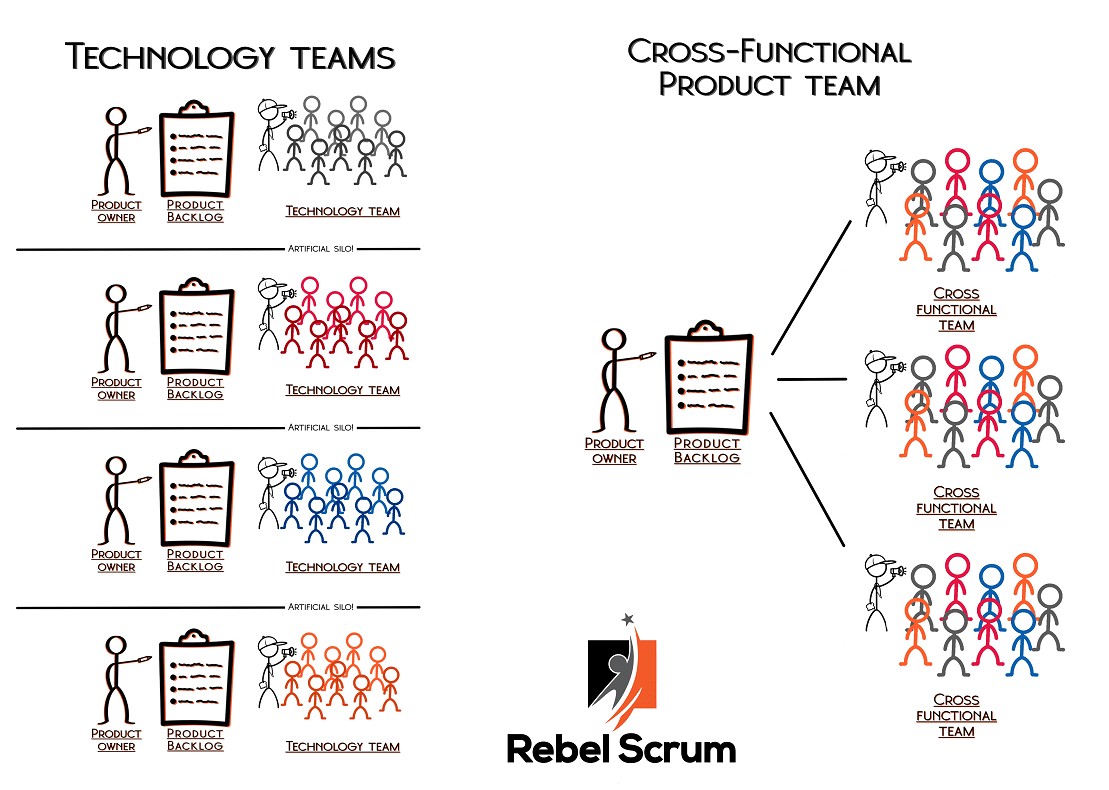
In an agile organizational structure, work is organised around value streams rather than functions. Teams are multidisciplinary and empowered to act within defined boundaries. Hierarchies still exist, but they are flatter and focused on direction and enablement rather than control. Evidence shows that organisations adopting agile design principles improve time to delivery and employee engagement¹.


Why do hierarchical structures slow organisations down?
Traditional hierarchies concentrate decision authority at the top. Information travels up. Decisions travel down. Each layer adds delay, distortion, and risk aversion.
In complex environments, this model breaks. By the time decisions are approved, conditions have changed. According to McKinsey & Company, excessive layers are a leading contributor to slow execution and missed opportunities². Hierarchies designed for control struggle with speed.
How does breaking down hierarchies increase speed?
Speed improves when decisions are made closer to the work. Agile design pushes authority to teams with the best information, within clear constraints.
This reduces handoffs and approval loops. Teams experiment, learn, and adjust quickly. Leaders focus on setting direction, priorities, and guardrails rather than approving every action. The result is faster feedback and higher-quality decisions under uncertainty.
What organizational design principles underpin agility?
Agile design rests on a small set of principles:
Value over function
Teams over roles
Clear decision rights over consensus
Learning over perfection
These principles ensure that structure supports outcomes. They also reduce ambiguity. When teams know what they own and how success is measured, execution accelerates. Frameworks from OECD highlight clarity of accountability as essential to agile public and private sector organisations³.
How do roles and leadership change in agile structures?
Roles broaden. Leaders shift from controllers to enablers. Managers focus on capability, alignment, and removing obstacles.
This does not eliminate leadership. It elevates it. Leaders create the conditions for teams to perform. They intervene when boundaries are crossed or outcomes are at risk. Research consistently shows that leadership behaviour, not structure alone, determines whether agile design delivers benefits⁴.
Where do governance and control sit in agile organizations?
Governance moves from process compliance to outcome oversight. Instead of approving activities, leaders monitor performance against agreed objectives and constraints.
Clear governance frameworks define escalation paths, risk thresholds, and decision authority. Standards from ISO reinforce that effective governance is compatible with decentralised decision-making when accountability is explicit⁵.
What risks arise when hierarchies are removed too quickly?
Removing layers without redesigning accountability creates confusion. Teams may act without alignment. Leaders may disengage.
Agile organizational design must be intentional. Decision rights, metrics, and escalation must be clear before authority is redistributed. Poorly executed flattening increases risk and burnout rather than speed.
How should agile organizational effectiveness be measured?
Effectiveness is measured through delivery and adaptability. Indicators include:
Time from decision to execution
Frequency of customer or stakeholder feedback
Reduction in approval steps
Stability of outcomes under change
When these indicators improve, agility is working. When they do not, structure or leadership behaviour must be revisited.
What are the next steps for leaders considering agile design?
Leaders should start with value streams and decision bottlenecks. Identify where work slows and why. Redesign authority and team structures around those constraints.
Customer Science Business Consulting and Value Management Consulting services support agile organizational design by aligning structure, governance, and performance measures to strategic outcomes rather than legacy hierarchies.
Evidentiary Layer
Customer Science product and service capabilities referenced in this article are based on official Customer Science documentation and solution descriptions.
FAQ
Is agile organizational design the same as agile delivery?
No. Agile delivery focuses on how work is done. Agile organizational design focuses on how the organisation is structured to support that work.
Does agile design remove managers?
No. It changes the role of managers from approvers to enablers and capability builders.
Can agile structures work in regulated environments?
Yes. Clear governance and accountability make agility compatible with regulation.
How long does it take to redesign an organisation?
Initial design can occur in weeks. Embedding new behaviours takes longer and requires leadership commitment.
Is agile organizational design suitable for the public sector?
Yes. When adapted to accountability requirements, it improves responsiveness and service outcomes.
What is the biggest risk in agile redesign?
Moving authority without clarifying accountability and success measures.
Sources
Denning S. The Age of Agile. AMACOM.
McKinsey & Company. Organizing for speed. 2018.
OECD. Agile government and organisational design. 2020.
Harvard Business Review. Why agile transformations fail. 2019.
ISO 38500:2015 Governance of IT.